
Table of Contents
- 1. Follow a Tractor Maintenance Checklist Built on Operating Hours
- 2. Nail Your Tractor Engine Oil Change Intervals
- 3. Is Synthetic Oil Worth It for Farm Vehicles?
- 4. Protect the Air Intake and Fuel System from Mallee Dust
- 5. Monitor Coolant Levels, Battery Terminals and Lubrication Points
- DIY or Professional Servicing: Where to Draw the Line
- Frequently Asked Questions
Last Updated: September 13, 2026
1. Follow a Tractor Maintenance Checklist Built on Operating Hours
Small farm tractor engine maintenance in the Mallee starts with one habit: logging operating hours and servicing on a fixed interval. Tractor engines fail early for predictable reasons, and almost all trace back to missed service intervals rather than manufacturing faults.
Tractor engines often run hard through harvest and sit idle for months. That stop-start rhythm is harder on an engine than continuous work, so a written checklist beats memory.
Daily Walk-Around Inspection
A five-minute walk-around before start-up catches most problems while they are cheap to fix. Check:
- Engine oil level on the dipstick, with the machine level
- Coolant level at the overflow bottle and radiator cap
- Fuel sediment bowl for water or visible grit
- Air intake pre-cleaner for chaff and dust build-up
- Belt tension and condition on the fan and alternator
- Battery terminals for corrosion or looseness
- Visible leaks under the sump, transmission and hydraulic lines
Log anything unusual. A slow weep today becomes a seized bearing next month.
The 50, 100 and 250 Hour Service Interval
The 50, 100 and 250 hour service interval is the backbone of small tractor engine care: light checks every 50 hours, oil and filter work at 100 hours, and comprehensive servicing at 250 hours.
| Interval | Key Tasks | Typical Time |
|---|---|---|
| Daily | Walk-around, fluid levels, leaks | 5 minutes |
| 50 hours | Grease lubrication points, check air filter, inspect belts | 30 minutes |
| 100 hours | Engine oil and filter change, fuel filter, battery check | 1-2 hours |
| 250 hours | Full service, coolant flush, transmission and differential oil, valve clearance | Half day |
Always confirm against your tractor’s own manual. Some Kubota and John Deere models specify shorter intervals for dusty conditions, which describes most Mallee paddocks.
2. Nail Your Tractor Engine Oil Change Intervals
Tractor engine oil change intervals should follow the manufacturer’s hour-based schedule, not a calendar date. For most small farm tractors, that means an oil and filter change every 100 to 250 operating hours, with the shorter end for dusty or heavy-load work (kubota.com.au).
Oil viscosity matters as much as the interval. Mallee summer heat thins oil until it stops protecting bearings and cylinder walls.
Oil Viscosity and Operating Temperature
Match the viscosity grade to the season and the manual’s specification. A 15W-40 diesel oil suits most older mechanical engines year-round in Australia, while newer common-rail diesels often call for a specific low-ash grade. Using the wrong viscosity is one of the most common mistakes we see, and the damage is cumulative.
Running a lighter automotive oil in a diesel tractor engine to save money is a false economy. Diesel engines shear oil faster and generate more soot, and the wrong oil accelerates wear on the camshaft and bearings long before you notice a symptom.
Filter Replacement and Sediment Bowl Checks
Replace the oil filter at every oil change, never every second one, it holds a cupful of contaminated oil that pollutes fresh oil if reused. On the fuel side, drain the sediment bowl weekly in dusty conditions; water and grit reaching the injectors cost far more than a filter.
Genuine filters such as Kubota Genuine Engine Oil specifications are matched to the engine’s flow rate and bypass pressure. Aftermarket filters can work, but check the part number against your model rather than trusting a shelf label.
3. Is Synthetic Oil Worth It for Farm Vehicles?
Is synthetic oil worth it for farm vehicles? For most small farm tractors working Mallee conditions, yes, but the decision should be driven by the oil’s specification rating, not the word “synthetic” on the label. A mineral oil meeting the correct API or ACEA category will outperform a synthetic that doesn’t.
Read the Specification, Not the Marketing
Diesel engine oil for small farm tractors in Australia is graded against two systems on the bottle:
- API service categories, the “C” series for compression-ignition (diesel) engines. Older mechanical tractors typically call for API CF or CG-4; newer common-rail diesels usually require API CJ-4 or the newer CK-4.
- ACEA sequences, the European equivalent. ACEA E7 suits many heavy-duty off-road diesels, while E9 is formulated for engines fitted with exhaust after-treatment such as diesel particulate filters (DPFs).
Your tractor’s manual names the minimum category. If it says API CG-4 or better, a CJ-4 oil exceeds that and is safe. If it specifies ACEA E9 for a DPF-equipped engine, an E7 oil risks ash loading the filter and triggering a derate.
Where Synthetic Earns Its Keep in the Mallee
Synthetic base stocks resist thermal breakdown better than mineral oils, which matters when a tractor pulls an implement through 40°C-plus Mildura summer afternoons. The benefits:
- Cold starts, a 5W-40 synthetic flows more readily on a frosty Mallee morning than a 15W-40 mineral, reducing dry-start wear on the bearings and camshaft.
- Extended intervals, some synthetics are rated for longer drains, but only if the oil meets the manual’s specification and fuel sulphur is low enough. Don’t extend intervals on the word “synthetic” alone.
- High-hour engines under sustained load, harvest and hay-making put engines under continuous load for hours, and synthetics hold viscosity better under that stress.
- Machinery that sits between jobs, synthetics resist oxidation during idle periods, which suits tractors used seasonally.
Where Mineral Oil Still Makes Sense
Mineral oil remains a legitimate choice for:
- Older low-hour engines with worn seals, where thinner synthetic base stock can weep past gaskets
- Engines where the manual specifies mineral oil for the first service period to allow ring seating
- Machines on a strict 100-hour change cycle, where oil is drained before its additives deplete anyway
- Tight budgets, fresh mineral oil at the correct interval beats neglected synthetic every time
Viscosity Grade and the Australian Climate
A 15W-40 diesel oil suits most older mechanical tractor engines year-round across the Mallee (api.org). Newer common-rail diesels often call for a specific low-ash grade, frequently 10W-30 or 5W-40, to protect the DPF and EGR system. Using the wrong viscosity is one of the most common mistakes we see, and the damage is cumulative.
Running a lighter automotive oil in a diesel tractor engine to save money is a false economy. Diesel engines shear oil faster and generate more soot, and the wrong oil accelerates wear on the camshaft and bearings long before you notice a symptom.
The Practical Rule
Match the specification first, viscosity second, base stock third. If a synthetic meets the manual’s API or ACEA requirement and the correct viscosity grade, it’s a sound upgrade for a hard-working small farm tractor. If it doesn’t meet the specification, the base stock is irrelevant.
Don’t switch grades mid-season without checking the manual, and never mix brands or grades to top up unless stranded, mixing dilutes the additive package and shortens the oil’s effective life.
4. Protect the Air Intake and Fuel System from Mallee Dust
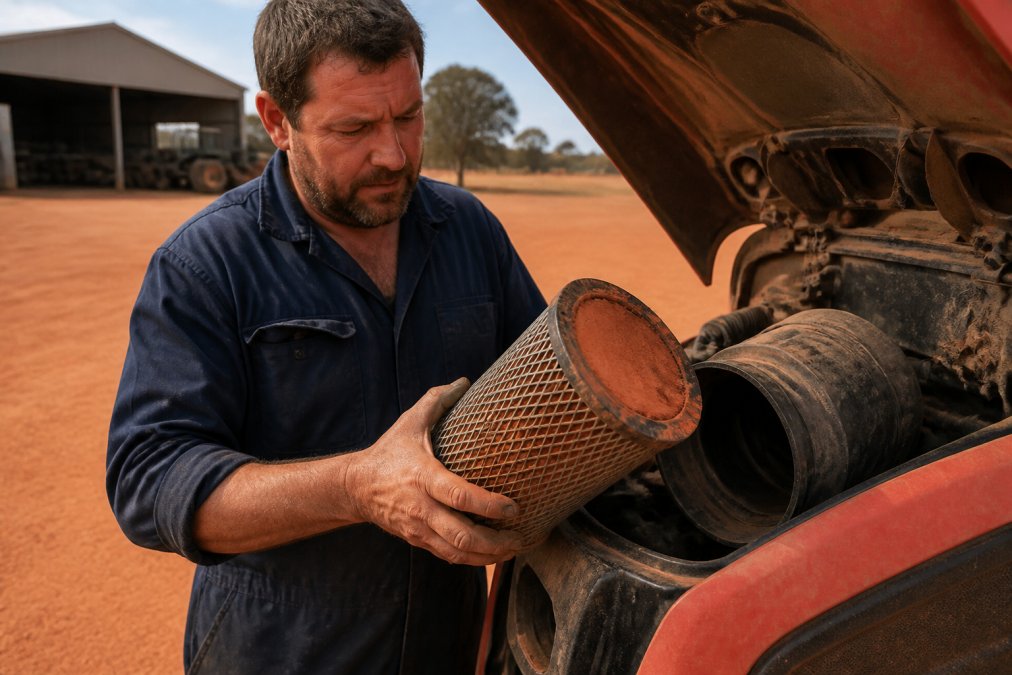
Dust is the single biggest engine killer in the Mallee, and the air intake and fuel system are where it does damage. Fine red soil passes through a neglected filter and acts like grinding paste on cylinder walls, piston rings and injectors.
Air Filter Inspection and Cleaning
Inspect the air filter every 50 hours and clean it carefully, not aggressively. Tap the element gently to dislodge dust, or use low-pressure air from the inside out. Never blast high-pressure air through the media; it tears the fibres and lets dust through.
Replace the element at the interval in your manual, or sooner if you can see light through it held to the sun. Donaldson filtration systems are widely used in Australian agriculture, and their ultra-web media holds more dust before restriction becomes a problem.
The thing nobody tells you about air filters is that a filter that looks clean can still be flowing poorly. Hold it up to a light source. If you can see pinpricks of light through the pleats, the media has failed and the element needs replacing regardless of hours.
Fuel Filter and Water Contamination
Diesel absorbs moisture, and condensation in a part-full tank is a constant risk on machinery that sits between jobs. Water in the fuel system corrodes injectors and pump internals, and the repair bill dwarfs the cost of a filter.
Drain the water trap weekly, replace fuel filters every 100 to 250 hours per your manual, and use filters with a water-in-fuel sensor where supported. Fleetguard fuel filters use StrataPore media that traps contaminants to a fine micron rating, protecting the expensive injection components downstream.
5. Monitor Coolant Levels, Battery Terminals and Lubrication Points
Coolant, battery and lubrication checks are the three areas owners skip most often, and the three that cause the most avoidable breakdowns. None takes more than a few minutes, and all prevent downtime that costs far more than the check.
Cooling System and Radiator Debris
Mallee dust blocks radiator fins faster than almost anywhere in the state. Blow the core out with compressed air from the engine side every 50 hours, and check coolant when the engine is cold. Top up with the correct concentrate mixed to the manufacturer’s ratio, not straight water, which lowers the boiling point and accelerates corrosion inside the block.
Watch for tell-tale signs: coolant loss without a visible leak, a temperature gauge that climbs under load, or a sweet smell near the radiator. Any of these warrant a pressure test before the next big job.
Battery and Electrical Harness Checks
Heat is harder on batteries than cold, and Mallee summers shorten battery life noticeably. Check terminals for corrosion monthly, keep them clean and lightly greased, and load-test the battery before harvest rather than during it. A battery that cranks slowly in March will fail in November.
Inspect the electrical harness for chafing near the engine block or exhaust. Rodent damage is common on shed-stored machinery, and a chewed sensor wire can trigger fault codes that look far more serious than they are. Modern diagnostic tools read those codes in minutes rather than hours of guesswork.
DIY or Professional Servicing: Where to Draw the Line
Most small farm tractor owners in the Mallee can safely handle the majority of routine engine maintenance themselves. The line sits at tasks needing specialised tooling, precision measurement, or diagnostic software, and crossing it without the right equipment usually costs more than the original service would have.
Tasks Most Owners Can Do Safely
These jobs need basic hand tools, a torque wrench, and a workshop manual:
- Daily and 50-hour checks, fluid levels, belt tension, greasing, air filter inspection
- Engine oil and filter changes at the 100-hour interval
- Fuel filter and sediment bowl replacement
- Battery terminal cleaning, load testing, and replacement
- Coolant top-up and radiator core cleaning with compressed air
- Visual inspection of hoses, wiring harnesses, and belts
- Tyre pressure checks and adjustment
If you can follow a torque specification and dispose of used oil responsibly, these tasks are within reach. Keep a log of every service, hours, date, parts used, because a documented history protects resale value and helps a mechanic diagnose faster.
Tasks That Need a Qualified Mechanic
Book these in rather than attempting them:
- Valve clearance adjustment, needs a feeler gauge, a cold engine, and the correct firing order. Getting it wrong causes burnt valves or poor compression.
- Injector removal, testing, and replacement, common-rail injectors operate at extreme pressure and need specialised test benches and clean-room conditions. Contamination during fitting destroys them.
- Fuel injection pump work, timing and calibration are precision jobs.
- Transmission, differential, and hydraulic oil changes, often need lifting gear, specific fluids, and bleed procedures.
- Coolant flush and thermostat replacement, airlocks can cause overheating if the bleed procedure isn’t followed.
- ECU fault diagnosis, modern tractors log fault codes requiring a diagnostic scan tool to read and clear. Replacing parts on a hunch is expensive guesswork.
- Any job involving engine internals, head gaskets, bearings, pistons, or timing components.
The Three-Question Test
Before starting any job, ask:
- Does it need a torque wrench, diagnostic scan tool, or lifting gear? If yes, it’s a workshop job.
- Does getting it wrong risk injury or a major repair bill? Fuel systems, hydraulics, and anything under tension qualify.
- Does the manual specify a precision measurement or special procedure? Valve clearances, injection timing, and bleed sequences all do.
If you answer yes to any of these, the job belongs with a qualified mechanic.
Warranty, Records, and Resale
If your tractor is still under manufacturer warranty, DIY servicing is permitted in Australia provided you use the correct parts and fluids and keep records, but damage traced to incorrect servicing won’t be covered. Keep receipts for filters, oil, and coolant, and note the date and engine hours at each service.
For tractors out of warranty, a documented DIY history still supports resale. Buyers and dealers look for consistent servicing, and a logbook with gaps raises questions.
Finding a Local Mechanic in the Mildura Region
For Mildura farmers searching for tractor engine servicing near me, the test is simple: if the job needs a torque wrench, a diagnostic scan tool, or lifting gear, book it in. DIY attempts on common-rail injectors or hydraulic systems usually cost more to repair than the original service would have.
When choosing a workshop, ask whether they carry diagnostic tools for your tractor’s brand, whether they do on-site callouts for breakdowns, and whether they provide a written report of what was checked. A mechanic who explains the fault rather than just replacing parts will save you money over the life of the machine.
DIY the routine, document everything, and hand the precision work to a qualified mechanic. That split keeps small farm tractor engines running without tying up your capital in tooling you’ll use once a year.
That’s where Mallee Auto & Agricultural Services fits. Our skilled mechanics have expertise in all vehicle types, from small farm tractors to heavy trucks, and we use modern diagnostic tools for accurate issue detection. We offer fair pricing with no hidden charges, pensioner discounts, and a complete satisfaction guarantee on every job.
Frequently Asked Questions
How often should I change the oil in my small farm tractor?
Most small farm tractors need an engine oil change every 100 to 250 operating hours, but dusty conditions shorten that window. Check your owner’s manual first, then adjust for how hard the tractor works. Machines doing heavy loader work or running in Mallee dust may need changes closer to the 100 hour mark. Track hours, not calendar months, and replace the oil filter at the same time.
What are the essential steps for small farm tractor engine maintenance?
Start with a daily walk-around inspection covering oil level, coolant, tyre pressure and belt tension. Then follow a tractor maintenance checklist based on operating hours: air filter cleaning, fuel filter replacement, lubrication points, battery terminals and hydraulic fluid checks. Keep a written record so nothing gets missed during busy periods, and book professional servicing for anything involving engine internals or diagnostics.
Is synthetic oil worth it for farm vehicles?
Synthetic oil costs more per litre but holds its viscosity better under high load and high operating temperature, which suits tractors working long hours in summer. It also resists sludge buildup in the engine internals. For older tractors with worn seals, a quality mineral oil meeting the manufacturer specification may be the safer choice. Match the oil to your manual’s requirement rather than assuming synthetic is always better.
What is the recommended maintenance schedule for compact tractors?
Compact tractors typically follow a 50 hour initial service, then routine intervals at 100, 250 and 500 hours. Each interval covers different items: engine oil and filter, transmission oil, differential oil, air intake, coolant levels and greasing of lubrication points. Dusty paddock work and seasonal prep periods may justify shorter gaps. Always confirm against your specific model’s manual, since intervals vary between brands.
Why is air filter maintenance critical for tractors in dusty environments?
Dust pulled into the air intake acts like sandpaper on engine internals, accelerating wear on pistons and cylinders. In dry, dusty conditions, filters load up far faster than in milder climates. Inspect the filter element regularly, clean it gently if reusable, and replace it when light shows through unevenly. A clogged filter also restricts airflow, which cuts engine performance and raises fuel use.
