
Table of Contents
- Why Routine Car Maintenance Near Me Matters More Than You Think
- What a Standard Routine Car Maintenance Service Includes
- Logbook Service Mildura: Keeping Your Warranty Valid
- The Benefits of a Local Auto Repair Shop Over Dealerships
- Your Car Maintenance Checklist Australia Drivers Should Follow
- Signs Your Car Needs Immediate Attention
- DIY vs. Professional Service: A Cost-Benefit Look
- Book Your Routine Car Maintenance in Mildura Today
- Frequently Asked Questions
Last Updated: September 9, 2026
Why Routine Car Maintenance Near Me Matters More Than You Think
Most drivers only think about their car when something breaks, when the repair bill is far higher than a simple service would have cost.
Routine car maintenance is following a scheduled service plan to keep your vehicle running safely and efficiently, addressing wear before major failure. For drivers in Mildura, Victoria, where summer heat pushes engines to their limits, staying on schedule is not optional. We often see the consequences of neglected maintenance: failed brakes, overheated engines, and costly breakdowns that could have been prevented.
Below, we’ll cover what a proper service includes, logbook servicing, and the checklist every Australian driver should follow.
What a Standard Routine Car Maintenance Service Includes
A standard service is far more than an oil change. It is a comprehensive inspection of the systems that keep you safe on the road.
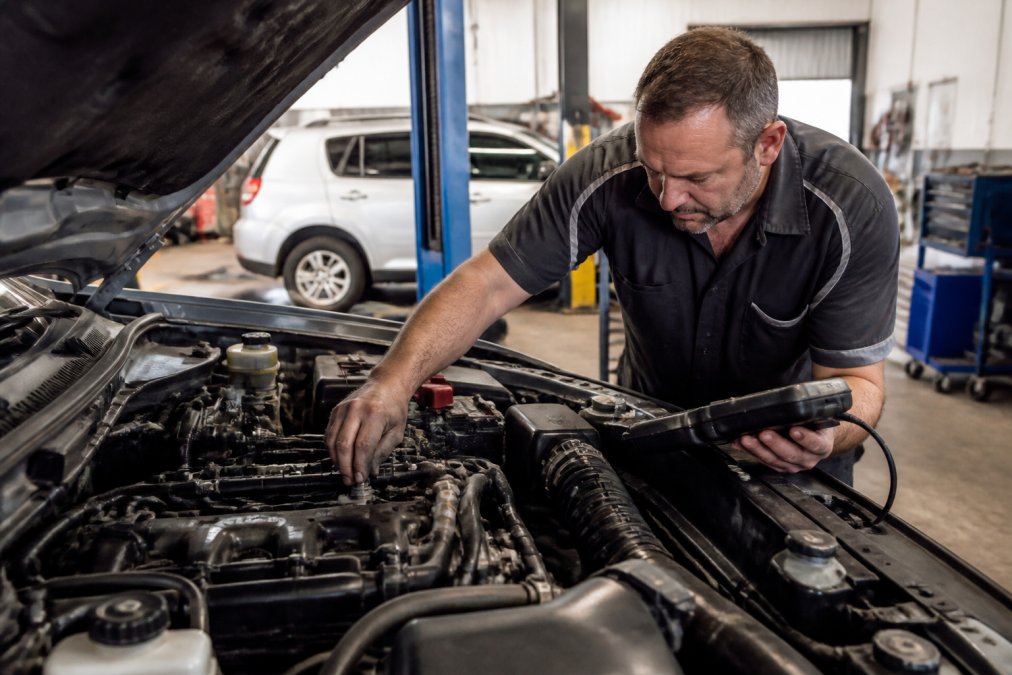
During a typical service, a technician replaces the engine oil and oil filter, checks and tops up all fluid levels, inspects the brake system, rotates the tyres, tests the battery, examines belts and hoses for cracks, and checks the cooling system. Each step is preventative: catching a worn belt now costs a few dollars, whereas a snapped belt on the highway can destroy the engine.
The 10-Point Safety Check Explained
The 10-point safety check is the backbone of any quality service. It focuses on the components that directly affect your safety and that of other road users. Here is what a certified mechanic looks for:
- Brakes: Pads, rotors, and fluid levels
- Tyres: Tread depth, pressure, and uneven wear
- Suspension: Shocks, struts, and bushings for wear
- Steering: Play in the wheel and condition of linkages
- Lights: Headlights, brake lights, and indicators
- Wipers and Washers: Blade condition and fluid
- Fluids: Engine oil, coolant, brake, and transmission fluid
- Belts and Hoses: Cracks, fraying, or leaks
- Battery: Charge level and terminal condition
- Exhaust: Leaks and unusual emissions
A common mistake is assuming these checks are only necessary when a problem is noticeable. In practice, brake pads wear gradually; you may not notice reduced stopping power until it is dangerously late. Regular inspections are designed to catch this gradual decline early.
What the Checks Mean for Your Wallet
Understanding the why behind each check helps you prioritise maintenance and avoid being oversold:
- Engine oil and filter: Oil lubricates moving parts and carries heat away. Over time, it degrades and collects contaminants that act as abrasive sludge. The filter catches particles, but once saturated, they circulate and score bearing surfaces. Skipping an oil change by 5,000 km can reduce engine life significantly, especially in Mildura’s summer heat, which thins the oil faster.
- Brake fluid: Brake fluid is hygroscopic, it absorbs moisture from the air (nhtsa.gov). Over two years, that moisture lowers the fluid’s boiling point. Under hard braking, the fluid boils, creating vapour bubbles that compress instead of transferring pressure, resulting in a soft pedal and reduced stopping power. A simple fluid test measures moisture content and tells you if a flush is needed.
- Coolant: The cooling system runs at about 95°C normally, but in a Mildura summer under load it can spike higher. Coolant lowers the freezing point and raises the boiling point. If the mixture is wrong, the engine can overheat and warp the cylinder head, a repair that often costs more than the car’s value.
- Tyres: Heat increases tyre pressure, and under-inflated tyres flex more, generating more heat, which can lead to a blowout at highway speeds. A monthly pressure check and a tread depth check with a 20-cent coin (insert it into the tread; if the coat of arms is not covered, the tread is below 1.5 mm and the tyre is illegal in Australia) prevents this (gov.au).
- Battery: Heat accelerates the chemical reaction inside a battery, which is why batteries fail more often in summer. A load test measures the battery’s ability to hold a charge under cranking conditions. Most batteries last 3-5 years; testing after year three is cheap insurance.
The Difference Between a ‘Service’ and a ‘Safety Check’
Not all workshops use these terms consistently. A safety check is a visual and functional inspection, it does not include replacing parts or fluids unless you approve the work. A service typically includes the safety check plus the scheduled replacements due at that kilometre interval.
When you book, ask explicitly: “Does this price include the oil and filter change, or is that extra?” This question alone can save you from a surprise bill.
Why a Standard Service Is Not a ‘One-Size-Fits-All’
Your vehicle’s service needs change with age and usage. A car that does short trips in town never gets the engine hot enough to evaporate condensation from the oil, leading to sludge build-up. A car that tows or carries heavy loads on unsealed roads puts far more stress on brakes, suspension, and transmission fluid. A good mechanic will ask about your driving habits and adjust the service schedule accordingly.
A routine service is not a box-ticking exercise. It is a set of targeted inspections and replacements designed around how your car is actually driven. Knowing what each check does helps you ask better questions, understand the invoice, and avoid both neglect and unnecessary upsells.
The 10-Point Safety Check Explained
The 10-point safety check is the backbone of any quality service. It focuses on the components that directly affect your safety and that of other road users. Here is what a certified mechanic looks for:
- Brakes: Pads, rotors, and fluid levels
- Tyres: Tread depth, pressure, and uneven wear
- Suspension: Shocks, struts, and bushings for wear
- Steering: Play in the wheel and condition of linkages
- Lights: Headlights, brake lights, and indicators
- Wipers and Washers: Blade condition and fluid
- Fluids: Engine oil, coolant, brake, and transmission fluid
- Belts and Hoses: Cracks, fraying, or leaks
- Battery: Charge level and terminal condition
- Exhaust: Leaks and unusual emissions
A common mistake is assuming these checks are only necessary when a problem is noticeable. In practice, brake pads wear gradually; you may not notice reduced stopping power until it is dangerously late. Regular inspections are designed to catch this gradual decline early.
Logbook Service Mildura: Keeping Your Warranty Valid
If your vehicle is relatively new, a logbook service is a condition of your manufacturer’s warranty. Skipping a scheduled service, or having it performed by someone not qualified to stamp the logbook, can void your coverage.
A logbook service follows the manufacturer’s specific schedule for your make and model. The technician performs exactly the checks and replacements required at that interval, then stamps the book as proof of compliance. This documentation is essential when you sell the car, as it demonstrates a full service history and boosts resale value.
For drivers searching for a logbook service in Mildura, the key is finding a workshop that understands manufacturer requirements and uses quality parts. Your logbook service must be performed correctly the first time, because if the paperwork is wrong, the warranty claim is denied.
Skipping a logbook service to save money is a false economy. If your engine fails and the manufacturer checks the service history, a missing stamp can void a warranty claim worth thousands of dollars. The cost of the service is always less than the cost of a major repair.
The Benefits of a Local Auto Repair Shop Over Dealerships
Many drivers default to the dealership for servicing because they assume it is the only safe option. That assumption often costs them more for the same quality of work.
Local workshops typically offer lower hourly rates than dealerships and do not push the same upsell quotas. A local mechanic relies on repeat business and word-of-mouth, so their incentive is to fix the problem correctly the first time, not to pad the bill.
For agricultural business owners and farmers in the Mallee region, a local shop that understands the demands of heavy machinery is essential. A generalist workshop that services tractors, trucks, and farm equipment understands the cost of downtime during harvest, and a local mechanic who can diagnose and repair quickly minimises that disruption.
Your Car Maintenance Checklist Australia Drivers Should Follow
Australia’s varied climate, from the heat of the Mallee to coastal humidity, places unique stress on vehicles. The following guide is tailored to these conditions.
Checklist for Vehicles Under 5 Years Old
Newer vehicles are still under warranty, so the priority is maintaining that coverage and preventing premature wear.
- Follow the logbook service schedule exactly, including time intervals, not just kilometre intervals
- Check tyre pressure monthly, as heat causes pressure to rise and fall significantly
- Replace wiper blades every 6-12 months; the Australian sun degrades rubber quickly
- Test the battery before summer; heat is the leading killer of car batteries
- Check coolant levels before long trips, especially in the hotter months
Checklist for Vehicles Over 5 Years Old
Older vehicles require more vigilance. Components wear out, and the cost of neglect rises sharply.
- Have the brake system inspected every 10,000 km, as pads and rotors wear faster with age
- Check suspension and steering components for play, which affects tyre wear and handling
- Inspect belts and hoses for cracks every service; a failed timing belt can destroy the engine
- Flush and replace the cooling system fluid every 2 years to prevent corrosion
- Have the transmission serviced according to the manufacturer’s interval, not “when it fails”
| Vehicle Age | Priority Focus | Service Interval | Key Risk |
|---|---|---|---|
| Under 5 years | Warranty compliance | Logbook schedule | Voiding warranty |
| 5-10 years | Preventative parts replacement | Every 10,000 km | Breakdowns |
| Over 10 years | Full system inspection | Every 6 months | Major component failure |
Signs Your Car Needs Immediate Attention
Some problems cannot wait for the next scheduled service. Ignoring these warning signs can turn a minor repair into a dangerous situation.
The most obvious signal is the check engine light. Many drivers assume it is a minor issue and keep driving. In modern vehicles, this light can indicate anything from a loose fuel cap to a failing catalytic converter. The only way to know is to have the engine diagnostics run with professional equipment.
Other signs include grinding or squealing from the brakes, indicating worn pads; a pulling sensation when braking or a soft brake pedal, pointing to a hydraulic problem; vibration through the steering wheel at speed, suggesting a suspension or tyre issue; and any fluid leak under the car.
If your check engine light comes on, note whether it is flashing or steady. A flashing light indicates a severe misfire that can damage the catalytic converter. Pull over and call for assistance. A steady light is less urgent but should still be diagnosed within a few days.
DIY vs. Professional Service: A Cost-Benefit Look
There is a growing trend of drivers attempting their own maintenance, driven by YouTube tutorials and the rising cost of living. For some tasks, this is perfectly reasonable. For others, it is a costly mistake. The key is knowing which tasks are genuinely DIY-friendly.
The Real Cost of DIY: More Than Just Parts
DIY maintenance makes sense for basic tasks: checking and topping up fluids, replacing wiper blades, and checking tyre pressure. These require no special tools and carry low risk. The line is drawn at tasks that affect safety or require specialised knowledge.
Let’s break down the actual cost of a common DIY job, replacing front brake pads on a typical Australian sedan (e.g., a Toyota Corolla or Mazda 3):
| Item | DIY Cost (approx.) | Professional Service Cost (approx.) |
|---|---|---|
| Brake pad set (quality brand) | $80-$150 | Included in service price |
| Brake cleaner, grease, anti-seize | $20-$40 | Included |
| Torque wrench (if you don’t own one) | $50-$150 | Not needed |
| Jack and axle stands (if you don’t own them) | $100-$200 | Not needed |
| Your time (4-6 hours for a first-timer) | Priceless | 1-2 hours workshop time |
| Total out-of-pocket | $250-$540 | $250-$400 |
Note: These are indicative ranges based on typical Australian parts pricing in 2026. Actual costs vary by vehicle model and workshop.
The professional service price includes parts, labour, and the workshop’s overheads. When you add up the tools you need to buy and your own time, the financial saving of DIY can be negligible, and the risk is not.
The Hidden Risks of DIY Safety-Critical Work
Brake work, suspension repairs, and engine diagnostics are not DIY projects. They require lifting equipment, torque specifications, and diagnostic tools that cost thousands of dollars. A mistake in any of these areas can lead to brake failure or an unsafe vehicle. The Australian Government’s vehicle safety standards exist to ensure all road users are protected, and a poorly executed DIY repair puts everyone at risk.
Consider what happens when a DIY brake job goes wrong:
- Incorrect torque on caliper bolts: Over-tightening can stretch and snap the bolt; under-tightening can let the caliper come loose and jam the wheel. Both can cause a loss of braking at speed.
- Air in the brake lines: If you do not bleed the system properly, air remains trapped. The brake pedal will feel spongy, and stopping distance increases dramatically.
- Wrong pad compound: Not all brake pads are the same. Using a cheap, incorrect compound can lead to brake fade on a long descent (e.g., coming down from the hills around the Mallee) or excessive dust and noise.
A professional mechanic has the training to torque every bolt to the manufacturer’s specification, uses a pressure bleeder to ensure no air is in the system, and knows which pad compound suits your driving conditions.
The ‘Time Tax’ of DIY
Beyond safety, there is the issue of time. A professional service takes a few hours. A DIY brake pad replacement can take a full weekend for an amateur, plus the cost of buying or renting tools. When you factor in your time and the risk of doing it wrong, the cost-benefit analysis rarely favours DIY for anything beyond the basics.
Consider the opportunity cost: if you spend Saturday morning under the car and it takes twice as long as expected, you have lost a day of your weekend. If you are a farmer in the Mallee during harvest, that day is worth far more than the $100 you might save on labour.
A Practical Decision Framework
Use this simple test to decide whether a task is DIY-appropriate:
- Does it require lifting the vehicle? If yes, you need proper jack stands and the knowledge to use them safely.
- Does it involve the brake or steering system? If yes, leave it to a professional. The consequences of failure are too severe.
- Does it require a diagnostic tool? A $20 OBD-II scanner will read codes, but it will not give you the live data or manufacturer-specific interpretations a $5,000 professional scanner provides.
- Is the part under warranty? If your car is under 5 years old, DIY work on certain components can void your warranty if it is not done to manufacturer specification.
If the answer to any of the first three questions is ‘yes’, or the fourth is ‘uncertain’, book a professional.
What You Can Safely DIY
There is a genuine list of tasks that are safe, simple, and save you money:
- Checking and topping up fluids (engine oil, coolant, washer fluid), 5 minutes, no tools needed.
- Replacing wiper blades, a $20-$40 job that takes 2 minutes.
- Checking tyre pressure and tread depth, free at any service station.
- Replacing cabin air filters, usually accessible behind the glovebox; a $30 part vs. $80+ at a workshop.
- Replacing exterior light bulbs, check your owner’s manual; some are simple, others require bumper removal (if it is complex, stop and book it in).
These tasks build familiarity with your vehicle and help you notice developing issues early, which is exactly what routine maintenance is about.
The line between a ‘simple’ DIY job and a safety-critical repair is thinner than it appears. If you are ever unsure about a task, stop. A professional inspection costs $50-$100. A hospital visit costs far more.
The Bottom Line
DIY maintenance is not about saving money on every job, it is about knowing which jobs are worth your time. For basic checks and consumables, DIY is a sensible way to stay engaged with your vehicle’s health. For anything involving brakes, suspension, steering, or engine management, the cost of a professional service is insurance against a far more expensive failure.
Book Your Routine Car Maintenance in Mildura Today
Finding reliable routine car maintenance near me in Mildura does not have to be a gamble. The difference comes down to the workshop you choose.
A quality local shop should offer transparent pricing with no hidden charges, use modern diagnostic tools to identify issues accurately, and stand behind their work. For pensioners, discounts on services can make a meaningful difference. For farmers, a mechanic who understands the urgency of harvest season and can get equipment back in the field quickly is invaluable.
Keeping your vehicle reliable is not about luck, it is about a consistent maintenance schedule. The team at Mallee Auto & Agricultural Services combines skilled mechanics with expertise across all vehicle types, from passenger cars to heavy farm machinery. We use modern diagnostic tools for accurate issue detection, offer fair pricing with pensioner discounts, and guarantee your complete satisfaction on every service. Get started with Mallee Auto & Agricultural Services and keep your car running smoothly, safely, and efficiently all year round. Book Now.
Frequently Asked Questions
How often should I get my car serviced in Mildura?
Most manufacturers recommend a routine car maintenance service every 12 months or 15,000 kilometres, whichever comes first. However, this can vary based on your vehicle’s age, model, and driving conditions. For example, if you frequently drive on unsealed roads or in extreme heat, more frequent servicing may be necessary. Check your owner’s manual for the specific service interval for your car.
What is included in a standard logbook service in Australia?
A standard logbook service in Australia follows the manufacturer’s schedule for your specific vehicle model. It typically includes an oil change, oil filter replacement, and a multi-point safety inspection. This inspection covers the brake system, suspension, tyres, lights, and fluid levels. The service is stamped in your logbook, which helps maintain your car’s resale value and keeps your new car warranty valid.
Why is it important to choose a local mechanic for routine maintenance?
Choosing a local mechanic for routine car maintenance offers several benefits. A local shop often provides more personalised service and transparent pricing than a large dealership. You are also supporting the local economy of Mildura. Local mechanics rely on their reputation within the community, so they have a strong incentive to provide honest, high-quality work to ensure you return for future services.
What are the signs that my car needs immediate maintenance?
Several warning signs indicate your car needs immediate attention. Common signs include the check engine light illuminating on your dashboard, unusual noises like grinding or squealing from the brakes, vibrating steering wheel, or visible fluid leaks under the car. A decrease in fuel efficiency or a rough idle can also signal a problem. If you notice any of these, book a diagnostic service right away to prevent more costly damage.
