
Table of Contents
- How Long Does a Car Diagnostic Take
- What Does a Car Diagnostic Test Include
- How Long Does a Full Car Diagnostic Take
- Intermittent Car Electrical Fault Diagnosis
- How to Prepare for a Car Diagnostic Appointment
- Diagnostic Time by Fault Type
- What Happens When Diagnosis Takes Longer Than Expected
- Frequently Asked Questions
Last Updated: October 10, 2026
How Long Does a Car Diagnostic Take
A car diagnostic typically takes 30 minutes to two hours, depending on fault type, vehicle complexity, and whether intermittent problems are present.
Standard diagnostic scans complete in 30 to 60 minutes. A technician connects a scan tool to your car’s on-board computer, retrieves fault codes, and reviews the data. Multiple warning lights or complex electrical issues can extend diagnosis to several hours.
Standard diagnostic scan time
A basic diagnostic scan takes 30 to 60 minutes. The technician connects the scan tool to your vehicle’s engine control unit (ECU), retrieves stored diagnostic trouble codes, and reads live data from sensors and systems. For simple faults like a faulty oxygen sensor or loose fuel cap, the scan identifies the problem immediately.
Bring your vehicle’s service history with you. It helps the technician understand previous repairs and patterns, which can speed up diagnosis.
Factors that extend diagnostic time
Intermittent faults extend diagnosis time because they don’t always show on the initial scan; road testing may be needed to capture the fault. Complex electrical issues require systematic testing of multiple components across hundreds of sensors and kilometres of wiring. Older vehicles and modern luxury or performance vehicles with sophisticated computer systems also demand more investigation.
What Does a Car Diagnostic Test Include
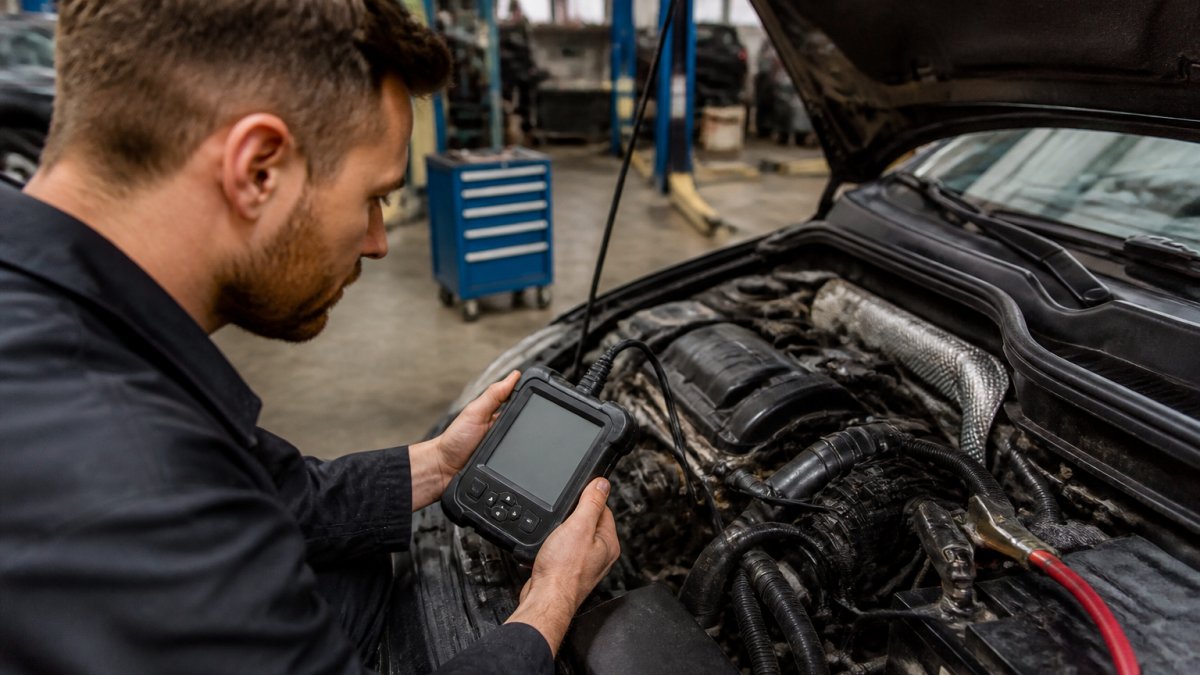
A complete car diagnostic test involves symptom discussion, visual inspection, diagnostic equipment connection, and live data review.
Initial assessment and visual inspection
The technician asks when the problem started and whether it happens consistently or intermittently. A visual inspection checks battery terminals, hoses, belts, fluid levels, and obvious damage, many issues are visible without a scan tool.
Scan tool and trouble code reading
The diagnostic scan tool connects through the OBD-II port to retrieve stored trouble codes. The technician interprets codes in context, an oxygen sensor code might indicate a bad sensor, vacuum leak, or fuel system issue.
Component testing and live data review
Live data shows real-time engine performance, transmission behaviour, and electrical system information, helping confirm whether a component is failing. Further testing may include battery voltage checks, alternator output testing, or individual sensor testing using specialised equipment.
Modern vehicles generate hundreds of data points per second. A skilled technician knows which ones matter for your specific symptoms.
How Long Does a Full Car Diagnostic Take
A full car diagnostic includes thorough component testing and typically takes one to three hours, depending on fault complexity and road testing needs.
Basic scans versus in-depth diagnosis
A basic scan reads trouble codes in 30 to 60 minutes. In-depth diagnosis tests individual components, checks electrical circuits, and verifies sensor operation, necessary when a basic scan doesn’t explain symptoms, especially for intermittent faults or multiple warning lights.
Intermittent faults and follow-up testing
Intermittent faults disappear before capture, making diagnosis challenging. Road testing while monitoring live data helps catch the fault when it occurs. Some intermittent faults require multiple visits or extended monitoring.
If your car has been intermittently misbehaving, tell your technician the exact conditions when it happens. Does it occur when the engine is cold? After driving for 20 minutes? In certain weather? These details help the technician reproduce the fault.
Intermittent Car Electrical Fault Diagnosis
Intermittent electrical faults are among the most time-consuming diagnostics, sometimes taking several hours to locate because the vehicle may run perfectly during the appointment then fail again at home.
Why intermittent faults take longer
Intermittent faults may not trigger codes, the computer detects them for only a split second. Temperature changes, moisture, vibration, and engine load influence these faults; a corroded connector might work when cold but fail after warm-up, or a loose wire might lose connection on bumpy terrain.
Road testing and sensor monitoring
Road testing is essential for intermittent fault diagnosis. The technician drives while monitoring live sensor data to recreate triggering conditions. This can take 30 minutes to two hours depending on how easily the fault reproduces; some require specific driving patterns or weather conditions and may need a follow-up visit.
How to Prepare for a Car Diagnostic Appointment
Preparing for your diagnostic appointment reduces delays. Understanding the difference between diagnostic test time and total workshop time helps set realistic expectations.
Test Time Versus Workshop Turnaround Time
A diagnostic scan or component test may take 30 minutes to two hours. However, the total time your vehicle is at the workshop can be significantly longer. Here’s why:
- Appointment availability: If the workshop is busy, your vehicle may wait in the queue before the technician begins diagnosis. Booking ahead (especially during harvest season or school holidays) can reduce wait time.
- Initial assessment and visual inspection: Before connecting diagnostic equipment, the technician performs a visual inspection and discusses symptoms with you. This adds 15-30 minutes.
- Diagnostic testing: The actual scan and component testing takes the timeframe listed in the fault-type table above.
- Findings discussion and approval: Once diagnosis is complete, the technician explains the fault and discusses repair options. This conversation can take 15-30 minutes, especially if multiple repair paths exist.
- Authorisation and parts availability: If you approve repairs, the workshop must order parts (if not in stock) and schedule repair time. Parts availability in regional areas can add one to three business days.
- Repair execution: If you proceed with repairs the same day, labour time is separate from diagnostic time.
Example: A check engine light diagnostic test takes 45 minutes. But if the workshop is fully booked, you drop your vehicle at 9:00 am, the technician begins at 10:30 am, diagnosis completes at 11:15 am, and the technician spends 20 minutes explaining findings. You collect your vehicle at 11:35 am, a two-and-a-half-hour total elapsed time for a 45-minute test.
Understanding this distinction helps you plan your day and set realistic expectations when you call to book.
Pre-Appointment Information Checklist
Before arrival, prepare:
Symptom Details: When the problem started, how often it occurs, what warning lights appear, and what the vehicle does (hesitation, rough idle, loss of power, noise, vibration).
Driving Conditions: Whether it occurs with cold or warm engine, during acceleration/cruising/braking/idling, on smooth or rough roads, in specific weather, after towing, or at certain speeds. These details narrow diagnostic focus and can save 30-60 minutes.
Vehicle History: Recent repairs, accidents, modifications, service history, age, mileage, and regular servicing. Vehicles with towing or heavy-use history may show patterns the technician should know upfront.
Safe-to-Drive Assessment
- Is the vehicle safe to drive to the workshop, or should it be towed?
- Are there any safety concerns (brake fade, steering issues, electrical hazards)?
- If you are unsure, ask the workshop whether to tow or drive.
Questions to Ask About Diagnostic Fees and Authorisation
Before dropping off your vehicle, clarify the following with the workshop:
Diagnostic Fee Structure: Confirm the cost of initial diagnostic (typically $80-$150), whether it covers basic scan only or includes component and road testing, how additional time is charged if diagnosis extends, and whether the fee credits toward repairs.
Authorisation and Additional Testing: Ask what additional testing might be needed if the initial scan doesn’t identify the fault and its cost, whether the technician will call before proceeding beyond initial diagnostic, and the process and cost for specialist equipment or dealership referral.
Turnaround and Communication: Confirm whether diagnostic completes same-day, how you’ll be notified of findings, the communication plan if vehicle isn’t ready as promised, and repair timeline if approved.
Parts and Repair Costs: Ask whether parts are in stock or must be ordered, the estimated repair cost range, and warranty coverage on parts.
Do not leave your vehicle without a clear understanding of diagnostic costs and what happens next. A reputable workshop will provide a written quote or estimate before proceeding with repairs. If you are uncomfortable with the proposed cost or approach, you have the right to collect your vehicle and seek a second opinion.
If you are a regular customer or have multiple vehicles, ask whether the workshop offers diagnostic discounts or loyalty programs. Some workshops credit diagnostic fees toward annual service packages.
Diagnostic Time by Fault Type
Different faults require different diagnostic timeframes, and understanding what extends time within each category helps you set realistic expectations.
Check Engine Light (Single Code): 30-60 minutes
Straightforward fault codes like a faulty oxygen sensor or loose fuel cap usually resolve quickly with scan, visual inspection, and live data confirmation.
Multiple Warning Lights: 60-90 minutes
The technician must determine whether warnings stem from a single root cause or multiple faults.
Intermittent Electrical Fault: 90-180 minutes or multiple visits
Intermittent faults are most time-intensive because the problem may not appear during initial scan.
Transmission Issue: 60-120 minutes
Transmission faults range from simple (faulty speed sensor) to complex (internal wear or solenoid failure).
Battery or Charging Problem: 30-60 minutes
Battery and alternator faults are usually quick to diagnose.
Brake System Fault: 45-90 minutes
Brake warning lights can indicate simple issues (low fluid, worn pads) or complex ones (ABS sensor malfunction, hydraulic pressure loss).
Before your appointment, note the exact conditions when the fault occurs. Does it happen when the engine is cold, after 20 minutes of driving, during acceleration, or in specific weather? This information can cut diagnostic time by 20-30 minutes because the technician can focus testing on the most likely cause.
The time ranges above reflect scan and component testing only. Total time at the workshop also includes waiting for availability, visual inspection, discussion of findings, and approval for further work. See the section below on distinguishing test time from workshop turnaround for a complete picture.
What Happens When Diagnosis Takes Longer Than Expected
Complex faults, multiple issues, or intermittent problems can extend diagnosis beyond initial estimates. If the initial scan doesn’t reveal the problem, component-level testing systematically eliminates possibilities. A good technician calls to explain findings and additional testing needs before proceeding. Some faults require specialist equipment or dealership referral, this is honest service, as some vehicles need manufacturer-specific tools.
Frequently Asked Questions
How long does a full diagnostic take on a car?
A full car diagnostic typically takes 30 minutes to 2 hours, depending on the complexity of the fault and whether intermittent issues are present. A basic diagnostic scan that reads trouble codes takes around 30 to 45 minutes. If the technician needs to perform component testing, live data review, or road testing to confirm a fault, the full diagnostic can extend to 90 minutes or more. The initial assessment and visual inspection add time at the start.
What does a car diagnostic test include?
A car diagnostic test includes an initial visual inspection of the engine and related systems, connection of a scan tool to read diagnostic trouble codes from your vehicle’s on-board computer, review of live sensor data, and component testing as needed. The technician may also perform a road test to reproduce symptoms or confirm faults. The exact scope depends on the symptoms you report and what the initial scan reveals.
Does an intermittent electrical fault take longer to diagnose?
Yes, intermittent car electrical faults take significantly longer to diagnose because the fault doesn’t occur consistently. A technician must monitor live data and perform extended road testing to catch the fault as it happens. This can add 1 to 3 hours or more to the diagnostic process. Intermittent faults in wiring, sensors, or the engine control unit require patience and specialized equipment to track down the root cause.
How should I prepare for a car diagnostic appointment?
Before your appointment, note when symptoms occur (at startup, while driving, at certain speeds), any warning lights displayed, and recent changes in vehicle performance. Provide this information to the technician. Ask about diagnostic fees upfront and whether the fee includes a written report. Clarify the difference between test time and total workshop turnaround time. Have your vehicle’s service history available, as this helps the technician understand the vehicle’s maintenance background.
Knowing how long a car diagnostic takes helps you plan your visit and budget accordingly. At Mallee Auto & Agricultural Services in Mildura, we use modern diagnostic tools to identify vehicle issues accurately and efficiently. Our skilled mechanics provide transparent communication about timing and costs, so you understand exactly what’s happening with your car. Book a diagnostic appointment with us today and get answers about your vehicle’s performance.
