
Last Updated: October 23, 2026
Quick Summary
When to replace brake rotors in Australia depends on rotor thickness measurement and warning signs like grinding noises, pulsing pedals, or visible scoring. Replace rotors once they reach minimum thickness specified in your vehicle’s manual, typically around 10 to 15 millimetres for new rotors, measured by a professional mechanic using a micrometer or calliper.
- Grinding or scraping noises indicate metal-to-metal contact and require immediate replacement
- Professional measurement with a micrometer is essential, visual inspection alone cannot confirm if rotors are below minimum safe thickness
- Worn rotors accelerate pad wear and increase stopping distances, especially dangerous on regional Victorian roads
- Driving conditions like towing, rough roads and stop-start traffic shorten rotor lifespan significantly
- Replace both rotors on an axle together if one is significantly thinner than its pair to prevent uneven braking
Table of Contents
- When to Replace Brake Rotors: Key Indicators
- Signs Brake Rotors Need Replacing
- Brake Rotor Minimum Thickness and Measurement
- Brake Pads and Rotors Replacement: Do They Go Together?
- How Driving Conditions Affect Rotor Lifespan
- Brake Rotor Replacement Cost in Australia
- What to Do If Your Rotors Need Replacing
- Frequently Asked Questions
When to Replace Brake Rotors: Key Indicators
Knowing when to replace brake rotors in Australia saves money and keeps your vehicle safe. At Mallee Auto & Agricultural Services, we help Mildura and Victorian drivers understand their brake systems.
Brake rotors are metal discs your pads squeeze against to create friction. Each brake application wears away a thin layer, and rotors eventually become too thin to work safely. Driving on worn rotors strains the braking system and increases stopping distances.
Signs Brake Rotors Need Replacing
Your vehicle sends several signals when brake rotors are wearing out. Recognising them helps you catch problems early.
Visual and Physical Warning Signs
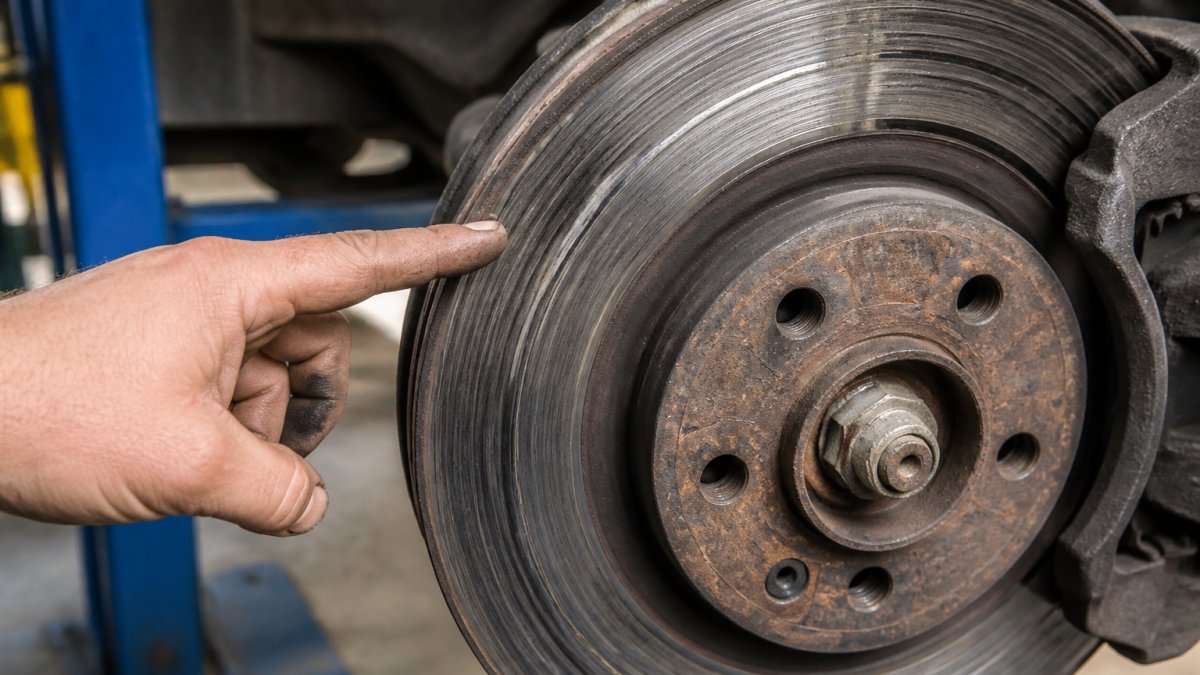
The easiest way to check rotors is to look at them directly, remove the wheel and inspect.
Look for visible damage on the rotor surface:
- Scoring or grooves running across the face of the rotor
- A glazed, shiny appearance instead of a normal matte finish
- Rust or discolouration, especially if it’s thick and uneven
- Cracks or chunks missing from the rotor edge
- Visible thickness loss compared to the opposite rotor
If unsure what you’re looking at, bring the vehicle to a mechanic. At Mallee Auto & Agricultural Services, we use modern diagnostic tools to assess condition accurately.
Touch tests have limits, rotors can feel smooth yet be dangerously thin. Visual inspection alone isn’t enough to decide when to replace brake rotors in Australia.
Sounds and Brake Performance Changes
Listen for these brake sounds:
- A high-pitched squealing or squeaking when braking
- Grinding or scraping noises, like metal on metal
- A pulsing or grinding feel through the brake pedal
- Reduced braking power or a softer brake pedal
- The brake warning light on your dashboard
Squealing often means pads are worn and metal-to-metal contact is starting. Grinding is more serious, pads have worn through and rotors are taking direct friction damage.
A pulsing pedal indicates rotor warping or uneven wear, often mistaken for ABS activation.
Longer stopping distances or harder pedal pressure likely mean brake wear and demand immediate inspection.
Brake Rotor Minimum Thickness and Measurement
Every rotor is cast with a minimum safe thickness, often stamped on the hub or listed in the workshop manual. Once it reaches that limit, replacement is mandatory, machining below minimum removes the heat capacity needed to dissipate braking energy safely.
Typical new rotor thickness is around 10 to 15 millimetres for many passenger vehicles, but the minimum is vehicle-specific. Do not assume a universal figure.
What a professional measurement involves
A mechanic uses a calibrated micrometer or vernier calliper at several points around the rotor face, because rotors rarely wear evenly, a single reading can miss a low spot from a sticking calliper, warped hub or uneven pad contact. Most workshops also check:
- Rotor thickness at multiple points around the circumference and across the face
- Lateral runout (side-to-side movement) with a dial gauge
- Surface condition for scoring, heat cracks, glazing and rust pitting
- Pad thickness and wear pattern on both inner and outer pads
- Calliper slide operation and brake fluid condition
Uneven wear between inner and outer pads, or left and right rotors, often points to a seized calliper slide, collapsed hose or suspension issue. Replacing rotors without fixing the cause leads to repeat wear.
Practical at-home checks and their limits
Safe checks you can do yourself:
- Look through the wheel spokes with a torch for deep grooves, blue heat discolouration, heavy rust flakes or cracks at the rotor edge
- Run a fingertip lightly across the rotor face (with the vehicle cold and parked) to feel for pronounced ridges, but do not rely on feel alone
- Note any pulsing through the pedal, which suggests uneven thickness or runout
- Check tyre wear patterns for cupping or uneven wear that may indicate suspension or alignment problems affecting braking
What a home check cannot tell you:
- Whether the rotor is below minimum thickness, only a micrometer or calliper can confirm that
- Whether runout is within specification
- Whether a heat crack is superficial or structural
- Whether a calliper is sticking and causing the wear
A visual glance is not a diagnosis. If you notice warning signs, book a professional measurement rather than waiting for the next service.
Do not machine (resurface) a rotor that is at or near minimum thickness. Machining removes metal, and a rotor machined below specification is a safety hazard regardless of how well it performs in the short term.
If one rotor on an axle is significantly thinner than its pair, replace both. Mismatched rotors create uneven side-to-side braking force, especially in wet conditions or under heavy braking, common on regional Victorian roads.
Brake Pads and Rotors Replacement: Do They Go Together?
Should you always replace brake pads and rotors together? No, pads and rotors wear at different rates depending on driving conditions, vehicle weight and maintenance history.
Replace pads and rotors together when:
- Both have reached their wear limits at the same time
- You’re replacing rotors due to damage or warping
- Pads are worn to less than 2 millimetres thickness
- You want to avoid a second brake service within 12 months
Replace only pads if:
- Rotors still measure above minimum thickness
- Rotors show no visible damage, scoring, or warping
- Brake performance is normal with no pulsing or grinding
Replacing only pads when rotors still have life saves money. However, if you’re already having rotors machined or replaced, new pads make sense. Worn pads accelerate rotor wear, so pairing them extends rotor life.
Many workshops recommend replacing both for convenience and warranty coverage. This isn’t always necessary, but it simplifies future maintenance.
How Driving Conditions Affect Rotor Lifespan
Where and how you drive dramatically changes how long rotors last. Mildura and regional Victoria driving presents specific challenges.
Factors that shorten rotor lifespan:
- Frequent stop-start driving in traffic
- Towing heavy loads or carrying extra weight
- Driving on rough or corrugated roads
- Harsh braking or aggressive driving
- Wet conditions that increase rust and corrosion
- Dusty environments that accelerate wear
Mildura’s rural roads and agricultural use create demanding conditions.
Driving style matters, gentle, predictable braking extends rotor life, while hard braking generates heat and friction that wears rotors faster.
Vehicle type matters, off-road four-wheel-drives wear brakes faster, and heavier vehicles generate more braking force and rotor friction.
Understanding your driving patterns helps predict when to replace brake rotors in Australia.
Brake Rotor Replacement Cost in Australia
Brake rotor replacement cost in Australia varies widely, and any workshop quoting a single figure without inspecting the vehicle is guessing. The final price depends on the vehicle, parts, labour and whether related components need attention.
What drives the price
- Vehicle make and model. Common Australian passenger vehicles and utes typically use widely available rotors, while European imports, performance models and some four-wheel-drives use larger or specialised rotors that cost more.
- Rotor type and quality. Standard vented rotors, slotted or drilled performance rotors and coated rotors sit at different price points. Cheap rotors can wear faster or warp under heat, so the cheapest option is not always the lowest cost over time.
- Labour time. Some vehicles require more disassembly, hub removal, bearing work or calliper replacement, which increases labour. A straightforward front-axle rotor and pad change is usually quicker than a rear setup with integrated parking brake shoes.
- Whether pads are replaced at the same time. Pairing pads with rotors usually adds parts cost but avoids a second labour charge within a short period.
- Related components. Seized callipers, worn brake hoses, damaged wheel bearings or suspension faults may need attention, and these add to the total.
- Regional location. Workshops in regional Victoria may have different labour rates and parts availability compared with metropolitan Melbourne, and freight on specialised parts can affect pricing.
Indicative ranges
As a general guide only, a front-axle brake rotor and pad replacement on a common passenger vehicle in regional Victoria often falls somewhere in the low-to-mid hundreds of dollars per axle in parts and labour, while larger utes, four-wheel-drives and imported vehicles can run higher.
At Mallee Auto & Agricultural Services, we provide transparent pricing with no hidden charges. We discuss costs upfront before beginning work, and explain why each item is recommended. Pensioner discounts are available for eligible Mildura customers.
The cost of delaying replacement
Delaying rotor replacement rarely saves money. Worn rotors accelerate pad wear, increase stopping distances and can damage callipers and other components, what starts as a rotor replacement can become a larger repair if grinding metal damages the calliper or hub. In regional Victoria, with long distances between towns and rough roads, reliable brakes are not optional.
Ask for a written quote that separates parts and labour, and ask whether the price includes new pads, brake fluid inspection and a post-service road test. A clear quote makes it easier to compare options and avoid surprises.
What to Do If Your Rotors Need Replacing
Once you’ve identified that rotors need replacement, here’s the practical process.
Step 1: Get a professional inspection
Don’t rely on visual checks alone.
Step 2: Understand the full scope
Step 3: Schedule the replacement
Brake work shouldn’t wait.
Step 4: Know what to expect during replacement
The mechanic removes wheels, unbolts the calliper and slides off the old rotor.
Step 5: Follow post-service care
New brakes perform best after a short bedding-in period. Avoid hard braking for the first 160 kilometres.
What Happens If You Skip Car Service(page:2) outlines the risks of delaying brake maintenance and other critical repairs.
Driving on rotors below minimum thickness risks brake failure. This is especially dangerous in regional Victoria, where long distances between towns and rough roads demand reliable braking. Do not delay replacement if measurement confirms rotors are too thin.
If you’re on a pension, ask about our pensioner discount when you book. At Mallee Auto & Agricultural Services, we believe quality brake service should be affordable for everyone in the Mildura community. Transparent pricing means no surprises.
When brake rotors need replacing, safe driving depends on making the right decision quickly.
| Warning Sign | What It Means | Action Required |
|---|---|---|
| Grinding or scraping noise | Metal-to-metal contact, rotors damaged | Replace immediately |
| High-pitched squealing | Brake pads worn, friction material gone | Replace pads and inspect rotors |
| Pulsing brake pedal | Rotor warping or uneven wear | Measure thickness, likely replacement needed |
| Reduced braking power | Brake system wear or fluid loss | Professional inspection urgent |
| Visible rotor scoring | Surface damage from friction | Measure thickness to determine replacement |
| Rotor below minimum thickness | Safety hazard, stopping distance compromised | Replace rotors before driving further |
Frequently Asked Questions
How do I know when my brake rotors need replacing?
Common signs include a high-pitched squealing noise, pulsing or vibration through the brake pedal, longer stopping distances, and visible scoring or wear on the rotor surface. If you notice any of these, have a mechanic inspect the rotors and measure their thickness against the manufacturer’s minimum specification. Professional assessment is the most reliable way to determine if replacement is needed.
What is the minimum thickness for brake rotors?
Brake rotor minimum thickness varies by vehicle model and is specified by the manufacturer. Most rotors have a discard thickness marked on the rotor itself. A qualified mechanic with proper measuring tools can check whether your rotors have reached this limit and advise on replacement.
Should brake pads and rotors always be replaced together?
Not always. If your brake pads are worn but rotors are still within safe thickness limits, you can replace just the pads. However, if rotors show significant wear, scoring, or heat damage, replacing both is recommended for optimal braking performance and safety. A professional inspection will determine what actually needs replacement rather than replacing components unnecessarily.
How much does brake rotor replacement cost?
Brake rotor replacement costs vary depending on your vehicle type, rotor quality, and whether pads are also replaced. For accurate pricing tailored to your specific vehicle and circumstances, contact your local mechanic or visit the pricing page. This ensures you receive a transparent estimate before committing to the work.

