
Table of Contents
- Why Engine Diagnostics Matter for Mildura Drivers
- 10 Signs Your Car Needs Immediate Engine Diagnostics
- 1. The Check Engine Light Comes On or Flashes
- 2. Knocking or Pinging Sounds While Idling
- 3. Rough Idling or Frequent Stalling
- 4. A Sudden Drop in Fuel Efficiency
- 5. Excessive Exhaust Smoke or Unusual Odours
- 6. Loss of Power When Accelerating
- 7. Engine Temperature Runs Hot
- 8. Vibrations or Shaking Through the Steering Wheel
- 9. Difficulty Starting the Engine
- 10. A Burning Smell from Under the Bonnet
- Check Engine Light Meaning: What the Colours and Flashes Tell You
- How to Tell If Engine Needs Repair (and When to Stop Driving)
- Engine Diagnostic Cost Mildura: What Affects the Price
- What Happens During a Professional Engine Diagnostic
- Conclusion: Don’t Ignore the Warning Signs
- Frequently Asked Questions
Last Updated: October 2, 2026
Why Engine Diagnostics Matter for Mildura Drivers
Engine diagnostics is the process of using computerised scanning equipment to read fault codes and live data from a vehicle’s onboard computer, pinpointing exactly what has gone wrong before any parts are replaced.
Heat, dust and long distances between towns put extra strain on engines here.
Below, we cover the 10 signs your car needs immediate engine diagnostics, what each one actually means, and when to stop driving altogether.
10 Signs Your Car Needs Immediate Engine Diagnostics
These ten symptoms cover the most common reasons vehicles arrive at our workshop needing urgent attention. Any one of them on its own is worth investigating; two or more together means book in now, not next month.
| Sign | What It Usually Means | Urgency |
|---|---|---|
| Check engine light on or flashing | Sensor fault or misfire | Flashing = stop driving |
| Knocking or pinging | Wrong fuel, timing or wear | Book within days |
| Rough idling or stalling | Air, fuel or ignition fault | Book immediately |
| Sudden fuel drop | Rich running or sensor failure | Book within days |
| Excessive smoke or odours | Oil, coolant or fuel burning | Book immediately |
| Power loss on acceleration | Restricted fuel or exhaust flow | Book immediately |
| Running hot | Cooling system failure | Stop driving |
| Steering wheel vibration | Mounts, misfire or driveline | Book within days |
| Hard starting | Battery, fuel or compression | Book immediately |
| Burning smell under bonnet | Electrical or fluid leak | Stop driving |
1. The Check Engine Light Comes On or Flashes
A steady check engine light means the computer has logged a fault and you should book a scan soon. A flashing light is different: it usually signals an active misfire dumping unburnt fuel into the exhaust, which can destroy a catalytic converter in minutes. Pull over safely and stop the engine.
2. Knocking or Pinging Sounds While Idling
A light pinging under load often traces back to low-octane fuel or carbon build-up. A heavy knocking from deep in the block is more serious and can point to worn bearings or incorrect ignition timing. Ignore it and you risk turning a repair into a replacement engine.
3. Rough Idling or Frequent Stalling
If the tacho needle wanders at the lights or the engine cuts out when you slow down, the cause is usually a vacuum leak, dirty throttle body or failing ignition component. This is one of the easiest faults to diagnose early and one of the most expensive to ignore, because stalling in traffic is a genuine safety risk.
4. A Sudden Drop in Fuel Efficiency
When your usual fuel run to Wentworth suddenly costs noticeably more, the engine is likely running rich. Common culprits include a failed oxygen sensor, leaking injectors or a stuck thermostat keeping the engine cold. A diagnostic scan reads live fuel trim data and shows exactly where the extra fuel is going.
5. Excessive Exhaust Smoke or Unusual Odours
Blue smoke means burning oil. White smoke that lingers points to coolant entering the combustion chamber, often a head gasket issue. Black smoke signals too much fuel. Each colour tells a mechanic something different, and a scan plus a compression test confirms it fast.
6. Loss of Power When Accelerating
A car that feels sluggish climbing the river flats or struggles to overtake is telling you something is restricting airflow, fuel delivery or exhaust flow. A partially blocked catalytic converter or failing turbo can both cause this, and both get worse the longer you drive on them.
7. Engine Temperature Runs Hot
If the temperature gauge climbs above normal, stop and let the engine cool before checking coolant levels. Overheating warps cylinder heads and can seize an engine completely. In Mallee summers, a marginal cooling system fails fast, so treat any temperature spike as urgent.
8. Vibrations or Shaking Through the Steering Wheel
Vibration at idle that smooths out as you accelerate often points to worn engine mounts or a misfiring cylinder. Vibration that worsens with speed is more likely driveline or wheel balance related. Either way, a diagnostic scan separates an engine fault from a suspension one before you spend money on the wrong repair.
9. Difficulty Starting the Engine
An engine that cranks slowly or takes several attempts to fire can have a weak battery, a failing fuel pump or low compression. Cold mornings in Mildura make a marginal battery obvious, but don’t assume that’s always the cause. Testing takes minutes and saves guesswork.
10. A Burning Smell from Under the Bonnet
A burning smell can come from an oil leak dripping onto the exhaust, a slipping belt or overheated wiring. Electrical burning smells are the most dangerous because they can precede a fire. Stop the car, let it cool and have it inspected before driving again.
Check Engine Light Meaning: What the Colours and Flashes Tell You
The check engine light meaning comes down to three states: steady amber, flashing amber, and (on some vehicles) red. A steady amber light means a fault code is stored and the car is safe to drive to a workshop.
Your owner’s manual explains the exact behaviour for your model, and the Australian Design Rules on vehicle lighting and warning systems set the standards manufacturers must follow.
How to Tell If Engine Needs Repair (and When to Stop Driving)
Knowing how to tell if engine needs repair comes down to whether the symptom is steady or worsening. Stop driving immediately if you see a flashing check engine light, the temperature gauge in the red, heavy knocking, or smoke pouring from the bonnet.
For everything else, book a diagnostic scan within a few days rather than weeks. A common mistake is clearing the warning light and hoping it stays off.
Clearing a fault code without fixing the cause is the fastest way to turn a cheap sensor repair into an expensive one. The engine keeps running in the same faulty condition, and the damage compounds every kilometre.
Engine Diagnostic Cost Mildura: What Affects the Price
Engine diagnostic cost Mildura drivers pay depends on three things: how deep the scan needs to go, how long the fault takes to trace, and whether the repair itself is included. A basic code read is quick. An intermittent fault that only appears under load can take considerably longer to reproduce and confirm.
Pricing at Mallee Auto & Agricultural Services is listed on our website with no hidden charges, and pensioners receive a discount. Before you commit, ask for a clear explanation of what the diagnostic fee covers and whether it comes off the repair if you proceed.
Ask whether the scan includes live data analysis or just a code read. A code tells you which circuit failed; live data tells you why. The second option takes longer but usually saves money overall by preventing parts-swapping.
What Happens During a Professional Engine Diagnostic
A professional engine diagnostic starts with a scan tool plugged into the OBD2 port under the dash, reading stored fault codes and live sensor data.
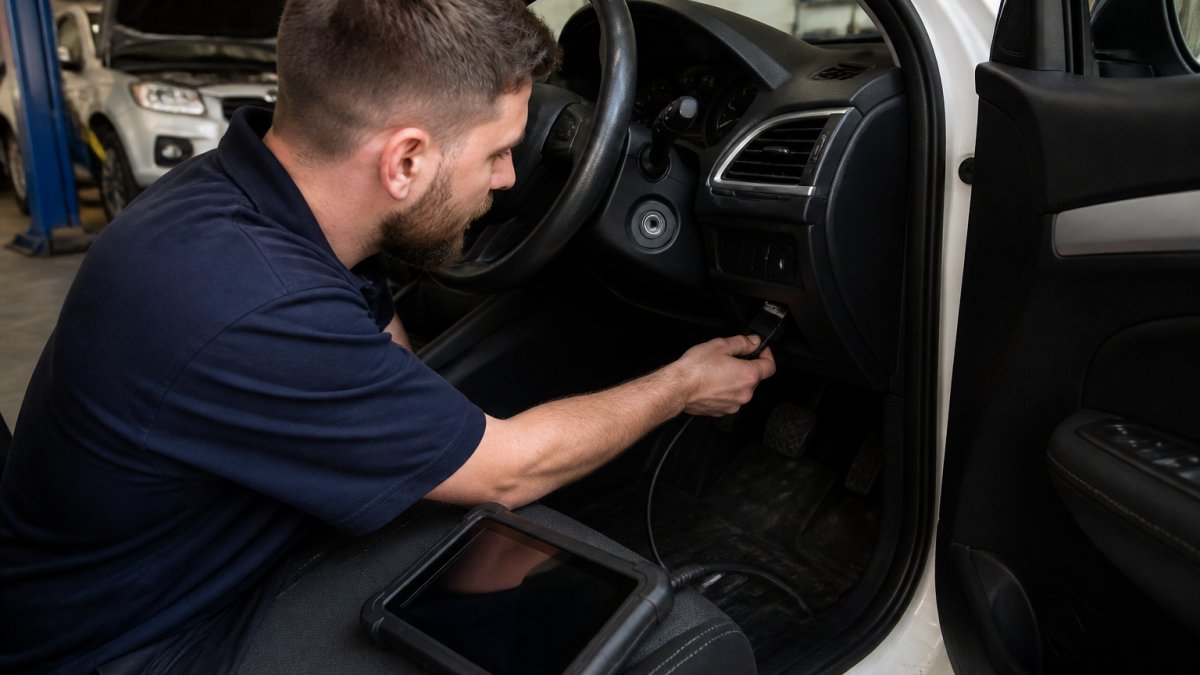
The process typically follows these steps:
- Connect the diagnostic scanner and read all stored and pending codes
- Review live data: fuel trim, oxygen sensor voltage, coolant temperature, ignition timing
- Confirm the fault with targeted tests such as compression, vacuum or circuit checks
- Explain the findings and provide a written quote before any work begins
- Complete the repair, clear codes and road-test to verify the fix
Modern scan tools go well beyond engine codes. For farm machinery and heavy vehicles, the same principle applies: scan first, repair once.
If you are comparing options, a basic DIY scanner such as an OBD2 Bluetooth unit can read codes at home, but it cannot perform the deeper tests a workshop does.
Conclusion: Don’t Ignore the Warning Signs
Every warning sign in this list gets more expensive the longer it’s left. A flashing light ignored for a week can mean a new catalytic converter; a temperature spike ignored for a day can mean a new engine.
Mallee Auto & Agricultural Services provides engine diagnostics for cars, trucks, motorbikes and farm machinery across Mildura and the Mallee, using modern scanning tools for accurate fault detection.
Frequently Asked Questions
How much does an engine diagnostic test cost in Mildura?
The cost depends on the vehicle type, the complexity of the fault, and whether the diagnostic is part of a broader repair. Mallee Auto & Agricultural Services offers transparent pricing with no hidden charges. For current rates, check the pricing page or request a quote. Pensioner discounts are available for eligible locals.
What does an engine diagnostic check actually do?
A diagnostic check uses a scanning tool plugged into your car’s OBD2 port to read fault codes stored by the engine control unit. It can reveal misfires, sensor failures, fuel mixture problems, and more. A professional then interprets those codes alongside live data and a physical inspection to pinpoint the actual fault, not just the symptom.
Can I keep driving if my check engine light is on?
If the light is steady, you can usually drive cautiously to a workshop, but book a diagnostic soon. If it is flashing, stop driving as soon as it is safe and arrange a tow. A flashing check engine light often indicates a serious misfire that can damage the catalytic converter. Ignoring it risks a much larger repair bill.
Why is my car making a knocking sound while idling?
Knocking or pinging while idling can stem from low oil pressure, worn bearings, carbon buildup, or using the wrong fuel octane. It is one of the clearest signs your car needs immediate engine diagnostics. Driving with a knock can turn a manageable repair into a full engine rebuild, so have it inspected without delay.
What are the common causes of engine misfires in Australian vehicles?
Common causes include worn spark plugs, faulty ignition coils, clogged fuel injectors, vacuum leaks, and low compression. In the Mallee region, dust and extreme heat can accelerate wear on ignition components. A misfire triggers the check engine light and often causes rough idling, power loss, and higher fuel use.
