
Table of Contents
- The 10,000 km Rule: What Your Manufacturer Actually Specifies
- Why Short-Distance Driving Requires More Frequent Service
- Understanding Logbook Service Requirements
- Signs Your Car Needs a Service Between Intervals
- Car Service Intervals in Regional Victoria: Local Factors That Matter
- What Happens During a Standard Service and Why Timing Matters
- Consequences of Skipping or Delaying Scheduled Maintenance
- Frequently Asked Questions
Last Updated: September 3, 2026
The 10,000 km Rule: What Your Manufacturer Actually Specifies
Should I service my car every 10,000 km? The answer depends on your vehicle’s manufacturer specifications, driving conditions, and the type of service required. Most modern cars have moved to longer service intervals, often 15,000 km or 20,000 km, but older vehicles and certain driving patterns still demand the traditional 10,000 km schedule. At Mallee Auto & Agricultural Services, many vehicle owners are uncertain about their actual service requirements, leading to either premature servicing or dangerous neglect.
Your vehicle’s logbook is the definitive source. It specifies the exact service intervals your manufacturer recommends, protecting your warranty and keeping your engine running efficiently. The 10,000 km rule isn’t universal anymore, but understanding when it still applies is crucial for making the right maintenance decision.
Check your vehicle’s logbook or owner’s manual first, don’t rely on general advice. Your specific car’s service schedule is the only one that matters for warranty compliance and engine longevity.
Why Short-Distance Driving Requires More Frequent Service
Short-distance driving degrades oil faster than highway driving. Frequent short trips prevent your engine from reaching optimal operating temperature, accelerating oil degradation, moisture accumulation, and engine sludge buildup. A driver making 5 km trips around town might accumulate wear equivalent to 15,000 km of highway driving (peer-reviewed research).
Even for newer vehicles, the 10,000 km rule often still applies. Time-based servicing becomes relevant: if you’re doing mostly short-distance driving, you might need to service your car every three months, regardless of kilometres travelled. In regional Victoria, agricultural workers, local tradespeople, and rural residents often drive short distances between properties or job sites. Your vehicle might clock 8,000 km over eight months, but the engine has endured 50+ cold starts, frequent acceleration, and extended idle periods.
A common mistake is ignoring the time interval on your logbook. If your manufacturer specifies “service every 10,000 km or 6 months, whichever comes first,” the six-month deadline applies even if you’ve only driven 6,000 km. Oil oxidation and moisture contamination follow a calendar, not an odometer.
Understanding Logbook Service Requirements
A logbook service is a manufacturer-approved maintenance schedule documented in your vehicle’s service logbook. Each service is recorded and stamped by an authorised repairer, maintaining your warranty compliance and proving you’ve followed manufacturer specifications. A complete logbook significantly increases resale value and buyer confidence.
Your logbook specifies two types of intervals: distance-based (10,000 km, 15,000 km, etc.) and time-based (every 6 months, 12 months). Whichever comes first is your service deadline. This dual-interval approach exists because engines deteriorate over time, not just kilometres. A car sitting idle for six months still accumulates engine sludge, fluid degradation, and corrosion.
Mallee Auto & Agricultural Services performs logbook services that keep your warranty intact and your maintenance history documented. Each service includes the specific tasks your manufacturer requires at that interval, typically fluid checks, filter replacements, and a safety inspection.
Most vehicle owners underestimate how important the logbook stamp is. An unserviced vehicle or one serviced at a non-authorised workshop may lose warranty coverage for engine and drivetrain issues. Manufacturers can deny claims if your service history doesn’t match their specifications.
Skipping an authorised logbook service can void your warranty. If your engine fails and your logbook shows missed services, the manufacturer can refuse to cover the repair, leaving you with a bill that could exceed the vehicle’s value.
Signs Your Car Needs a Service Between Intervals
Oil colour is one of the most obvious warning signs: fresh oil is amber or light brown, while degraded oil turns dark or black. If your dipstick shows thick, dark oil, a service is overdue.
Engine performance changes signal trouble. Harder cold starts, increased fuel consumption, or reduced power indicate worn spark plugs, a clogged air filter, or degraded oil. Strange engine noises, knocking, ticking, or grinding, suggest wear requiring immediate investigation. In agricultural settings, these signs appear faster than in typical driving.
Fluid leaks are never normal. Oil stains under your car, dropping coolant levels, or low brake fluid all demand immediate service. Dashboard warning lights, engine warning, oil pressure, or temperature, require immediate attention. Don’t ignore these; pull over safely and have your vehicle checked.
Car Service Intervals in Regional Victoria: Local Factors That Matter
Service intervals aren’t one-size-fits-all in regional Victoria. Local climate, terrain, and driving patterns create specific demands on vehicles that urban drivers rarely experience.
Heat and Dust: How Local Conditions Affect Your Schedule
Mildura’s hot, dry climate accelerates engine wear and oil degradation. High ambient temperatures stress cooling systems and accelerate engine sludge formation. Synthetic oil rated for 20,000 km might realistically last only 15,000 km in peak summer conditions (peer-reviewed research).
Dust clogs air filters rapidly, reducing engine efficiency and increasing fuel consumption. Vehicles driven on unsealed roads or in dusty agricultural areas need air filter replacement every 5,000-8,000 km rather than waiting for the scheduled interval (the CDC). The cooling system works harder in sustained heat, and coolant degrades faster. Regular coolant checks and replacement prevent overheating, particularly during harvest season.
Agricultural and Rural Driving: Extra Wear and Tear
Agricultural and rural driving creates mechanical stress that standard service intervals don’t fully account for. Towing heavy loads, driving on rough unsealed roads, and operating vehicles at high RPM for extended periods accelerates wear on the drivetrain, suspension, and engine.
Brake wear accelerates on rural roads with constant dust ingress and frequent stopping. Suspension components deteriorate faster on rough terrain. Transmission fluid in vehicles doing heavy towing should be checked more frequently, as additional heat and stress degrade fluid faster than normal driving.
Engine oil in agricultural vehicles deserves particular attention. Dust ingress, combined with extended operating periods and variable load conditions, means oil quality degrades significantly faster. Many agricultural vehicle owners should consider servicing every 8,000-10,000 km rather than waiting for the manufacturer’s 15,000 or 20,000 km interval.
Mallee Auto & Agricultural Services understands these regional demands. Our mechanics assess each vehicle’s actual operating conditions and recommend service intervals matching the real-world stress the vehicle experiences.
What Happens During a Standard Service and Why Timing Matters
A standard service typically includes an oil and filter change, fluid level checks, and a safety inspection. The exact scope depends on whether it’s a minor or major service, but the principle is the same: replace degraded fluids, inspect components for wear, and catch problems early.
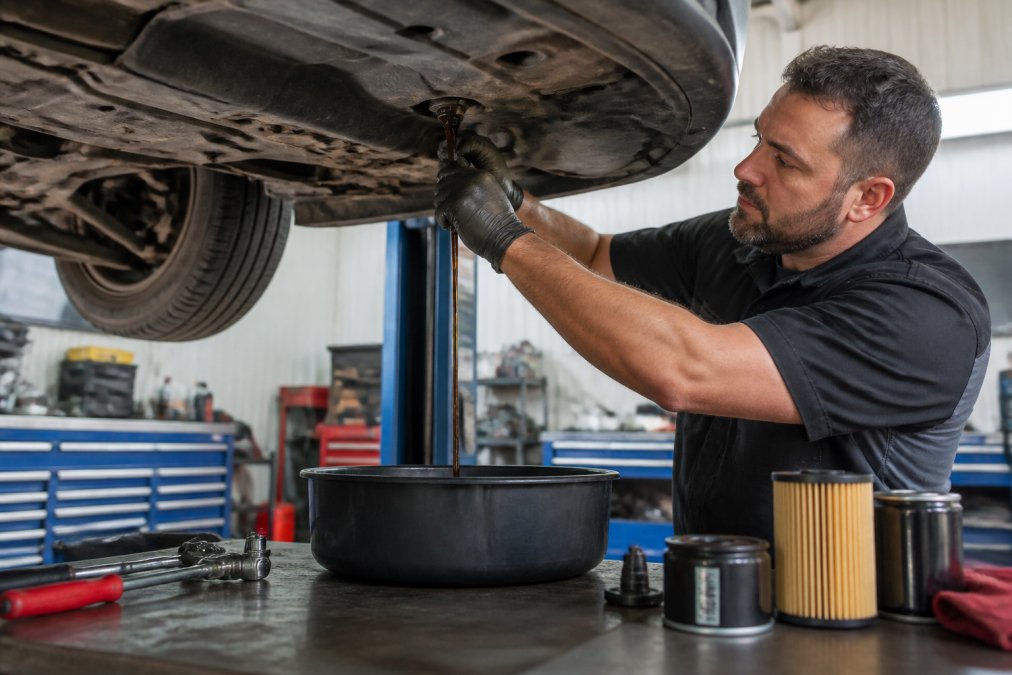
During an oil change, old oil is drained and replaced with fresh oil meeting your vehicle’s specifications. Oil accumulates contaminants, metal particles from wear, carbon deposits, and moisture that reduce its protective ability. Fresh oil restores lubrication efficiency and prevents sludge buildup.
The oil filter is replaced simultaneously. A clogged filter restricts oil flow and forces the engine to work harder, reducing efficiency and increasing wear. Filter replacement is inexpensive relative to the damage a clogged filter can cause.
Fluid level checks include coolant, brake fluid, and power steering fluid. Low coolant indicates a leak or evaporation; low brake fluid suggests brake pad wear or a hydraulic leak. These checks catch problems early, preventing overheating, brake failure, or steering issues.
A safety inspection examines brake pad thickness, tyre condition and pressure, light operation, and suspension components. Many vehicle failures stem from issues a basic safety inspection would catch. In regional Victoria, where long distances between towns are common, a vehicle breakdown can create serious consequences.
The timing of service matters because preventative maintenance prevents catastrophic failure. An engine running on degraded oil for months beyond its service interval accumulates sludge and wear that no single service can fully reverse. By the time you finally service the vehicle, wear has progressed beyond normal maintenance.
Regular servicing at the correct intervals costs a fraction of repairing an engine damaged by neglect. Preventative maintenance can help avoid costly repairs.
Consequences of Skipping or Delaying Scheduled Maintenance
Delaying service creates a domino effect. Oil degradation accelerates wear on moving parts. Engine sludge restricts oil flow, increasing friction and heat. Worn components generate metal particles that contaminate remaining oil, accelerating wear further.
Engine longevity suffers dramatically with deferred maintenance. A well-serviced engine reliably reaches 200,000 km or more. An inconsistently serviced engine often fails by 150,000 km. This difference represents years of reliable ownership or premature replacement costing thousands of dollars.
Transmission failure is another consequence. Transmission fluid degrades over time, and without regular servicing, it loses its protective ability. Transmission repairs or replacement can cost $2,000-$5,000 or more, far exceeding the cost of regular fluid changes.
Warranty coverage becomes void if your service history shows missed intervals. Manufacturers test engines based on the assumption that owners will follow the logbook schedule. If your vehicle fails and your service history shows deferred maintenance, the manufacturer can deny the warranty claim.
Fuel efficiency declines when your engine isn’t properly serviced. A vehicle running on degraded oil, with a clogged air filter and fouled spark plugs, consumes significantly more fuel. Over a year, the extra fuel cost often exceeds what you would have spent on regular servicing.
Safety risks increase with deferred maintenance. Worn brake pads reduce stopping power. Degraded coolant can cause overheating and engine seizure. Neglected suspension components affect handling and stability. In rural Victoria, a mechanical failure can leave you stranded in dangerous conditions.
A vehicle serviced regularly maintains its resale value. One with a spotty service history sells for significantly less. Buyers trust a complete logbook; they’re suspicious of gaps.
Should you service your car every 10,000 km? For most vehicles in regional Victoria, check your logbook first. If that’s what your manufacturer specifies, follow it. If your vehicle does short-distance driving, operates in hot or dusty conditions, or is used for agricultural work, consider servicing more frequently. The cost of regular maintenance is minimal compared to engine failure or warranty denial.
At Mallee Auto & Agricultural Services, we perform logbook services that keep your warranty intact and your vehicle running reliably. Our skilled mechanics have the diagnostic tools to identify emerging problems before they become expensive repairs. We offer fair, transparent pricing with no hidden charges, and pensioner discounts make regular servicing more affordable for those on fixed incomes. Book now for a service that keeps your vehicle running smoothly, safely, and efficiently.
Frequently Asked Questions
Is it okay to change oil every 10,000 km if my manufacturer recommends a longer interval?
Changing oil more frequently than recommended is safe and may extend engine life, but it’s unnecessary if your vehicle operates under normal driving conditions. Follow your manufacturer’s service intervals first, they’re designed for your car’s specific engine and oil type. However, if you do frequent short trips, tow regularly, or drive in dusty conditions, more frequent oil changes can reduce engine sludge and wear. Check your vehicle manual for the interval that suits your actual driving pattern.
How many kilometres can I go over my service interval?
Going significantly over your service interval risks engine damage, voided warranty, and increased wear on internal components. Most manufacturers allow a small buffer, typically 5-10% over the recommended distance or time, but exceeding this regularly can cause oil degradation, filter saturation, and mechanical failure. If you’re close to a service deadline, book it rather than delay. Warranty compliance also depends on maintaining logbook records of services at the correct intervals.
Does driving in regional Victoria affect my service schedule?
Yes. Regional areas like the Mallee experience higher temperatures, dust, and rougher road conditions than urban centres. These factors accelerate engine sludge formation, filter clogging, and general wear and tear. If you drive on unsealed roads, tow farm equipment, or operate in hot, dusty conditions regularly, consider servicing at the shorter end of your manufacturer’s interval or more frequently. Discuss your specific driving conditions with your mechanic to determine the right schedule for your vehicle and local environment.
What happens if I skip a scheduled service?
Skipping services allows oil to degrade, filters to clog, and fluid levels to drop, leading to reduced engine performance, increased fuel consumption, and accelerated mechanical wear. Over time, this causes engine sludge buildup, bearing damage, and potentially costly repairs. Skipped services also void manufacturer warranty coverage and break logbook compliance, which affects resale value. Regular maintenance is far cheaper than engine repairs or replacement, preventative care protects both your vehicle’s longevity and your investment.
This article was written using GrandRanker
