
Table of Contents
- 1. Establish a Farm Equipment Maintenance Schedule
- 2. Keep Equipment Clean and Protected from the Elements
- 3. Check and Top Up Fluids Regularly
- 4. Lubricate Moving Parts and Pivot Points
- 5. Inspect Belts, Hoses, and Filters
- 6. Use Best Tools for Farm Machinery Maintenance
- 7. Seek Professional Agricultural Machinery Repair When Needed
- Protecting Your Investment in Agricultural Machinery
- Frequently Asked Questions
Last Updated: September 2, 2026
1. Establish a Farm Equipment Maintenance Schedule
A farm equipment maintenance schedule is a structured plan that outlines when and how often you service each piece of machinery on your property. Creating one prevents costly breakdowns during critical harvest periods and extends the lifespan of your assets.
The difference between farms that run smoothly and those plagued by unexpected downtime often comes down to planning. Without a schedule, maintenance becomes reactive, you fix things only when they fail. With one, you’re proactive, catching small issues before they become expensive repairs.
Start by gathering the manufacturer’s recommended service intervals for each machine. These are typically found in the operator’s manual or online. Most tractors need oil changes every 100-200 hours of operation, whilst combine harvesters may require more frequent checks depending on harvest intensity (peer-reviewed research). Document these intervals clearly, whether in a notebook, spreadsheet, or farm management app.
Next, map these intervals against your actual operating calendar. If you run heavy equipment during harvest from March to May, schedule major services before that period begins. For equipment that sits idle during winter, plan maintenance during that downtime rather than waiting until spring when you need the machine in the paddock.
At Mallee Auto & Agricultural Services, we help local farmers develop tailored maintenance schedules that fit their operational rhythm. Our skilled mechanics understand the demands of regional agriculture and can advise on realistic service windows that minimise downtime without cutting corners.
Record every service completed, date, hours on the machine, work performed, and any issues noted. This history becomes invaluable when diagnosing problems later and helps you spot patterns (for example, a recurring hydraulic leak that needs attention). Over time, your maintenance log becomes a detailed asset record that increases the resale value of your equipment.
2. Keep Equipment Clean and Protected from the Elements
Dirt, mud, and dust accelerate corrosion and wear on moving parts. Regular cleaning removes abrasive materials that would otherwise grind against bearings, seals, and hydraulic cylinders. In the Mildura region, where red dust and alkaline soil are common, cleanliness is especially critical.
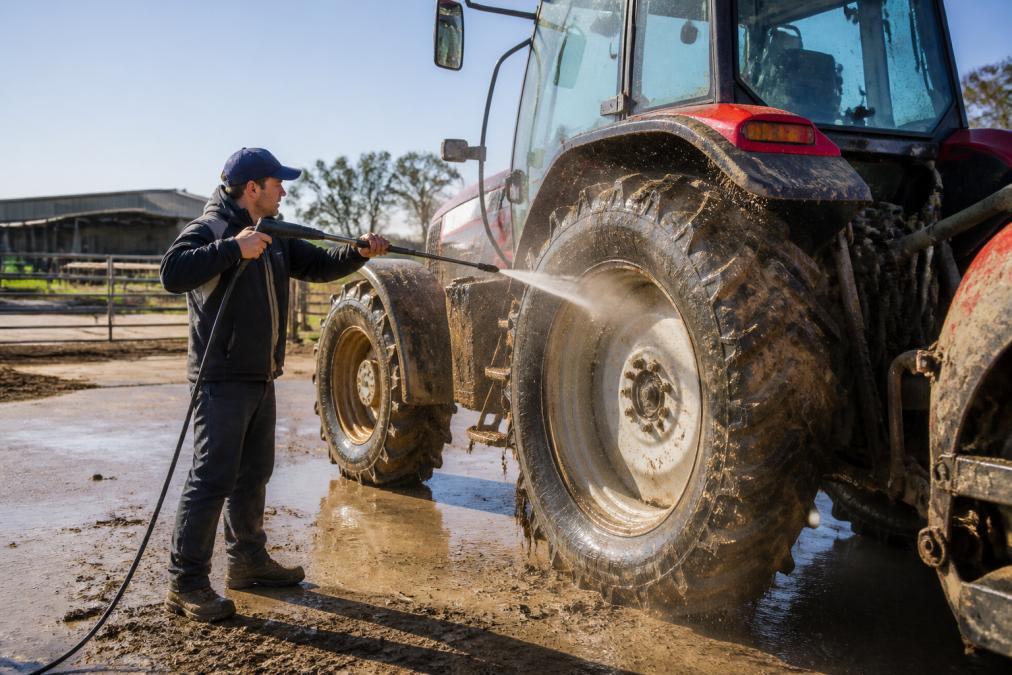
A pressure washer is one of the most effective tools for this job. The Bullmax Petrol Pressure Washer delivers 3200 PSI and 10L/min water flow, making it powerful enough to strip stubborn mud and grime from engine bays, undercarriages, and implement frames without damaging sensitive components when used correctly (guidance on safe pressure washer use). Its petrol engine means you can operate it in remote paddocks without needing mains power.
After washing, allow equipment to dry completely before storage. Trapped moisture accelerates rust formation, particularly in crevices and welds. If you’ve cleaned the undercarriage, consider applying a rust preventative coating to exposed steel surfaces.
Storage location matters significantly. Ideally, park machinery under a shed or covered structure to shield it from rain, direct sunlight, and temperature swings. If a shed isn’t available, use heavy-duty tarps secured tightly to prevent wind damage and water pooling. Exposed equipment left in the paddock deteriorates rapidly, UV exposure fades paint, moisture penetrates seals, and temperature fluctuations stress metal components.
For equipment stored long-term, consider applying a protective coating. Fluid Film is a lanolin-based lubricant that creeps into rust and provides lasting protection, especially for machinery with existing surface corrosion. Alternatively, Wagon Paints Australia Machine Paint offers a chip-resistant finish specifically formulated for Australia’s harsh conditions, providing durable rust prevention when applied over clean, prepared surfaces.
3. Check and Top Up Fluids Regularly
Engine oil, coolant, hydraulic fluid, and fuel are the lifeblood of agricultural machinery. Running low on any of these creates friction, overheating, and component failure. Checking fluids should be part of your weekly pre-operation routine, not something you do only when problems appear.
Start with engine oil. Most tractors require checking before each day of operation. Park on level ground, wait a few minutes for oil to settle, then pull the dipstick, wipe it clean, and reinsert it fully before checking the level. Top up if needed using the manufacturer’s recommended grade, typically SAE 15W-40 for most farm equipment in Australian conditions. Overfilling is just as harmful as underfilling, so aim for the middle of the marked range.
Coolant prevents overheating and corrosion inside the engine block. Check the coolant level when the engine is cold (never open a hot radiator cap, steam and boiling coolant can cause serious injury). If the level is low, top up with the correct coolant type specified in your manual. Never mix coolant types or use plain water as a substitute.
Hydraulic systems power the implements on most modern machinery. Hydraulic fluid operates under extreme pressure and temperature, so its condition directly affects performance and component longevity. Check the hydraulic reservoir level monthly, more frequently during heavy use. S-Oil Hydraulic Oil AW68 is formulated specifically for agricultural machinery, providing anti-wear protection and maintaining viscosity across temperature ranges common in Australian farming.
Fuel quality affects engine performance and fuel system health. Store fuel in clean, sealed containers away from direct sunlight. Old fuel oxidises and deposits gum inside carburettors and fuel injectors, causing hard starting and rough running. If equipment has sat unused for more than a month, drain old fuel and replace it with fresh stock before operating.
4. Lubricate Moving Parts and Pivot Points
Friction between moving metal surfaces causes wear, heat, and eventual failure. Lubrication reduces friction, dissipates heat, and protects against corrosion. Agricultural machinery has dozens of pivot points, linkages, and bearings that require regular greasing to function smoothly.
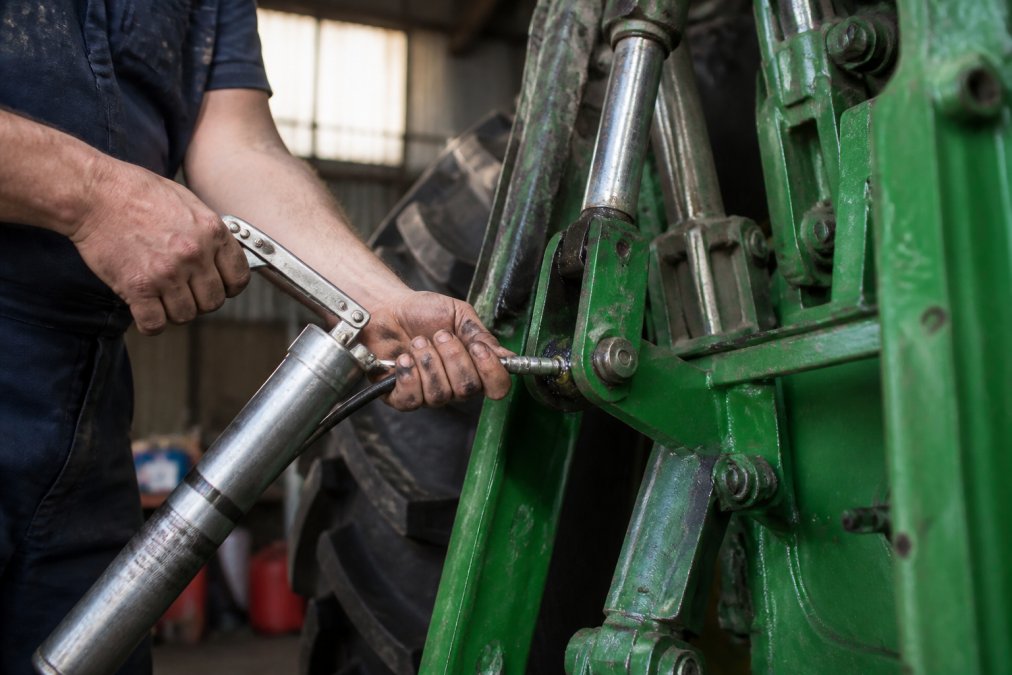
Identify all grease points on your equipment. These are typically marked with a small nipple or zerk fitting. Your operator’s manual provides a lubrication diagram showing their exact locations. Common grease points on tractors include the three-point linkage pins, PTO shaft bearings, steering column pivots, and brake clevis pins.
An air-operated grease gun like the Uniclamp 9900 Series L-470 significantly speeds up the greasing process compared to manual guns. It develops up to 9000 PSI output pressure, forcing grease into tight spaces and hard-to-reach pivot points with minimal effort. The pistol-grip design reduces hand fatigue during extended greasing sessions, and it accepts standard 450g Australian grease cartridges or bulk fill options.
Apply grease until it appears at the joint, indicating that old, contaminated grease has been purged and fresh lubricant has filled the cavity. Don’t over-grease, excessive grease attracts dirt and can damage seals. Most machinery requires greasing every 40-80 operating hours, though your manual will specify exact intervals.
In dusty conditions like those around Mildura, grease points accumulate fine particles that accelerate wear if not regularly flushed out. Establishing a weekly greasing routine during the busy season keeps joints moving freely and extends the life of expensive linkage components and bearings.
5. Inspect Belts, Hoses, and Filters
Belts drive essential functions like cooling fans, alternators, and hydraulic pumps. Hoses carry hydraulic fluid, fuel, and coolant under pressure. Filters trap contaminants before they damage engines and hydraulic systems. All three require regular inspection and replacement to prevent unexpected failures.
Check belts for cracks, fraying, or glazing (a shiny, hardened surface). A cracked or frayed belt can snap during operation, leaving you stranded. Glazed belts slip, reducing efficiency and generating heat. If a belt shows any of these signs, replace it before it fails. Belts are inexpensive compared to the cost of a breakdown during harvest.
Examine hoses for bulges, leaks, or hardening. Hydraulic hoses operate under extreme pressure, a failed hose can spray hot fluid at high velocity, causing serious injury and machine damage. If you spot a leak or damage, replace the hose immediately. Don’t attempt temporary repairs with tape or clamps; they’ll fail under pressure.
Air filters trap dust and particles before they enter the engine. A clogged air filter restricts airflow, reducing power and increasing fuel consumption. Check the air filter monthly during heavy use, more frequently in dusty conditions. If it’s visibly dirty, replace it. A clean filter costs a few dollars; engine damage from dust ingestion costs thousands.
Hydraulic filters remove contaminants from hydraulic fluid, protecting pumps, cylinders, and valves. Replace hydraulic filters according to your manual’s schedule, typically every 500 operating hours or annually, whichever comes first. Neglecting hydraulic filter changes allows metal particles and moisture to accumulate, accelerating wear on expensive hydraulic components.
Fuel filters prevent dirt and water from reaching the fuel injection system. Replace them as recommended in your manual. If your equipment sits unused for extended periods, consider replacing the fuel filter before returning it to service, as old fuel may have degraded and deposited contaminants.
6. Use Best Tools for Farm Machinery Maintenance
Having the right tools makes maintenance safer, faster, and more effective. Poor tools lead to stripped fasteners, damaged components, and frustration. Investing in quality equipment pays for itself through fewer mistakes and reduced downtime.
A comprehensive diagnostic tool is essential for modern farm machinery. Many tractors and implements now include electronic control systems that require specialised equipment to diagnose faults accurately. The Jaltest Agricultural Diagnostic Tool Kit covers over 40 brands and 360 models of agricultural equipment, providing engine, transmission, and hydraulic system diagnostics. It reads fault codes, clears errors, adjusts parameters, and offers guided troubleshooting, capabilities that would otherwise require a trip to a dealer’s workshop.
For routine maintenance, you’ll need a basic toolkit: sockets and spanners in both metric and imperial sizes (older equipment often uses imperial), screwdrivers, pliers, adjustable wrenches, and a torque wrench for critical fasteners. A quality torque wrench ensures you tighten bolts to specification, too loose and they vibrate free; too tight and you strip threads or crack components.
A hydraulic fluid transfer system makes changing hydraulic oil safer and cleaner than pouring from containers. It reduces spills, minimises exposure to used oil, and allows you to capture and dispose of old fluid responsibly.
Safety equipment is non-negotiable. Wear work gloves to protect against sharp edges and hot surfaces. Safety glasses shield your eyes from flying debris and splashing fluid. Steel-capped boots protect your feet if heavy machinery shifts. A fire extinguisher should be nearby whenever you’re working on fuel systems or engines.
7. Seek Professional Agricultural Machinery Repair When Needed
Some maintenance tasks, like replacing belts or checking fluid levels, are straightforward enough for most farmers to handle. Others require specialised knowledge, expensive diagnostic equipment, or workshop facilities beyond what’s practical on-farm.
Complex hydraulic repairs, transmission work, and engine diagnostics fall into this category. Attempting these without proper training risks further damage and safety hazards. A small hydraulic leak might seem simple, but tracing its source requires understanding complex systems and often demands pressure testing equipment.
Mallee Auto & Agricultural Services has skilled mechanics with expertise across all vehicle types, including tractors and farm equipment. We use modern diagnostic tools to pinpoint problems accurately, avoiding guesswork repairs that waste time and money. Our fair pricing and transparent approach mean you know exactly what work is needed and why, no hidden charges or unnecessary recommendations.
For farmers in the Mildura region, having a trusted local service provider minimises downtime during critical periods. Rather than waiting for a dealer’s appointment or arranging transport to a distant workshop, you can often get same-day or next-day service. We also offer pensioner discounts, making professional maintenance more accessible for older operators on fixed incomes.
The real cost of a breakdown isn’t just the repair bill, it’s the lost productivity during harvest, the stress of uncertainty, and the risk of secondary damage if you continue operating a faulty machine. Professional maintenance catches issues early and keeps equipment running reliably when you need it most.
Protecting Your Investment in Agricultural Machinery
Your machinery represents a significant capital investment. Protecting that investment through consistent maintenance is far cheaper than replacing equipment prematurely or managing emergency repairs during peak season.
A structured approach to maintaining agricultural machinery, combining regular inspections, fluid checks, greasing, and professional service, keeps your equipment running smoothly and safely. The practices outlined above are proven to extend machinery lifespan, reduce downtime, and ultimately improve your bottom line.
Start by establishing a maintenance schedule this week. Review your operator’s manuals, document service intervals, and mark them on your calendar. Invest in basic tools and a pressure washer. Then commit to the routine: weekly fluid checks, monthly greasing, and regular filter replacements. When you encounter problems beyond your expertise, bring your equipment to Mallee Auto & Agricultural Services. Our team understands the demands of local farming and delivers the professional care your machinery deserves.
Frequently Asked Questions
How often should I service my tractor and farm equipment?
Service intervals depend on your machinery type and usage hours. Most tractors need servicing every 200-400 hours of operation or annually, whichever comes first. Check your equipment manual for exact schedules. Establish a farm equipment maintenance schedule based on your peak season workload. Daily pre-operation checks (oil, coolant, tyre pressure) take minutes but catch problems early. Local professional services can help you develop a routine suited to your operation.
What are the common causes of agricultural machinery breakdown in hot, dusty climates?
Heat and dust are harsh on farm equipment. Clogged air filters reduce engine performance and fuel efficiency. Overheating occurs when cooling systems aren’t maintained. Dust ingress into hydraulic systems causes component wear. Corrosion from moisture and salt spray damages metal surfaces. Regular cleaning, frequent filter changes, and protective coatings prevent most failures. Hydraulic oil breaks down faster in heat, so check levels and condition often and use quality fluid rated for your climate.
What tools do I need to maintain farm equipment myself?
Basic tools include spanners, sockets, screwdrivers, and a torque wrench for correct fastener tightness. A grease gun (manual or air-operated) handles lubrication of pivot points and linkages. A pressure washer removes mud and grime safely. For diagnostics, modern farm equipment often requires specialist scan tools, this is where professional agricultural machinery repair services excel. A good set of best tools for farm machinery maintenance saves time and prevents damage, but complex diagnostics are best left to qualified technicians with proper equipment.
How does dust and heat in the region affect how I maintain my machinery?
Dust clogs air filters faster, requiring more frequent replacement during harvest season. Heat accelerates hydraulic fluid and oil degradation, so check levels weekly during peak use. Metal surfaces rust quicker in dry heat followed by rain, making protective coatings and rust preventatives essential. Store equipment under cover when not in use. Clean machinery regularly to prevent dust buildup that traps moisture. Consider rust-preventative sprays and industrial coatings designed for harsh Australian conditions to extend your equipment’s working life.
Don’t let equipment failures disrupt your harvest. Mallee Auto & Agricultural Services provides expert diagnostics and repairs for tractors and farm machinery across Mildura and the surrounding region. Our skilled mechanics use modern diagnostic tools to identify issues accurately, and we guarantee complete satisfaction on every service. Book your maintenance appointment now and keep your equipment running reliably all season long.
This article was written using GrandRanker
