
Table of Contents
- Step 1: Know Which Signs Your Tractor Needs Professional Repair
- Step 2: Understand What Each Warning Sign Actually Means
- Step 3: Use a Tractor Maintenance Checklist Australia Farmers Can Rely On
- Step 4: Decide Between DIY Fixes and Professional Tractor Repair
- How Often to Service a Tractor for Reliable Performance
- Common Mistakes Farmers Make When Diagnosing Tractor Faults
- What to Expect from the Cost of Tractor Service in Australia
- Conclusion
Last Updated: August 3, 2026
Knowing the signs your tractor needs professional repair is the difference between a minor service bill and a catastrophic breakdown mid-harvest. At Mallee Auto & Agricultural Services, we see this play out regularly: farmers who catch warning signs early spend a fraction of what those who ignore them end up paying. The good news is that most serious tractor faults announce themselves well before they cause irreversible damage. Below, we’ll walk you through exactly how to read those signals, what they mean, and when to put down the spanner and call a professional.
Most tractor owners underestimate how quickly a small fault escalates. A hydraulic seal that weeps for a week can fail completely under load. An engine that runs rough in the morning might seize by afternoon. The framework we use at Mallee Auto & Agricultural Services is simple: categorise the symptom, understand the cause, and make a clear call on whether it’s a DIY fix or a workshop job.
Step 1: Know Which Signs Your Tractor Needs Professional Repair
Identifying the signs your tractor needs professional repair starts with knowing which systems to watch. Tractors are complex machines, and faults rarely announce themselves with a dashboard light. Most of the time, the warning comes through sound, smell, behaviour, or fluid.
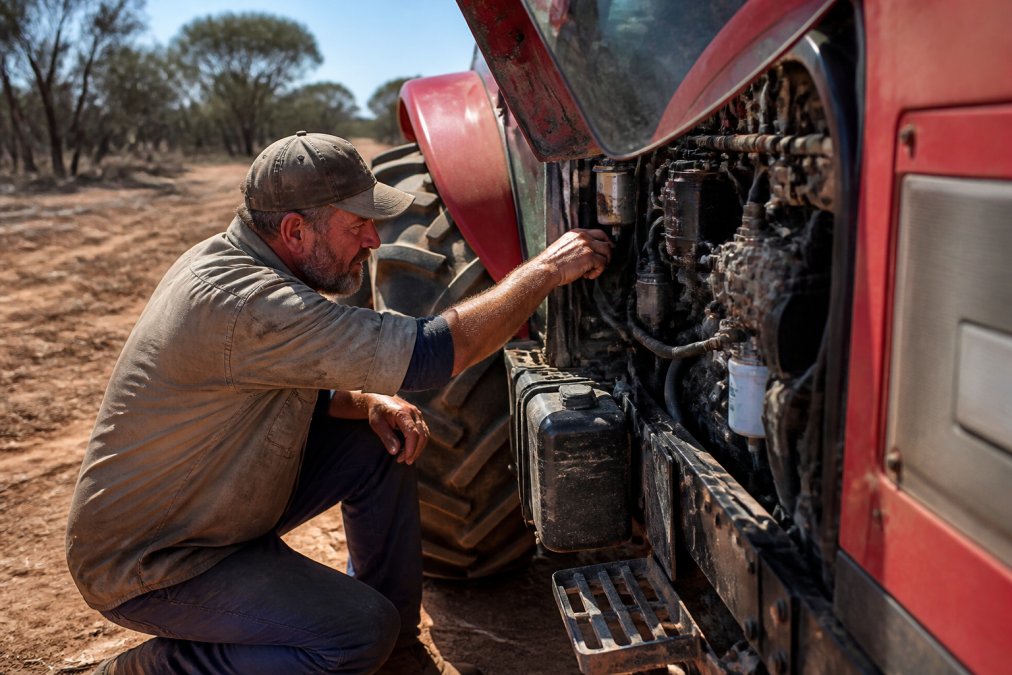
Engine Warning Signs You Should Not Ignore
Engine problems are the most costly to ignore and the easiest to spot early. Watch for these:
- Excessive smoke from the exhaust (colour matters – see Step 2)
- Hard starting or failure to start in normal conditions
- Loss of power under load that wasn’t there last season
- Overheating indicated by temperature gauge spikes or steam
- Oil pressure warning or visible oil leaks around the block
- Fuel consumption that has noticeably increased without a change in workload
Any one of these warrants attention. Two or more together means stop working the machine and get it assessed.
Hydraulic System Red Flags
The hydraulic system is the workhorse of most farm tractors, controlling implements, steering, and lift functions. Hydraulic faults are among the most common signs your tractor needs professional repair because the system operates under high pressure and is unforgiving when seals or lines fail.
Look for:
- Slow or jerky implement response
- Implements that drift or drop under load without input
- Visible fluid leaks around hoses, cylinders, or the pump housing
- Whining or groaning noise when operating the hydraulics
- Contaminated hydraulic fluid (milky, dark, or gritty appearance)
A milky appearance in hydraulic fluid almost always means water contamination, often from a failed cooler or breather. This is not a DIY fix. Water in a hydraulic system causes rapid pump wear and can destroy components within hours of operation.
Transmission and Drivetrain Problems
Transmission faults are serious and tend to worsen quickly under working loads. Common warning signs include:
- Difficulty selecting gears or gears slipping out under load
- Grinding or clunking when changing speed ranges
- Vibration through the seat or floor that wasn’t present before
- Unusual noise from the diff or final drive during turns
- Visible oil leaks from the gearbox or axle housings
According to Grains Research and Development Corporation’s farm machinery guidance, drivetrain failures are a leading cause of unplanned downtime during grain harvest in Australia. Getting ahead of these symptoms is critical for Mallee farmers working tight seasonal windows.
Step 2: Understand What Each Warning Sign Actually Means
Symptoms tell a story, but only if you know how to read them. The mistake most farmers make is treating the symptom rather than diagnosing the cause. Here’s where that gets expensive.
Smoke Colour and What It Tells You
Exhaust smoke is one of the clearest diagnostic signals a diesel tractor engine produces. Each colour points to a different fault:
| Smoke Colour | Likely Cause | Action Required |
|---|---|---|
| Black | Over-fuelling, blocked air filter, injector fault | Inspect air filter first; if clear, professional injector test needed |
| White/Grey | Coolant entering combustion, head gasket fault | Stop immediately, professional diagnosis required |
| Blue | Oil burning in combustion chamber, worn rings or valve seals | Professional assessment; continued use accelerates damage |
| Light grey (on startup only) | Normal condensation burn-off | Monitor; no action if it clears within minutes |
White or blue smoke from a working tractor is never normal. These are two of the clearest signs your tractor needs professional repair rather than a field fix.
Unusual Noises and Their Likely Sources
Noise diagnosis is a skill, but some patterns are consistent enough to act on:
- Knocking from the engine block: Often big-end or main bearing wear. This is serious. Continued operation risks catastrophic engine failure.
- Ticking or tapping from the top of the engine: Valve clearance or rocker arm issues. Addressable but requires correct tooling and knowledge.
- Whining from the hydraulic pump: Cavitation or low fluid level. Check fluid first; if level is correct, the pump needs professional inspection.
- Clunking from the front axle on turns: Worn CV joints or king pins. These affect steering safety and should not be deferred.
- Rhythmic vibration at speed: Often a wheel bearing or tyre issue, but can indicate drivetrain imbalance.
A knocking engine that is still running is not a machine you keep working. The cost of a bearing replacement is a fraction of a full engine rebuild.
Step 3: Use a Tractor Maintenance Checklist Australia Farmers Can Rely On
A tractor maintenance checklist Australia farmers can use consistently is the most practical tool for catching faults before they become failures. The Agriculture Victoria farm machinery safety and maintenance resources recommends structured pre-season and in-season inspection routines for all farm equipment.
Use this checklist before each season and after every 250 hours of operation:
- Check engine oil level and condition (colour, consistency, smell)
- Inspect coolant level and condition (look for discolouration or oily film)
- Check hydraulic fluid level and colour
- Inspect all external hoses and lines for cracks, chafing, or weeping
- Check air filter condition and restriction indicator
- Inspect fan belts for wear, cracking, or glazing
- Check battery terminals for corrosion and secure connection
- Inspect tyres for pressure, wear, and sidewall damage
- Check all lights and safety switches are operational
- Inspect PTO shaft and guards for damage
- Grease all fittings according to manufacturer schedule
- Check fuel filter condition and water separator bowl
- Inspect brakes for even response and stopping distance
- Look for any new fluid spots under the machine after overnight parking
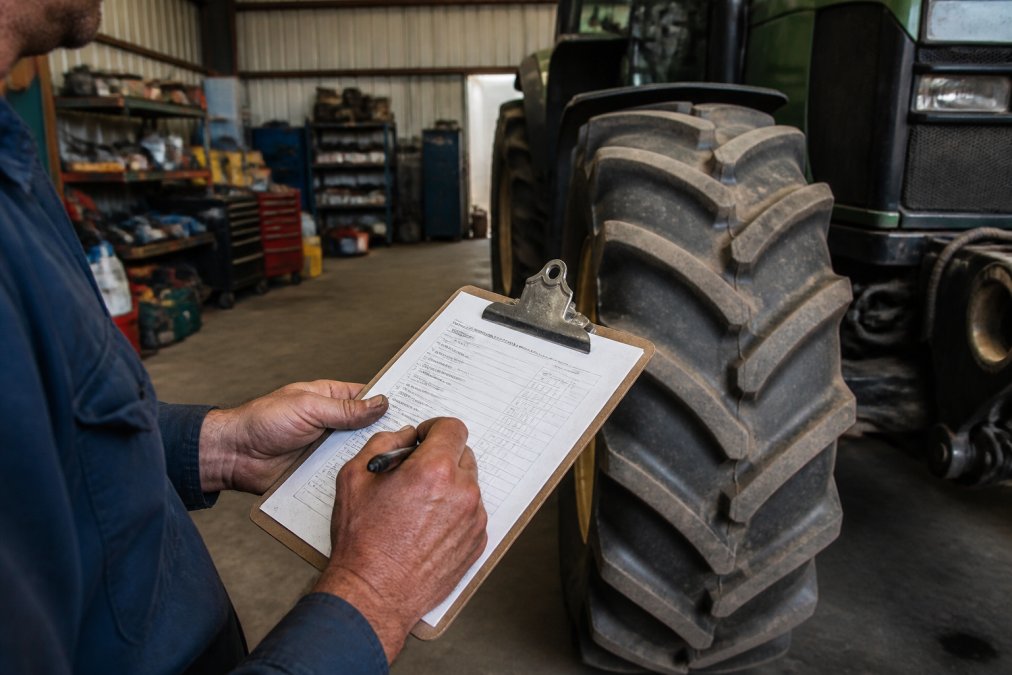
This checklist does not replace a full service, but it will catch the majority of developing faults before they become workshop emergencies.
The overnight fluid check is one of the most underused diagnostics available to any farmer. Park the tractor on clean concrete or cardboard before bed. Any spot in the morning tells you exactly where to look first.
Step 4: Decide Between DIY Fixes and Professional Tractor Repair
This is where most farmers get the balance wrong. The instinct to fix it yourself is understandable, but some repairs genuinely require specialist equipment, calibrated tools, or technical knowledge that goes beyond what a paddock toolkit can provide.
What You Can Safely Handle Yourself
Many routine maintenance tasks are well within a competent farmer’s ability:
- Air filter cleaning or replacement
- Fuel filter replacement
- Greasing fittings and applying fresh lubricants
- Checking and topping fluid levels
- Replacing worn fan belts (with correct belt spec)
- Tyre pressure adjustment and visual tyre inspection
- Battery terminal cleaning and replacement
- Replacing blown fuses
These tasks are low-risk, require minimal tooling, and are well documented in most operator manuals. Doing them yourself is sensible.
When to Stop and Call a Mechanic
Professional tractor repair is necessary when:
- The fault involves the fuel injection system or common rail components
- Any internal engine work is required
- Hydraulic pump or valve block repair or replacement is needed
- Transmission or gearbox internal work is required
- Electrical fault diagnosis requires a scan tool
- The fault affects steering, braking, or PTO safety systems
- You have replaced a part and the symptom persists
The rule of thumb: if the repair requires draining the system, opening a sealed component, or calibrating a pressurised circuit, it belongs in a workshop with the right equipment.
Attempting hydraulic pump repairs without pressure testing equipment can result in the system being reassembled incorrectly, leading to sudden implement failure under load. This is a serious safety risk in the field.
How Often to Service a Tractor for Reliable Performance
How often to service a tractor depends on operating hours, conditions, and the machine’s age, but there are standard intervals that apply across most modern diesel tractors used in Australian conditions.
General service intervals:
- Every 50 hours: Check engine oil, grease all fittings, inspect air filter
- Every 250 hours: Engine oil and filter change, fuel filter replacement, hydraulic filter check
- Every 500 hours: Full hydraulic fluid analysis, transmission oil check, coolant system inspection
- Every 1,000 hours: Major service including all fluid replacements, belt inspection, injector check, and full drivetrain assessment
Mallee conditions are particularly hard on tractors. Dust ingestion accelerates air filter loading and can shorten engine life significantly if filter maintenance is deferred. Many experienced operators in the region service their air filters more frequently than the manufacturer’s standard interval during harvest.
The Safe Work Australia guidance on plant and equipment maintenance also notes that maintaining service records is important for demonstrating due diligence in the event of a workplace incident involving farm machinery.
Common Mistakes Farmers Make When Diagnosing Tractor Faults
The most common mistake is treating the most visible symptom and assuming the job is done. A tractor that has been losing coolant might have a leaking hose or a failing head gasket. Replacing the hose and refilling the coolant does not tell you which one it is.
Other frequent errors:
Ignoring intermittent faults. A fault that comes and goes is still a fault. Intermittent symptoms are often the earliest stage of a developing problem. Document when they occur, under what load, and at what operating temperature.
Using the wrong fluid specifications. Modern tractors are precise about hydraulic fluid grades and engine oil viscosity. Using the wrong spec because it’s what’s in the shed can accelerate wear or void warranty coverage.
Deferring repairs until after harvest. This is the most expensive habit in farm maintenance. A machine that is showing signs of a developing fault will almost always fail at the worst possible moment under the highest workload.
Assuming a new part fixes the root cause. Replacing a failed component without understanding why it failed means the replacement will likely fail too. A hydraulic pump that failed because of contaminated fluid will destroy its replacement in short order if the fluid isn’t also addressed.
Tractor faults rarely appear without warning. The signs are almost always there first. Building a habit of observation and documentation is the most cost-effective maintenance strategy available to any farmer.
What to Expect from the Cost of Tractor Service in Australia
The cost of tractor service in Australia varies considerably based on machine size, service type, parts required, and the complexity of any fault diagnosis. There is no single figure that applies across all situations.
What is consistent is that early intervention almost always costs less than delayed repair.
For current pricing on tractor and agricultural machinery diagnostics and repair, Mallee Auto & Agricultural Services provides transparent, upfront pricing with no hidden charges. The team uses modern diagnostic tools to accurately identify faults before recommending any repair work, which means you’re not paying for guesswork. Pensioner discounts are also available for eligible customers in the Mildura and Mallee region.
The best approach before committing to any service is to get a clear scope of work and an honest assessment of what is urgent versus what can be scheduled. A good mechanic will tell you both.
Tractor faults don’t wait for a convenient moment, and the Mallee’s demanding conditions make regular, structured maintenance non-negotiable. Mallee Auto & Agricultural Services brings skilled mechanics, modern diagnostic equipment, and transparent pricing to agricultural machinery repair across the Mildura region. If your machine is showing any of the warning signs covered in this guide, don’t wait until harvest to find out how serious it is. Book Now and get a clear, honest assessment from a team that understands what farm downtime actually costs.
Frequently Asked Questions
What are the most common signs of tractor engine failure?
The most common signs your tractor needs professional repair due to engine trouble include excessive black, white or blue smoke from the exhaust, a sudden loss of power under load, overheating, hard starting, and unusual knocking or rattling noises. Oil pressure warning lights or a persistent misfire are also serious indicators. Any of these symptoms warrants a proper diagnostic inspection rather than guesswork, especially during busy periods like seeding or harvest in the Mallee region.
How often should a tractor be professionally serviced in Australia?
Most tractor manufacturers recommend a service every 200 to 500 engine hours, though the exact interval depends on the make, model, and operating conditions. In Australia's dusty agricultural environments, like those common across the Mallee, filters and fluids can degrade faster than the manual suggests. A practical tractor maintenance checklist for Australian conditions should include checks at 50-hour, 250-hour and annual intervals. Always refer to your operator's manual and confirm intervals with a qualified agricultural mechanic.
What are the early warning signs of hydraulic system failure in tractors?
Early hydraulic warning signs include slow or jerky implement response, implements that drift or drop unexpectedly under load, visible oil leaks around hoses and fittings, and a whining noise from the hydraulic pump. Foamy or discoloured hydraulic fluid is another clear indicator that the system needs attention. Hydraulic faults can escalate quickly and affect implements critical to farm operations, so professional diagnosis is strongly recommended rather than attempting repairs without the right equipment.
Is 7,000 hours considered high for a farm tractor?
7,000 hours is generally considered high use for a farm tractor, though well-maintained machines can reliably exceed this figure. At that hour count, major components such as the engine, transmission and hydraulic pump are more likely to need attention or rebuilding. The key factor is service history: a tractor with documented, regular servicing at 7,000 hours is in a far better position than one with patchy maintenance records. A professional inspection at high hour counts helps identify what needs attention before a costly breakdown occurs.
When should you choose professional repair over DIY tractor maintenance?
DIY maintenance is suitable for tasks like checking fluid levels, replacing filters, greasing fittings and inspecting tyres. Professional tractor repair is necessary when you notice internal engine noises, hydraulic failures, electrical faults, transmission slipping, or any issue you cannot diagnose with certainty. Attempting complex repairs without proper tools and training can cause further damage and void manufacturer warranties. During harvest or seeding season, the cost of downtime far outweighs the cost of a professional repair done correctly the first time.
This article was written using GrandRanker
