
Table of Contents
- Why Tractor Diagnostic Services Matter for Farm Operations
- Common Signs Your Tractor Needs Professional Diagnostics
- Tractor Electrical Fault Troubleshooting: What You Need to Know
- How Tractor Engine Diagnostic Tools Identify Hidden Problems
- On-Farm Tractor Repairs: Minimising Downtime During Critical Seasons
- Preventative Maintenance and Seasonal Inspection Checklists
- Booking Your Tractor Diagnostic Service
- Frequently Asked Questions
Last Updated: September 23, 2026
Why Tractor Diagnostic Services Matter for Farm Operations
When a tractor breaks down during harvest, every hour costs money. Modern tractors rely on complex electronic systems, hydraulic networks, and engine management computers that require specialised knowledge to troubleshoot properly. This is where tractor diagnostic services become essential.
A proper diagnostic service identifies the root cause of a problem in minutes, not days. Without it, you’re guessing, and guessing costs money.
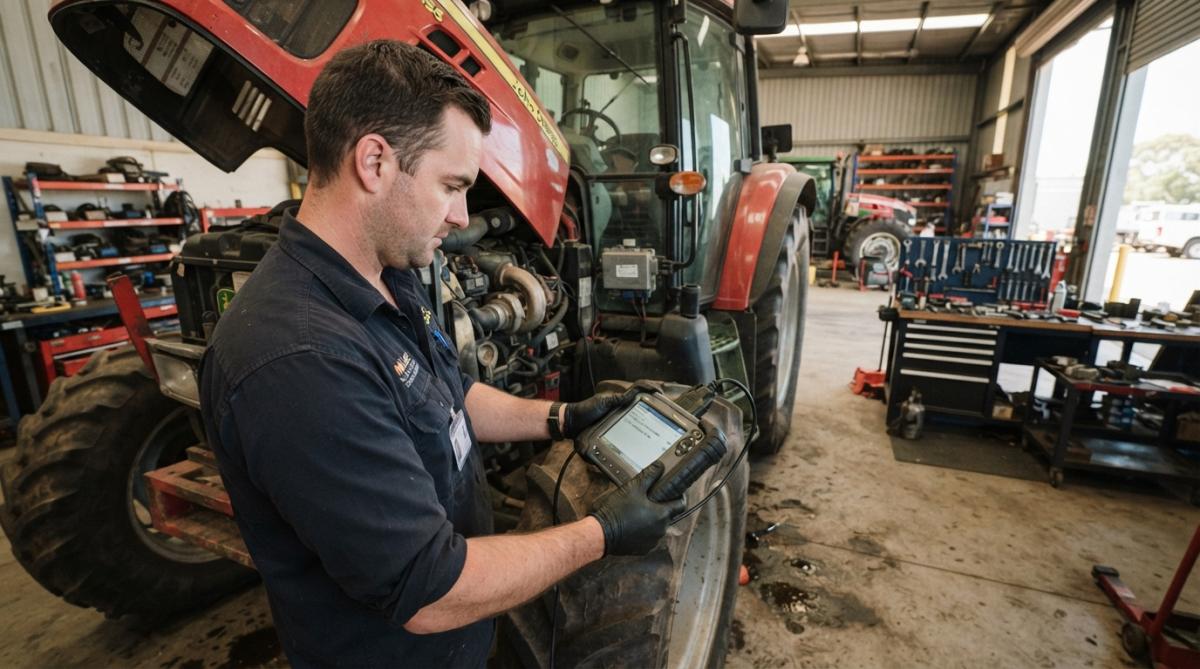
Diagnostic tools give mechanics the ability to read fault codes, monitor live engine data, and pinpoint issues that would otherwise remain hidden. Whether it’s an electrical fault that appears intermittently or a hydraulic leak that’s hard to locate, professional diagnostics eliminate the guesswork.
Modern tractor engines generate hundreds of data points every second. A diagnostic scan captures all of them at once, revealing problems that manual inspection might miss entirely. This is why investing in a proper diagnostic service saves time and money over the long run.
Common Signs Your Tractor Needs Professional Diagnostics
Common indicators that professional diagnostics are needed include:
- Engine warning lights or fault codes displayed on the dashboard
- Reduced power or sluggish acceleration under load
- Rough idling or inconsistent engine performance
- Hydraulic system failures affecting implement controls
- Starting problems that come and go without clear pattern
- Unusual noises from the engine or transmission
- Excessive fuel consumption compared to normal operation
What starts as a minor electrical fault can cascade into a major failure that takes your machine offline for weeks.
The key difference between a small repair and a catastrophic breakdown often comes down to catching the problem early. Professional tractor diagnostic services in Mildura identify these issues before they escalate, keeping your equipment in the field where it belongs.
Tractor Electrical Fault Troubleshooting: What You Need to Know
Electrical faults are intermittent, hard to reproduce, and nearly impossible to diagnose without proper tools. Before calling a technician, perform systematic checks to narrow down the problem.
Intermittent electrical faults appear randomly, your tractor might start perfectly one morning and refuse to turn over the next.
DIY Electrical Troubleshooting Steps
Battery and charging system (15 minutes):
- Check battery terminals for corrosion and clean with a wire brush if present.
- Ensure cable connections are tight; loose connections cause intermittent starting problems.
- Turn on headlights; dim lights suggest a weak battery or charging problem.
- Listen for rapid clicking when turning the key, indicates insufficient battery voltage.
- Batteries over 5 years old are the most common cause of intermittent electrical issues in Mildura’s heat.
Connector and wiring inspection (20 minutes):
- Locate main engine harness connectors near the engine block and battery. Look for corrosion, cracks, or loose pins.
- Gently wiggle connectors while someone turns the key, intermittent engine turnover indicates a loose connection.
- Check under the tractor seat and around hydraulic controls for chafed wiring or moisture exposure.
- In Mildura’s dusty environment, look for rodent damage to wiring harnesses.
Fuel pump and ignition circuit (10 minutes):
- Turn the key to “on” and listen for a brief buzzing sound near the fuel tank (fuel pump priming). Silence suggests a faulty fuel pump relay or circuit.
- Repeat three times; consistent priming is normal; silence indicates an electrical fault in the fuel system.
Sensor and warning light diagnostics (5 minutes):
- Note exact conditions when warning lights appear (cold start, under load, after 30 minutes running).
- Check engine oil and coolant levels; low levels trigger sensor warnings that mimic electrical faults.
When to Stop and Call a Professional
If the problem persists after cleaning connectors and checking battery voltage, professional diagnostics are necessary. A diagnostic scan reveals problems that manual inspection might miss, particularly sensor failures, wiring shorts, or engine management computer faults.
Never attempt to diagnose electrical faults by trial-and-error replacement of sensors or relays. You’ll waste money on unnecessary parts and risk damaging other systems. A proper diagnostic scan takes 30 minutes and saves you hundreds in wasted repairs. If your basic checks don’t resolve the issue, professional diagnostics are the most cost-effective next step.
How Tractor Engine Diagnostic Tools Identify Hidden Problems
Modern tractor engines monitor fuel injection timing, air intake, exhaust emissions, turbo boost pressure, and dozens of other parameters every millisecond. When something deviates from normal operating range, the engine management system logs a fault code.
On-Farm Tractor Repairs: Minimising Downtime During Critical Seasons
Every day your tractor is offline during harvest costs real money. Minimising downtime requires both speed and accuracy.
Many common tractor failures can be resolved onsite:
- Hydraulic system repairs, replacing hoses, seals, or filters
- Electrical connector cleaning and replacement, fixing corrosion or loose connections
- Oil filter and fluid changes, routine maintenance that prevents larger problems
- Sensor replacement, swapping faulty sensors identified by diagnostics
- Belt and hose replacement, addressing wear before failure occurs
The fastest repair is the one you prevent through regular maintenance. Seasonal inspections before harvest catch problems while they’re still minor, keeping your equipment in the field when you need it most.
Preventative Maintenance and Seasonal Inspection Checklists
A structured inspection schedule catches wear patterns before they become failures.
Pre-season inspection checklist (before major work periods):
- Full diagnostic scan to identify any existing fault codes
- Oil and filter change with fresh fluid analysis
- Hydraulic fluid level and condition check
- All electrical connectors inspected for corrosion
- Battery voltage and charge capacity test
- Belt tension and wear assessment
- Hose integrity check for cracks or leaks
- Fuel system inspection and filter replacement
- Coolant level and freeze protection verification
- Tire pressure and tread depth evaluation
Mid-season maintenance (during active use):
- Weekly fluid level checks before operation
- Visual inspection for leaks or loose components
- Diagnostic scan if any warning lights appear
- Cleaning air filters if operating in dusty conditions
- Hydraulic system pressure verification
Post-season inspection (after major work periods):
- Comprehensive diagnostic scan to log any faults
- Complete fluid change and filter replacement
- Deep cleaning of cooling systems and air intake
- Electrical system inspection and battery service
- Storage preparation to prevent corrosion
| Maintenance Task | Frequency | Seasonal Timing | Estimated Duration |
|---|---|---|---|
| Oil and filter change | Every 250 hours or 6 months | Before harvest | 1 hour |
| Hydraulic fluid analysis | Every 500 hours | Mid-season | 30 minutes |
| Full diagnostic scan | Before major work | Pre-season | 45 minutes |
| Electrical connector inspection | Quarterly | Each season change | 1 hour |
| Belt and hose replacement | As needed | Post-season | 2-3 hours |
Booking Your Tractor Diagnostic Service
Transparent pricing for tractor diagnostic services helps you make informed decisions about equipment maintenance.
Understanding Tractor Diagnostic Service Costs
Diagnostic service pricing depends on the complexity of your tractor and the issue.
What Affects Diagnostic Costs in Mildura
Diagnostic costs vary by tractor age and complexity, fault severity, system involvement, and technician expertise. Older mechanical tractors cost less to diagnose; modern electronically controlled tractors cost more. Intermittent faults take longer to isolate than clear problems.
The Booking Process
The booking process is straightforward:
- Initial contact: Describe the symptoms or concerns with your tractor. Provide the make, model, and year if possible. This helps the technician prepare the correct diagnostic software and estimate the service tier you’ll need.
- Appointment scheduling: Choose a time that works around your operation. For urgent issues during harvest season, emergency appointments are often available, though these may incur a surcharge.
- Pre-appointment preparation: Write down when the problem occurs (cold start, under load, after running 30 minutes), any warning lights displayed, and unusual sounds or performance changes. This information accelerates diagnosis.
- Diagnostic scan: The technician performs the appropriate diagnostic service (basic, comprehensive, or extended) and provides a written report with findings.
- Repair estimate: Clear explanation of findings with transparent pricing for any work needed, with no hidden charges. You’ll know exactly what repairs are needed and what they’ll cost before work begins.
- Repair execution: Efficient completion of approved work with quality guarantee. Many farmers appreciate this transparency after experiences elsewhere where repair bills exceeded estimates without explanation.
Service Packages and Seasonal Discounts
Many farmers benefit from bundled service packages that combine diagnostics with preventative maintenance.
- Pensioner discount: Dedicated discounts on all services, including diagnostics and repairs, apply to routine maintenance as well as emergency repairs, making professional tractor care more accessible.
Transparent pricing removes uncertainty from equipment maintenance decisions. Knowing the cost of diagnostics upfront helps you budget for repairs and understand whether a problem warrants professional attention or can be addressed through preventative maintenance.
Frequently Asked Questions
How often should I schedule tractor diagnostic services?
Schedule diagnostic checks annually before peak harvest season, or whenever you notice unusual engine behaviour, electrical faults, or performance drops. Many farmers benefit from mid-season inspections during intensive use. If your tractor is older or works in demanding conditions, twice-yearly diagnostics can prevent costly breakdowns. Modern diagnostic tools catch problems early, reducing unexpected downtime and repair costs.
What can tractor engine diagnostic tools actually detect?
Professional diagnostic tools read fault codes from your tractor’s electronic control unit (ECU), revealing engine performance issues, emission system problems, hydraulic faults, and electrical circuit failures. They provide real-time data on fuel pressure, temperature, and sensor readings that manual inspection cannot. This precision means mechanics identify the actual problem instead of guessing, saving you money on unnecessary repairs and getting your equipment back to work faster.
Can you provide on-farm tractor repairs in Mildura to minimise my downtime?
Yes, mobile diagnostic and repair services come to your property, eliminating transport time and keeping your tractor closer to work. This is especially valuable during harvest when every hour counts. Technicians can diagnose faults on-site using portable equipment, then either complete repairs immediately or arrange rapid workshop service. Contact the team to discuss your specific situation and book an on-farm visit that fits your operational schedule.
How do I know if a mechanic is recommending repairs I actually need?
Professional diagnostic services provide clear, documented fault codes and test results, not guesswork. A reputable mechanic explains exactly what the diagnostics found, why it matters, and what happens if you delay repair. Transparent pricing with no hidden charges means you see the cost upfront. Ask for a written quote before work begins, and choose a service that guarantees its work. Pensioner discounts and fair pricing are signs of a business that values long-term trust over padding the bill.
