
Table of Contents
- Why Farm Equipment Downtime Costs More Than You Think
- Daily Pre-Operation Inspections to Catch Problems Early
- Preventive Maintenance Checklist for Tractors and Heavy Machinery
- Is Synthetic Oil Worth It for Farm Vehicles
- Fluid, Filter, and Lubrication Management
- Farm Equipment Diagnostic Services and When to Use Them
- Storage, Weather Protection, and Seasonal Preparation
- Building a Spare Parts Inventory and Service History System
- Frequently Asked Questions
Last Updated: September 29, 2026
Why Farm Equipment Downtime Costs More Than You Think
To minimize farm equipment downtime isn’t just about convenience, it’s a financial imperative, since downtime is a crisis waiting to happen. When a tractor breaks down during planting season or a harvester fails at the critical moment, the cost extends far beyond the repair bill. Lost productivity, missed market windows, and cascading delays across your entire operation compound the damage. Agricultural machinery downtime can derail a season’s revenue, which is why preventive maintenance and systematic inspection have become non-negotiable for farmers across the region.
The real problem isn’t that equipment fails. Equipment fails. The real problem is that most farm businesses treat maintenance as an afterthought rather than a strategic operation. They wait for something to break, then scramble to find a mechanic who can prioritise their repair. By then, critical work windows have closed. The farms operating at peak efficiency aren’t the ones with the newest equipment, they’re the ones with the best maintenance discipline.
To minimize farm equipment downtime requires three things: visibility into what’s happening with your machinery, a structured approach to catching problems before they become failures, and access to reliable diagnostic services when something does go wrong. This guide walks through each of these, with practical checklists and strategies you can implement immediately.
Daily Pre-Operation Inspections to Catch Problems Early
The cheapest repair is the one you prevent. A five-minute inspection before you start work each day catches the vast majority of problems while they’re still minor. Worn belts, low fluid levels, cracked hoses, and corroded battery terminals don’t announce themselves, they fail silently until they stop your equipment mid-task.
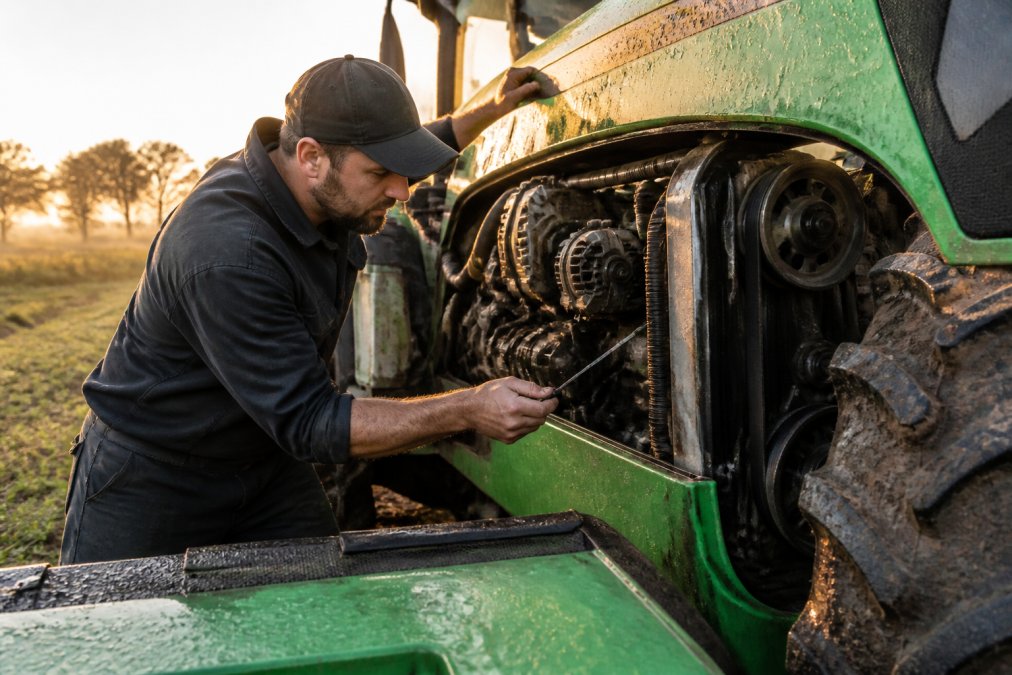
Daily pre-operation inspections are the frontline defence against unplanned downtime. Spend five minutes before you operate any piece of agricultural machinery checking these critical points:
- Fluid levels, Check engine oil, coolant, hydraulic fluid, and fuel. Low levels indicate leaks or consumption that need attention before they cause mechanical failure.
- Belts and hoses, Look for cracks, fraying, or loose connections. A belt failure in the field can leave you stranded for hours.
- Battery terminals and connections, Corrosion or loose connections cause starting problems and electrical failures. Clean terminals with a wire brush if you see white or blue buildup.
- Air filter condition, A clogged filter reduces engine performance and fuel efficiency. Replace if it’s visibly dirty.
- Tyre pressure and condition, Underinflated tyres wear faster and reduce traction. Check for punctures, bulges, or uneven wear.
- Lights and safety equipment, Ensure all lights work and safety guards are in place before operating.
- Hydraulic system leaks, Scan underneath for drips or wet spots that indicate seal or hose failure.
Document what you inspect each day. A simple notebook or digital log creates a record of what you’ve checked and when problems first appeared. This history becomes invaluable when you need to explain a pattern to a mechanic.
Preventive Maintenance Checklist for Tractors and Heavy Machinery
Preventive maintenance is the systematic approach to keeping equipment running. Unlike reactive repairs, preventive maintenance follows a schedule based on hours of operation or calendar time. It’s the difference between replacing a filter before it clogs and replacing an engine because a clogged filter starved it of oil.
Most agricultural machinery manufacturers publish maintenance schedules in the operator’s manual. These schedules specify what needs servicing and when. Ignoring these schedules is false economy, you save a few hundred dollars on a service and lose tens of thousands when the engine fails prematurely.
A preventive maintenance checklist for tractors and heavy farm equipment should include:
| Maintenance Task | Frequency | Impact |
|---|---|---|
| Oil and filter change | Every 250-500 hours | Prevents engine wear and sludge buildup |
| Air filter replacement | Every 500 hours or annually | Maintains engine efficiency and fuel economy |
| Hydraulic fluid and filter | Every 1,000-2,000 hours | Prevents hydraulic system failure |
| Coolant flush | Every 2 years or per manual | Prevents overheating and corrosion |
| Belt inspection and replacement | Every 1,000-2,000 hours | Avoids mid-operation belt failure |
| Spark plug inspection | Every 500 hours | Ensures reliable starting and performance |
| Tyre rotation and pressure check | Monthly or before heavy use | Extends tyre life and improves traction |
| Battery load test | Seasonally | Prevents starting failures in cold weather |
The key is consistency. Set a calendar reminder for each service interval and stick to it. A tractor serviced on schedule will run reliably for years. One that’s neglected will surprise you with a catastrophic failure at the worst possible moment.
Is Synthetic Oil Worth It for Farm Vehicles
The question of synthetic versus conventional oil comes up regularly with farmers. Synthetic oil costs more upfront but lasts longer between changes. For farm equipment running in dusty, hot conditions typical of the region, the choice matters.
Synthetic oil offers several advantages for agricultural machinery. It flows better in cold weather, reducing startup strain on engines in winter. It resists breakdown at high temperatures, which matters for equipment working hard in summer heat. It contains fewer impurities, so it keeps engines cleaner and reduces sludge buildup. Most importantly, synthetic oil extends drain intervals, you can often go twice as long between oil changes, which reduces your total maintenance cost over the life of the equipment.
The trade-off is cost. Synthetic oil runs 50-100% more per litre than conventional mineral oil. For a large tractor with a 20-litre sump, a synthetic oil change costs significantly more than a conventional one. However, if you’re changing oil half as often, the total cost per year may actually be lower.
For farm equipment in the Mildura region, where summer temperatures regularly exceed 35 degrees Celsius and dust levels are high, synthetic oil is worth considering for primary work equipment. A tractor that runs eight hours a day during harvest season benefits from synthetic’s superior heat resistance and longer service intervals. Backup equipment or seasonal-use machinery might not justify the extra cost.
Check your equipment manual first. Some manufacturers specify synthetic oil requirements; others allow either type. If the manual allows your choice, consider your equipment’s age and workload. Newer equipment with tight tolerances often runs better on synthetic.
Fluid, Filter, and Lubrication Management
Clean fluids and proper lubrication are the foundation of equipment longevity. Dirty oil, clogged filters, and insufficient lubrication accelerate mechanical wear and cause unexpected failures.
Farm Equipment Diagnostic Services and When to Use Them
Modern farm equipment is complex. A tractor engine has dozens of sensors feeding data to a computer that controls fuel injection, ignition timing, and emissions. When something goes wrong, the problem isn’t always obvious. A check-engine light might indicate a sensor fault, an emissions issue, a fuel problem, or something entirely different. Guessing costs money.
Storage, Weather Protection, and Seasonal Preparation
Equipment stored outdoors deteriorates rapidly. UV exposure cracks rubber seals and hoses. Moisture causes corrosion. Temperature swings create condensation inside fuel tanks and hydraulic systems. Proper storage extends equipment life significantly.
- Change the oil and filter, Fresh oil prevents acid corrosion during storage.
- Fill the fuel tank and add fuel stabiliser, This prevents varnish buildup in the fuel system.
- Drain the cooling system or add antifreeze, Prevents freeze damage and corrosion.
- Lubricate all grease points, Prevents rust and seizing.
- Disconnect the battery, Prevents slow discharge and corrosion.
- Cover the equipment with a breathable cover, Protects from weather without trapping moisture.
Building a Spare Parts Inventory and Service History System
Equipment failures often happen at inconvenient times. A belt breaks during harvest. A hydraulic hose ruptures when you’re far from town. If you don’t have a replacement on hand, you’re waiting for parts to arrive while your work stops.
Frequently Asked Questions
What are the most common causes of agricultural machinery failure in the Mallee region?
Dust infiltration, extreme temperature swings, and corrosion from seasonal moisture are the primary culprits in this environment. Cooling fans clogged with debris, worn belts from UV exposure, and battery degradation from temperature extremes cause unexpected shutdowns during critical work periods. Regular debris removal, UV-resistant covers, and scheduled inspections of cooling systems prevent 70% of preventable failures.
What should I check daily to avoid equipment downtime?
Before starting any machinery, inspect fluid levels (oil, coolant, hydraulic), check for visible leaks, examine belt tension and hose integrity, clean cooling fans, and test battery connections. Look for debris around air filters and inspect tyres for damage. These five-minute checks catch mechanical wear early, preventing unplanned downtime during harvest or peak work seasons.
Is synthetic oil worth it for farm vehicles and heavy machinery?
Yes, for equipment running in harsh conditions. Synthetic oil resists breakdown in extreme heat, reduces mechanical wear, and extends intervals between oil changes, critical when you cannot afford downtime. The higher upfront cost is offset by longer equipment longevity and fewer emergency repairs. Mineral oil works for light-duty equipment; synthetic is essential for tractors and irrigation pumps running extended hours.
How often should I service my tractor to minimise downtime?
Follow the manufacturer’s preventive maintenance schedule, typically every 100-200 operating hours or seasonally. Before and after harvest, perform full inspections of belts, hoses, filters, and fluids. Keep detailed work order documentation to track service history and identify patterns in mechanical failure. Professional diagnostic services catch developing issues before they cause unplanned downtime.
What is a preventive maintenance checklist for tractors?
A systematic inspection covering engine oil and filter replacement, coolant and hydraulic fluid checks, belt and hose integrity, battery performance, air filter condition, fuel filter replacement, tyre pressure and wear, lubrication of moving parts, and cooling fan operation. Document each check with dates and findings. This asset management approach reduces equipment longevity loss and operational efficiency drops caused by deferred maintenance.
When should I use professional farm equipment diagnostic services?
Use diagnostic services when equipment exhibits unusual sounds, performance drops, or warning lights, or before major seasonal work. Modern tractors and irrigation pumps require specialist equipment to read fault codes and identify mechanical issues accurately. Professional diagnostic services prevent costly guesswork, confirm repair necessity, and ensure critical spare parts are ordered with realistic lead times for regional Victoria.
