
Table of Contents
- How to Find Reliable Farm Equipment Repair Services
- Farm Machinery Breakdown Diagnosis: What You Can Check Yourself
- Creating a Farm Equipment Maintenance Checklist
- Synthetic Oil for Farm Vehicles: Is It Worth the Investment?
- Getting an Accurate Farm Machinery Repair Cost Estimate
- Minimising Downtime During Busy Periods
- Repair Versus Replace: Making the Right Decision
- Frequently Asked Questions
Last Updated: October 11, 2026
How to Find Reliable Farm Equipment Repair Services
Finding trustworthy farm equipment repair services in Mildura matters, a breakdown during harvest season can cost thousands in lost productivity.
Start by looking for mechanics who understand agricultural machinery specifically. General automotive technicians often lack the knowledge to diagnose hydraulic systems, diesel engines, or the specialised components common in farm equipment. Ask whether the workshop handles tractors, harvesters, and heavy machinery.
What to look for in a qualified mechanic
A qualified mechanic should explain what they’re looking at clearly and ask detailed questions about how the equipment failed and what warning signs appeared. This diagnostic approach prevents unnecessary repairs.
Check whether they use modern diagnostic tools. Farm machinery has become increasingly complex, with electronic systems that require proper scanning equipment to read accurately.
Look for transparency about pricing and labour rates. A repairer who quotes a job over the phone without seeing the equipment is guessing. Reliable mechanics inspect the machinery first, then provide a detailed breakdown of parts and labour costs before starting work.
Checking qualifications and warranties
Ask about qualifications and warranties on repairs. Reputable workshops often employ tradespeople with formal apprenticeships in diesel fitting or agricultural engineering.
A reliable repairer stands behind their work, typically offering at least a 30-day warranty on parts and labour.
Farm Machinery Breakdown Diagnosis: What You Can Check Yourself
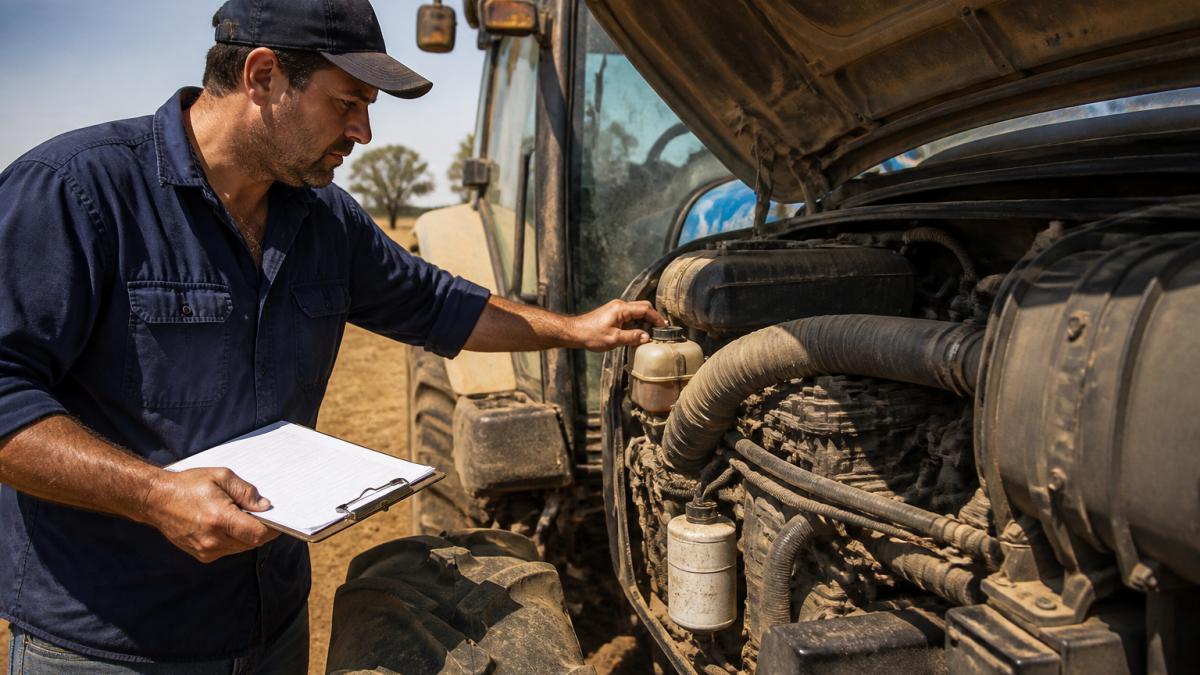
Before calling a mechanic, gather information that saves time and money during the repair process.
Common warning signs and what they mean
Strange noises signal problems: grinding points to bearing damage; knocking suggests fuel timing issues. Hydraulic systems: a whining pump often means low fluid or air in the lines; jerky movement indicates pressure loss or contamination.
Note the colour and location of leaks. Red fluid typically means hydraulic oil; dark brown or black usually indicates engine oil or diesel contamination.
Overheating engines often stem from coolant loss, blocked radiators, or thermostat failure. Check coolant levels when the engine is cold. A radiator clogged with dust and chaff is common in harvest season and easy to clean yourself with compressed air or a soft brush.
Information to gather before calling a mechanic
Document what happened before the failure: was the equipment under load, running for extended hours, or showing warning signs? Write this down.
Check fluid levels: engine oil, hydraulic fluid, coolant, and fuel. Frequent topping-up suggests a leak needing professional attention.
Photograph any visible damage or leaks. If the equipment won’t start, check fuel supply, battery connections, and fuel filter.
Creating a Farm Equipment Maintenance Checklist
Preventive maintenance costs far less than emergency repairs. A simple checklist keeps your equipment running reliably through busy periods.
Pre-harvest and seasonal checks
Before harvest, check all fluid levels and change engine oil and filters if due. Running old oil during extended hours accelerates engine wear.
Examine belts and hoses for cracks or hardening. Replace weakened hydraulic hoses before harvest to prevent mid-season breakdowns. Check all connections for tightness.
Clean or replace cab air filters before harvest to prevent overheating.
Inspect tyres or tracks for damage and proper pressure. Under-inflated tyres increase fuel consumption; over-inflated ones risk blowouts.
Routine servicing intervals
Most farm equipment needs servicing every 250-500 operating hours, depending on the manufacturer’s recommendations. Keep detailed records of servicing dates and work completed.
Change engine oil and filters at recommended intervals. Hydraulic fluid should be inspected for contamination, a simple test kit shows whether water or particles have degraded the fluid. Replace it if testing shows contamination, not just on a calendar schedule.
Check diesel fuel filters monthly during the season. Water and sediment accumulate in fuel tanks, especially if equipment sits idle for weeks. A blocked fuel filter starves the engine of fuel and causes hard starting or loss of power.
Synthetic Oil for Farm Vehicles: Is It Worth the Investment?
Synthetic oil costs more upfront, but the question is value over time.
Synthetic oil resists breakdown at high temperatures, maintaining viscosity and protecting engine components longer than mineral oil during extended harvest runs.
Synthetic oil flows smoothly at startup, providing better lubrication when the engine is most vulnerable, translating to less internal damage over time.
Synthetic oil lasts 10,000-15,000 kilometres or 500 operating hours, compared to 5,000-8,000 kilometres for mineral oil, reducing servicing frequency.
For equipment running fewer than 500 hours annually, mineral oil’s lower cost makes sense. For intensive operations, synthetic oil’s extended drain intervals justify the higher cost. Calculate total servicing cost over three years, including labour.
Getting an Accurate Farm Machinery Repair Cost Estimate
A fair estimate protects both you and the repairer. Understanding what drives repair costs and how to compare quotes helps you avoid surprises and make informed decisions about repair versus replacement.
Breaking down repair costs: what you’re actually paying for
Diagnostic labour
Diagnosis takes 0.5 to 2 hours depending on complexity.
Labour rates and hours
Farm equipment mechanics in regional Victoria typically charge $80-$150 per hour. Specialists command higher rates but prevent misdiagnosis.
Ask the mechanic to explain labour hour estimates. If vague, request a breakdown of removal, diagnosis, repair, and testing time.
Parts and materials
Parts costs vary based on whether you choose genuine, aftermarket, or refurbished components.
- Genuine parts (OEM) cost 20-50% more but guarantee compatibility and carry manufacturer warranty.
- Aftermarket parts cost less but quality varies; reputable suppliers offer warranties.
- Refurbished parts are rebuilt to factory specs, cost less than genuine, and often carry 12-month warranty, a sensible middle ground for expensive components.
Ask which option they’re quoting. For wear items, aftermarket is fine; for critical systems, genuine or refurbished is worth the cost.
Travel and callout fees
Travel time and distance are billable.
Scheduling maintenance during quieter periods avoids emergency callout premiums.
Disposal and waste fees
Most workshops include disposal in their labour rate, but ask. Separate disposal fees are typically $10-$30.
Requesting and comparing written quotes
What a good quote includes
Request a detailed written quote showing: equipment details, problem description, itemised parts list, labour hours and rate, additional costs, total cost, warranty, timeline, and payment terms.
A quote missing any of these details is incomplete. Ask the mechanic to clarify before you approve the work.
Red flags in quotes
- Vague descriptions: “Engine repair – $2,000” tells you nothing. Demand specifics: what’s being repaired, what parts are included, how many hours of labour?
- Inflated labour hours: Compare the quoted hours against the manufacturer’s service manual if available. A simple repair shouldn’t take twice as long as the manual suggests.
- Unexplained parts markup: Parts should be quoted at cost plus a reasonable markup (typically 10-20%). If a $100 part is quoted at $250, ask why.
- No warranty clause: Reliable mechanics warrant their work. If the quote doesn’t mention warranty, ask for one in writing.
- Pressure to decide immediately: A reputable mechanic gives you time to review the quote and get a second opinion if needed.
Getting a second opinion
For major repairs, engine rebuilds, transmission overhauls, hydraulic system replacements, it’s reasonable to have a second qualified mechanic assess the equipment independently. This costs a diagnostic fee (typically $100-$200) but can prevent expensive mistakes.
Compare quotes on total cost, not just labour or parts. A workshop charging slightly more per hour but completing the job faster may cost less overall.
Understanding payment terms and protecting yourself
Clarity on payment protects both parties. Ask:
- Deposit: Do they require a deposit before starting work? (Common for major repairs; typical deposit is 25-50% of the quote.)
- Progress updates: Will they contact you if they discover additional problems? (A reputable mechanic won’t proceed with extra work without your approval.)
- Final invoice: Will the final bill match the quote, or can it exceed the quoted amount? (Legitimate overages should be explained and approved before completion.)
- Payment method: Do they accept bank transfer, cash, or card? Are there payment plan options for large repairs?
If a repair exceeds the quote, ask for a revised quote before they continue. This prevents bill shock and gives you the chance to decide whether to proceed or seek an alternative solution.
Calculating repair versus replacement
Once you have a repair quote, compare it against replacement cost. If the repair exceeds 50-60% of the equipment’s current market value, replacement often makes financial sense. Factor in downtime: a week without your primary tractor during harvest season might cost more than the repair itself. A reliable used replacement might be cheaper than fixing an ageing machine that will fail again soon.
Minimising Downtime During Busy Periods
Downtime during harvest season is expensive. Strategic planning reduces the risk and impact of equipment failures.
Plan repairs around your schedule. If an item needs servicing but isn’t urgent, book it for a quieter period, early morning before fieldwork starts, or during a weather delay.
Understand realistic response times. Emergency breakdown calls take priority, but “emergency” means the equipment is non-functional. A mechanic who arrives within two hours is responding quickly in a rural area; same-day service during peak season is excellent.
Have backup equipment if possible. A second tractor or harvester, even an older model, keeps operations running if the primary machine fails.
Repair Versus Replace: Making the Right Decision
At some point, every piece of farm equipment reaches an age where repairs become uneconomical.
A machine approaching the end of its useful life will need increasingly frequent repairs.
Reliability matters. Older equipment fails at inconvenient times, mid-harvest, far from the workshop. New or newer used equipment comes with warranties and predictable servicing schedules.
Consider fuel efficiency and capability. Modern equipment often uses less fuel and offers features that increase productivity. Over several seasons, these gains can offset the purchase cost.
Keeping your farm equipment running reliably through busy seasons requires attention to maintenance, access to qualified mechanics, and honest decisions about repair versus replacement.
Frequently Asked Questions
How do I know if a mechanic is recommending repairs I actually need?
Ask the mechanic to explain the diagnosis using your vehicle’s current symptoms, not future possibilities. Request a written quote that breaks down labour and parts separately. A trustworthy repairer will prioritise urgent safety issues first and suggest preventive work as optional. Always ask what happens if you delay non-critical repairs, and don’t hesitate to get a second opinion on major work. Transparent mechanics welcome questions and won’t pressure you into unnecessary services.
What should I include in a farm equipment maintenance checklist?
A basic farm equipment maintenance checklist should cover fluid levels (engine oil, hydraulic fluid, coolant), filter replacements, belt and hose condition, battery health, and tyre pressure. Before harvest, add checks for brakes, lights, and all hydraulic connections. Keep records of service dates and costs. Seasonal checks are critical: inspect air conditioning before summer and fuel systems before extended operating hours. Routine servicing intervals depend on your machinery type and operating hours, so refer to the manufacturer’s manual or ask your mechanic for a schedule tailored to your equipment.
Is synthetic oil worth using in farm vehicles and heavy machinery?
Synthetic oil offers longer intervals between changes (often 10,000 to 15,000 kilometres or more) and performs better in extreme temperatures, which matters for machinery running extended harvest hours. It reduces engine wear and can improve fuel efficiency slightly. The upfront cost is higher, but the extended drain intervals may offset this over time. For older farm equipment or light-duty vehicles, conventional oil is usually adequate. For newer machinery, heavy-use tractors, or vehicles operating in harsh conditions, synthetic oil for farm vehicles delivers better protection and longer equipment life. Your mechanic can advise based on your machinery’s age and usage patterns.
What information should I provide when requesting a farm machinery repair cost estimate?
Provide the equipment make, model, year, and current operating hours or kilometres. Describe the symptoms clearly: when the problem started, what sounds or performance changes you’ve noticed, and whether warning lights are showing. Include your maintenance history if available. Explain the urgency: is this a breakdown during harvest or routine servicing? This context helps the mechanic assess the scope of work and provide an accurate farm machinery repair cost estimate. Ask whether the quote includes parts, labour, and diagnostic fees, and request a timeframe for the repair. Written quotes prevent misunderstandings and give you a basis for comparison if you seek multiple estimates.
