
Table of Contents
- Synthetic vs Conventional Oil: The Core Difference
- Benefits of Synthetic Oil in Extreme Heat
- Engine Wear and Longevity: What Synthetic Delivers
- Oil Change Intervals for Farm Vehicles
- Total Cost of Ownership: Is Synthetic Worth the Investment?
- Compatibility with Older Farm Machinery
- The Verdict: When Synthetic Makes Sense
- Frequently Asked Questions
Last Updated: October 3, 2026
Synthetic vs Conventional Oil: The Core Difference
The choice between synthetic and conventional oil comes down to how molecules behave under stress. Conventional oil is refined directly from crude oil and contains whatever molecules naturally occur in that crude. Synthetic oil is chemically engineered from base oils, with additives precisely formulated to deliver consistent performance across extreme temperature ranges and heavy workloads.
For farm vehicles, this distinction matters. Agricultural machinery operates under prolonged high temperatures during harvest, extended service intervals, and heavy towing loads, conditions that stress conventional oil. Synthetic oil maintains its protective film longer because its viscosity index (how much thickness changes with temperature) is significantly higher, meaning it flows smoothly in cold starts and resists thinning when engines get hot.
The Australian Automotive Aftermarket Association notes that synthetic oils are increasingly specified by modern engine manufacturers because they extend engine life and reduce fuel consumption. For farm operators in the region, understanding this difference is the first step in determining whether is synthetic oil worth it for farm vehicles as an investment.
Benefits of Synthetic Oil in Extreme Heat
Thermal breakdown is where synthetic oil shows its clearest advantage. Under sustained load like pulling a header during harvest, conventional oil oxidises and loses protective properties. Synthetic oil resists this degradation because its uniform molecular structure is engineered to withstand high temperatures without breaking down.
In extreme heat, conventional oil thickens and loses its protective lubrication film. Synthetic oil maintains viscosity stability, delivering consistent protection whether it’s 35 or 50 degrees Celsius.
Synthetic oils’ additive package, detergents and dispersants that keep contaminants suspended, performs more reliably at high temperatures, resulting in cleaner engine internals and less carbon buildup. For farm vehicles running at high RPM under load, this protection compounds over time.
If your farm equipment is running through a hot season with minimal downtime for maintenance, synthetic oil’s thermal stability becomes your insurance policy against unexpected engine failure. The cost difference per litre is worth the certainty that your engine won’t seize mid-season.
Engine Wear and Longevity: What Synthetic Delivers
Synthetic oil reduces friction between moving engine components more effectively than conventional oil, meaning less wear on piston rings, cylinder walls, and bearing surfaces. Over thousands of hours a farm tractor can accumulate in a single season, this compounds into real longevity gains.
Wear protection comes from synthetic oil’s superior lubrication film and absence of microscopic particles that act as abrasives in conventional formulations. Synthetic oil eliminates this source of wear entirely.
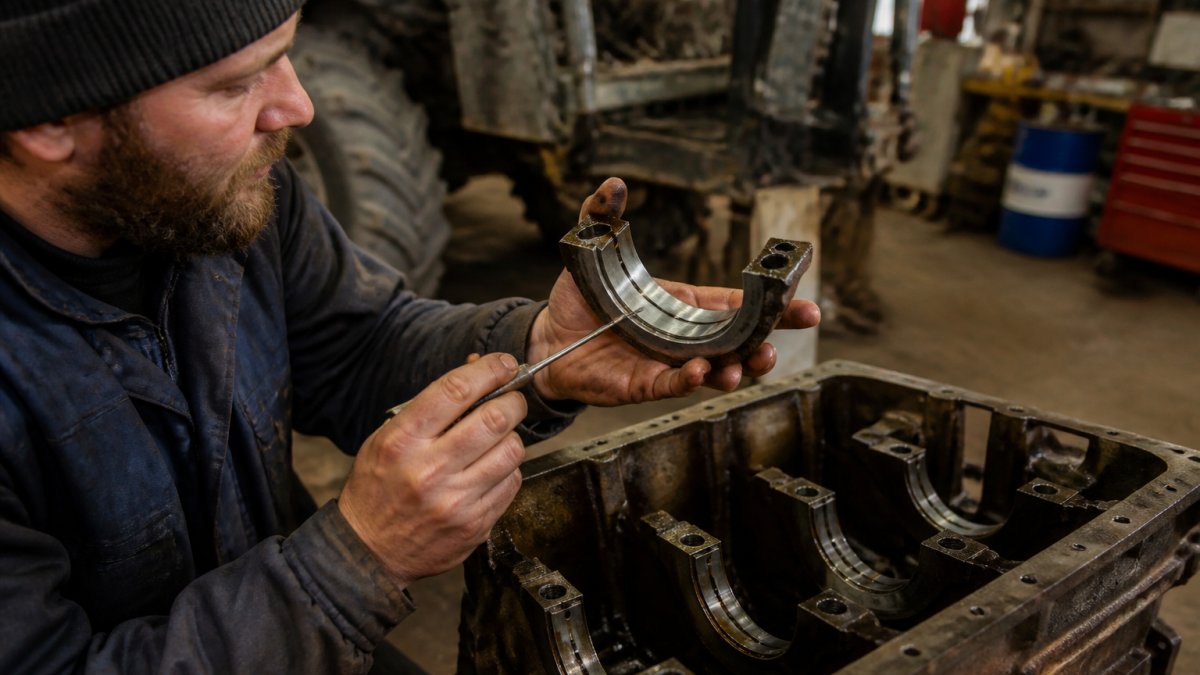
For agricultural equipment running 10,000+ hours over its lifetime, a tractor on synthetic oil will likely outperform an identical machine on conventional oil by 1,000+ hours before major engine work becomes necessary.
Synthetic oil resists oxidation far more effectively, maintaining protective properties longer between changes. This is particularly important for farm vehicles that sit idle between seasons, as synthetic resists degradation when engines sit unused.
Oil Change Intervals for Farm Vehicles
Oil change intervals show synthetic oil’s economic advantage, but the calculation for farm equipment differs from standard automotive guidance. Conventional oil typically requires changing every 5,000 kilometres or three months, but farm vehicles rarely follow this pattern because usage is seasonal and load-dependent.
For tractors, time-based intervals (every three months) are more practical than distance-based ones because equipment sits idle between seasons. Synthetic oil’s superior oxidation resistance is valuable here, resisting degradation when engines sit unused for weeks or months.
Modern tractors (post-2010) often specify 500-hour intervals or 10,000-15,000 kilometres for synthetic oil. Older machines may recommend 250-hour intervals on conventional oil. Check your equipment’s service manual rather than applying generic automotive intervals.
Many farm operators adopt a hybrid approach: they run synthetic oil but monitor operating hours rather than kilometres, as a header running 60 hours during harvest accumulates more engine stress than a utility vehicle covering 1,000 kilometres.
Extended intervals depend on operating environment. Farm equipment in dusty conditions accumulates contaminants faster. Many experienced mechanics recommend oil analysis every 200-300 hours in dusty conditions rather than blindly following the manufacturer’s interval, to determine whether the oil is still protecting adequately.
Don’t assume that synthetic oil means you never need to check your oil level or condition. Farm equipment operating in dusty environments can still accumulate contaminants rapidly. Regular visual inspection and condition monitoring remain essential, even with synthetic oil’s extended drain intervals. A clogged air filter or worn seals can accelerate contamination, making more frequent changes necessary despite using premium oil.
Synthetic oil’s practical benefit is flexibility: you can run longer between changes when conditions allow, but you’re not locked into a rigid schedule if equipment works harder than expected.
Total Cost of Ownership: Is Synthetic Worth the Investment?
Synthetic oil costs roughly 2-3 times more per litre than conventional oil, making a single oil change significantly more expensive upfront.
The offset comes from reduced change frequency and extended engine life. An engine that runs 1,000 additional hours before major work, or avoids catastrophic failure during harvest, delivers value far beyond premium oil cost. Synthetic’s superior heat performance also reduces engine damage risk during peak season.
For tight budgets, upfront cost matters most. For agricultural businesses where harvest downtime represents lost income, synthetic’s reliability and extended intervals often justify the premium.
At Mallee Auto & Agricultural Services, we help farm operators across the region make informed decisions about their equipment. The extended intervals and improved engine protection offered by synthetic oil can provide peace of mind during demanding seasons.
| Oil Type | Upfront Cost per Change | Change Frequency | Engine Wear Protection | Best For |
|---|---|---|---|---|
| Conventional | Lower | Every 5,000 km | Standard | Budget-conscious, light-duty use |
| Synthetic Blend | Moderate | Every 7,500 km | Good | Moderate-duty farm equipment |
| Full Synthetic | Higher | Every 10,000-15,000 km | Superior | Heavy-duty, high-temperature operation |
Compatibility with Older Farm Machinery
Older tractors and farm equipment present a specific and legitimate challenge that deserves more than a casual mention. Many machines built before the 1990s were engineered for conventional oil, and their seals and gaskets were designed around conventional oil’s viscosity and chemical properties. Synthetic oil is thinner and more fluid than conventional oil, which means it can seep past older seals that have hardened over decades of exposure to heat and conventional oil’s additives.
This is not a myth, it is a real failure mode that has caught out farm operators who switched to synthetic without assessing their equipment’s condition first. The risk is highest in machines with high mileage or extended idle periods, where seals have become brittle. A slow leak from a rear main seal or transmission gasket might go unnoticed until the engine seizes mid-season, which is the worst possible time for an equipment failure.
However, the risk is manageable with a straightforward assessment. A qualified mechanic can inspect seal condition by looking for existing weeping or leaks around the engine block, transmission housing, and oil pan. If seals are already leaking conventional oil, they will leak synthetic oil faster. If seals are dry and show no signs of leakage, they are likely still resilient enough to handle synthetic’s thinner viscosity. This inspection takes 15-20 minutes and costs far less than an engine rebuild.
For heritage equipment or machines where seal replacement isn’t practical or economically justified, synthetic blends offer a middle ground. Synthetic blends combine conventional and synthetic base oils (typically 25-50% synthetic content) and provide improved thermal stability and extended intervals compared to pure conventional oil, while being compatible with older seals and gasket materials.
Equipment age is a useful guide but not definitive. A 1985 tractor that has been well-maintained and stored indoors may have more resilient seals than a 2005 machine that has sat in the sun for years. Conversely, a pre-1990s machine that has already been converted to synthetic by a previous owner and shows no leaks is clearly compatible. The condition of the seals matters more than the calendar age of the equipment.
For newer farm equipment manufactured in the last 15 years, full synthetic is typically compatible and often recommended or required by the manufacturer. Check your equipment’s service manual; if synthetic is approved, there is no compatibility concern. Most modern tractors, headers, and utility vehicles specify synthetic oil or synthetic blend as the preferred lubricant, and their seals are engineered accordingly.
If you are uncertain about your equipment’s seal condition, here is a practical approach: run a synthetic blend for one oil change cycle (perhaps 7,500 kilometres or 250 hours). Monitor the oil level weekly and watch for any visible leaks under the engine or around the transmission. If the oil level remains stable and you see no new leaks, the seals are tolerating the thinner oil well, and you can confidently switch to full synthetic on the next change.
The seal-leakage risk with older farm machinery is real but avoidable with a 20-minute inspection and a cautious transition. Don’t assume your equipment is incompatible without checking; equally, don’t assume it is compatible without assessing seal condition. A synthetic blend is a safe intermediate step if you are uncertain.
Treating compatibility as a condition-based decision, not a blanket yes-or-no based on the year the equipment was built, is key for farm operators considering a switch.
The Verdict: When Synthetic Makes Sense
Determining whether is synthetic oil worth it for farm vehicles depends on whether operating conditions justify the cost and downtime represents genuine financial loss. If you’re running a tractor intensively during harvest season, pulling heavy loads in hot conditions, and can’t afford unexpected engine failure, synthetic oil is insurance you should buy.
For occasional users, lighter-duty equipment, or operations where downtime isn’t catastrophic, conventional oil or a synthetic blend delivers adequate protection at lower cost. The decision ultimately depends on your specific use case, your budget, and how much risk you’re willing to accept.
The thermal stability, extended drain intervals, and superior wear protection of synthetic oil make it the logical choice for demanding farm work, particularly in the heat of an Australian summer. The upfront cost is real, but so is the value of reliable equipment when you need it most.
At Mallee Auto & Agricultural Services, we help farm operators and vehicle owners in the region make informed maintenance decisions. Whether synthetic oil is right for your equipment depends on your specific needs, and our mechanics can assess your vehicles and recommend the best approach. The Automotive Industry Association of Australia supports best practices in vehicle maintenance that extend equipment life and reduce total operating costs.
If you’re uncertain whether your farm equipment should run synthetic or conventional oil, or if you’d like your current oil analysed to determine whether it’s performing adequately, Book Now with our team and we’ll provide a transparent assessment with no hidden charges. Our pensioner discounts apply to all services, and we’re committed to keeping your equipment running smoothly and safely through every season.
Frequently Asked Questions
Does synthetic oil really make a difference for heavy-duty farm engines?
Yes. Synthetic oil maintains a stronger lubrication film under the extreme temperatures and high loads that farm equipment endures. It resists thermal breakdown better than conventional oil, reducing friction, engine wear, and the buildup of sludge and deposits. For tractors and trucks working long hours in demanding conditions, this translates to measurably longer engine life and fewer unplanned repairs that cost you downtime during critical seasons.
Can I switch from conventional to synthetic oil in older tractors?
In most cases, yes. However, older seals and gaskets were designed for conventional oil and may swell or leak with synthetic. Before switching, check your tractor’s manual or consult a mechanic familiar with your equipment. If seals are worn, repair them first. Many farmers successfully transition older machinery to synthetic blends as a middle ground, gaining some synthetic benefits while minimising compatibility risk.
How does synthetic oil perform in the extreme heat of the Mallee region?
Synthetic oil excels in high-temperature environments. Its superior oxidation resistance means it resists breakdown and sludge formation better than conventional oil when engines run hot during peak harvest season or in dusty conditions. This is particularly valuable in regions with sustained high temperatures, where conventional oil degrades faster and requires more frequent changes. Synthetic maintains viscosity consistency and protective film strength longer.
Is synthetic oil more cost-effective for high-hour farm vehicles?
It depends on your usage pattern and budget. Synthetic costs more upfront but extends drain intervals significantly, reducing the total number of oil changes over the vehicle’s lifetime. For high-hour equipment, the savings in labour time, filter costs, and downtime often offset the premium price. Budget-conscious operators might prefer synthetic blends as a compromise. Calculate your own total cost of ownership based on your equipment’s annual hours and current maintenance schedule.
