
Table of Contents
- Verify Qualifications, Licences, and Experience with Your Vehicle’s Make and Model
- Check Online Reviews and Word-of-Mouth Recommendations
- Inspect the Workshop Facilities, Equipment, and Mechanic Diagnostic Tools
- Questions to Ask a Mechanic Before Committing to Repairs
- Compare Car Repair Quote and Understand the Estimate
- Older Car Maintenance and the Repair-Versus-Replace Decision
- Red Flags and How to Avoid Unnecessary Repairs
- Frequently Asked Questions
Last Updated: October 19, 2026
Verify Qualifications, Licences, and Experience with Your Vehicle’s Make and Model
Understanding how to choose a good mechanic for older cars starts with recognising that a mechanic excellent with late-model cars is not automatically the right person for a 20- or 30-year-old vehicle. Older cars reward a different skill set: pattern recognition for worn components, patience with intermittent faults, and the ability to source or refurbish parts that are no longer stocked by dealers. Verify both the formal credentials and the practical older-car experience before you book.
What to check on paper
In Australia, automotive trades are regulated through state and territory fair trading and consumer affairs agencies, and the relevant qualification is typically a Certificate III in Light Vehicle Mechanical Technology (or an equivalent automotive trade qualification) plus a current trade licence where the state requires one.
Also confirm membership of a recognised industry body such as the Motor Trades Association of Australia (MTAA) or a state affiliate. Membership is not a guarantee of quality, but it usually means the business has agreed to a code of conduct and has a complaints pathway beyond the workshop itself.
How to test older-car expertise
Qualifications tell you the mechanic is trained; they do not tell you the mechanic has actually worked on cars like yours. Ask these questions and listen for specific answers rather than general reassurance:
- How many vehicles of my make, model and approximate year have you worked on in the last 12 months?
- What are the common failure points on this model at my car’s age and kilometre reading?
- How do you source parts that are discontinued or no longer stocked by the dealer? Do you use refurbished, new old stock, or aftermarket equivalents, and how do you decide?
- How do you approach rust in structural versus cosmetic areas?
- When a fault is intermittent, what is your diagnostic process and how do you avoid replacing parts by guesswork?
- Can you show me examples of similar older-car repairs you have completed?
A mechanic with genuine older-car experience will talk in specifics: known weak points, typical labour times, parts sources, and the trade-offs between repairing and replacing ageing components. Vague answers such as “we work on everything” are a signal to keep looking.
General repairer versus older-car specialist
For routine servicing and common faults, a competent general repairer in Mildura or elsewhere in regional Victoria is often the practical choice. For complex diagnostics, electrical faults, rust repair, or parts sourcing on a rare or older model, a specialist, or a workshop with a dedicated older-vehicle technician, is usually worth the extra travel. Ask directly which category the workshop sees itself in, and whether it has the diagnostic equipment and reference material for your vehicle’s era.
Bring your vehicle’s logbook, previous invoices and a written symptom log to the first visit. A mechanic who reviews them before quoting is demonstrating the methodical approach older cars need.
At Mallee Auto & Agricultural Services, we specialise in all vehicle types. Our skilled mechanics understand the unique challenges that come with maintaining vehicles that have been on the road for years, and we can talk you through our experience with your specific make and model before you commit to any work.
Check Online Reviews and Word-of-Mouth Recommendations
Start by asking people you trust. Friends, family, and colleagues often know reliable mechanics. Personal recommendations carry real weight because they come from people who’ve used the service.
Search online for reviews on Google, Facebook, and industry sites. Read what customers say about their experience. Look for patterns in reviews, not just one or two comments.
Pay attention to what reviewers mention:
- How clearly the mechanic explained the problem
- Whether the final bill matched the estimate
- If repairs held up over time
- How the mechanic treated them
Word-of-mouth in your local area is valuable. Ask at community groups or local shops who they use.
Red flags in reviews include complaints about high-pressure sales, unexpected costs, or rushed work. If many reviews mention these issues, look elsewhere.
Inspect the Workshop Facilities, Equipment, and Mechanic Diagnostic Tools
Visit the workshop before you commit to repairs. A clean, organised space suggests professional standards. Poor conditions often mean poor service.
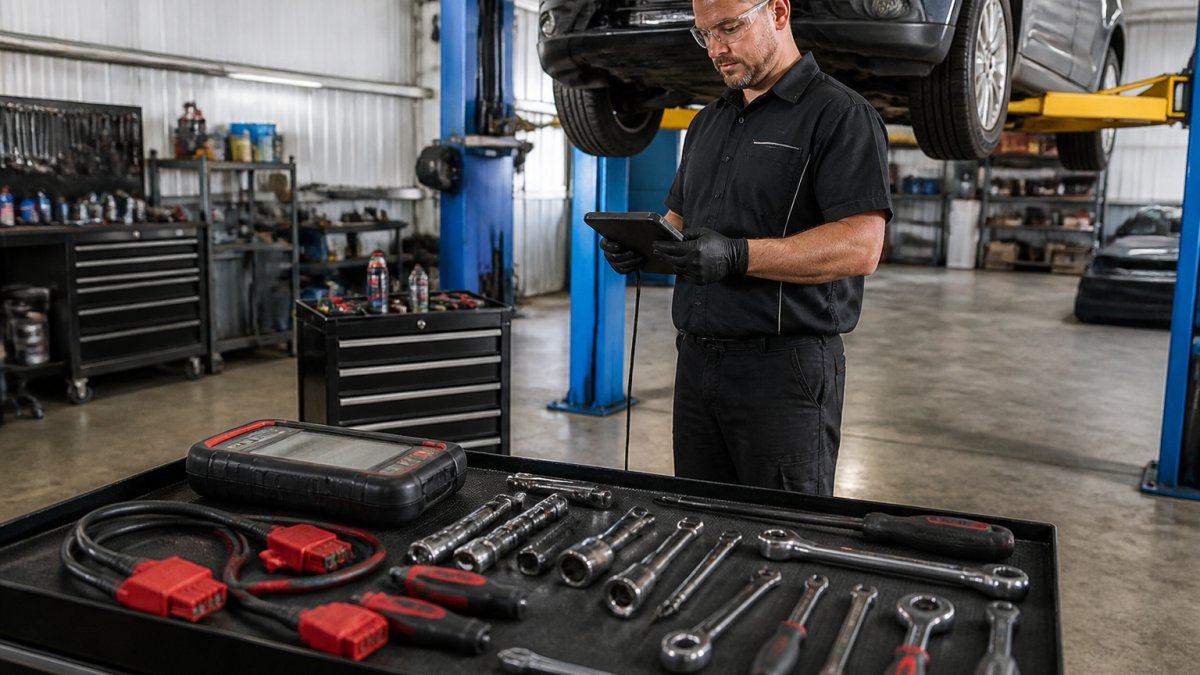
Look for modern diagnostic equipment. Older cars sometimes need specialist tools, but a good workshop should have basic diagnostic capability. Ask what diagnostic tools they use.
Check for these signs of a quality workshop:
- Clean floors and organised tool storage
- Modern diagnostic equipment visible
- Safety equipment properly displayed
- Vehicles inside protected from weather
- Staff wearing appropriate safety gear
A mechanic with access to modern diagnostic tools can identify problems accurately. This matters especially for older cars, where guesswork wastes money.
The workshop’s condition tells you how seriously they take their work. Mallee Auto & Agricultural Services maintains modern diagnostic tools and clean facilities to ensure accurate fault finding and quality repairs.
Questions to Ask a Mechanic Before Committing to Repairs
Before you leave your vehicle, ask clear questions. A good mechanic welcomes them and explains thoroughly.
Ask about the repair process:
- What’s the problem?
- How did you identify it?
- What repair options exist?
- Which option do you recommend and why?
- What’s the total cost?
Request a written estimate before work starts. This protects you. The estimate should list each repair, parts costs, and labour hours.
Ask about warranties. What guarantee covers the work? How long does it last? What happens if something goes wrong after you leave?
Questions to ask about older car maintenance specifically:
- Is this repair essential now, or can it wait?
- Will this repair prevent bigger problems later?
- Are there temporary fixes that cost less?
A mechanic who answers these questions clearly and patiently is worth your trust. Someone who rushes you or gets defensive is a warning sign.
Compare Car Repair Quote and Understand the Estimate
Comparing quotes is not just about the bottom line. Under the Australian Consumer Law (ACL), which applies in Victoria through Consumer Affairs Victoria, a business must not make false or misleading claims about the price or the work, and consumer guarantees apply to services, including that they are delivered with due care and skill and are fit for purpose. That framework gives you leverage, but only if you set the job up properly before work starts.
Get the quote in writing and authorise it explicitly
Ask for a written quote or estimate that separates parts, labour and any subcontracted work, and states whether it includes GST. Clarify in writing whether the figure is a fixed quote or an estimate that may vary, and what the process is if additional faults are found.
For older cars, ask the workshop to note assumptions: for example, that a quoted price assumes the fasteners are not seized, that a replacement part is available at the quoted price, or that no additional corrosion is found once the component is removed. These assumptions are where older-car bills diverge from quotes, so surface them early.
What a comparable quote should contain
When you compare two or more quotes, make sure each one covers the same scope:
- Description of each repair and the diagnostic basis for it
- Parts: new, refurbished, new old stock or aftermarket, with brand or part number where possible
- Labour hours and hourly rate, stated separately
- Sublet work such as machining, auto-electrical or rust repair
- Total cost including GST
- Warranty terms on parts and workmanship
- Expected completion date and any parts lead time
If one quote is much lower, ask why. It may reflect a different parts strategy, a different diagnostic conclusion, or a scope that omits something the other quote includes. A cheaper quote that relies on a used part with no warranty is not comparable to one using a warranted refurbished unit.
Records, variations and disputes
Keep every quote, approval message, invoice and warranty document. If the final bill exceeds the authorised amount without your approval, raise it in writing with the workshop first. If that does not resolve it, Consumer Affairs Victoria provides a dispute resolution service, and the ACL consumer guarantees may apply. For work over a few thousand dollars, it is reasonable to ask for a written repair contract that sets out the scope, price, timing and warranty.
Never authorise open-ended work on an older car. Approve a diagnostic fee and a defined first stage, then decide on the larger repair once you have the findings in writing.
For older cars, also ask each workshop to quote repair versus replacement of the affected component, and to state how long the repair is expected to last. A quote that presents both options honestly is easier to compare than one that only prices the most expensive path.
Mallee Auto & Agricultural Services provides transparent pricing. We explain what’s needed and why, put assumptions in writing, and seek your approval before any work beyond the authorised scope, so you understand every charge.
Older Car Maintenance and the Repair-Versus-Replace Decision
Older cars need different thinking about repairs. Sometimes fixing an old part costs nearly as much as replacing it. Sometimes replacement is smarter long-term.
Ask your mechanic: Is this part worth repairing, or should I replace it? A good answer considers:
- The part’s age and condition
- How much longer the vehicle will likely run
- Repair cost versus replacement cost
- Whether the repair will hold or fail again soon
Keep maintenance records for your older car. These show what’s been done and help mechanics understand the vehicle’s history. Records also help you decide whether to repair or replace.
For farmers and agricultural business owners in the Mallee region, downtime costs money. Choosing quick, reliable repairs over cheap temporary fixes protects your productivity.
Some older cars aren’t worth major repairs. If repairs exceed 50% of the vehicle’s value, replacement might make sense. Your mechanic can help you think through this decision honestly.
Red Flags and How to Avoid Unnecessary Repairs
Watch for mechanics who pressure you into repairs you didn’t ask for. A good mechanic explains why something needs fixing.
Red flags include:
- Pressure to decide immediately
- Refusing to give you a written estimate
- Vague descriptions of problems
- Unwillingness to explain repairs in simple terms
- Recommending expensive repairs without showing the problem
- Dismissing your questions or concerns
If a mechanic finds multiple serious problems in an older car suddenly, ask for a second opinion. Sometimes that’s accurate.
Avoid mechanics who won’t let you watch the diagnostic process or explain how they found the problem. Transparency builds trust.
If you feel uncomfortable, leave. Your instinct often catches what logic misses.
For pensioners in the Mallee region, ask about pensioner discounts upfront. Some mechanics offer them. Don’t assume.
Learning how to choose a good mechanic for older cars takes effort but pays off. Watch for red flags that signal unnecessary repairs.
A mechanic you trust saves money, keeps your vehicle safe, and reduces stress.
Frequently Asked Questions
How do I tell if a mechanic is good and trustworthy?
A good mechanic has current licences and certifications, listens to your concerns without pushing unnecessary repairs, provides written quotes with itemised costs, and stands behind their work with a warranty. They explain repairs in plain language, answer your questions openly, and have positive customer reviews. Look for someone with experience working on your vehicle’s make and model, especially for older cars that need specific knowledge.
What questions should I ask a mechanic before booking repairs?
Ask about their experience with your vehicle’s age and model, what diagnostic process they’ll follow, whether they use genuine or aftermarket parts, what warranty they offer on labour and parts, how long repairs will take, and their labour rate per hour. Request a written quote before work begins. Ask if they’ll contact you before doing any work beyond what’s listed in the estimate. These questions help you avoid surprises and unnecessary repairs.
How can I check if a repair quote is fair?
Get written quotes from at least two mechanics to compare labour rates, parts costs, and recommended work. Check whether parts are genuine or aftermarket and ask why specific repairs are necessary. Review your vehicle’s service history to see if similar repairs have been done recently. Ask the mechanic to explain the diagnosis and what symptoms justify each repair. Fair quotes itemise all costs clearly and match industry standard labour times for your vehicle type.
Should I repair or replace an older car?
Compare the repair cost to the vehicle’s current market value and remaining useful life. If repairs exceed 50-70% of the car’s value or major components like the engine are failing, replacement may be more cost-effective. Consider your vehicle’s safety, reliability, and how much longer you plan to keep it. A trusted mechanic can help you assess whether ongoing repairs are sustainable or if replacement makes financial sense for your situation.
