
Table of Contents
- When Suspension Repair Makes Financial Sense for Older Vehicles
- Signs of Worn Shocks and Struts: How to Spot Trouble Early
- Suspension Inspection for Older Cars: What Mechanics Check
- Older Car Suspension Repair or Replacement: The Decision Framework
- Car Suspension Repair Cost Australia: What Affects Your Quote
- Safety, Roadworthiness, and Remaining Vehicle Life
- Frequently Asked Questions
Last Updated: October 15, 2026
When Suspension Repair Makes Financial Sense for Older Vehicles
Is suspension repair worth it for older cars? Whether is suspension repair worth it for older cars depends on three things: what’s broken, how much it costs, and how much longer you plan to keep the vehicle. For many older car owners in Mildura, a targeted repair makes sense. For others, replacement becomes the smarter choice.
At Mallee Auto & Agricultural Services, we help local owners make this call every week. The key is knowing what you’re paying for and whether it aligns with your vehicle’s remaining life.
When suspension components fail, you either repair the broken part or replace the whole system. Most older vehicles benefit from a focused repair first: one worn shock or strut costs far less than overhauling the front or rear suspension. But if multiple components are damaged, or the vehicle is near the end of its service life, replacement may save money long term.
The real question isn’t whether suspension repair is possible, but whether the money you spend today extends the vehicle’s useful life. That’s where professional inspection matters.
Signs of Worn Shocks and Struts: How to Spot Trouble Early
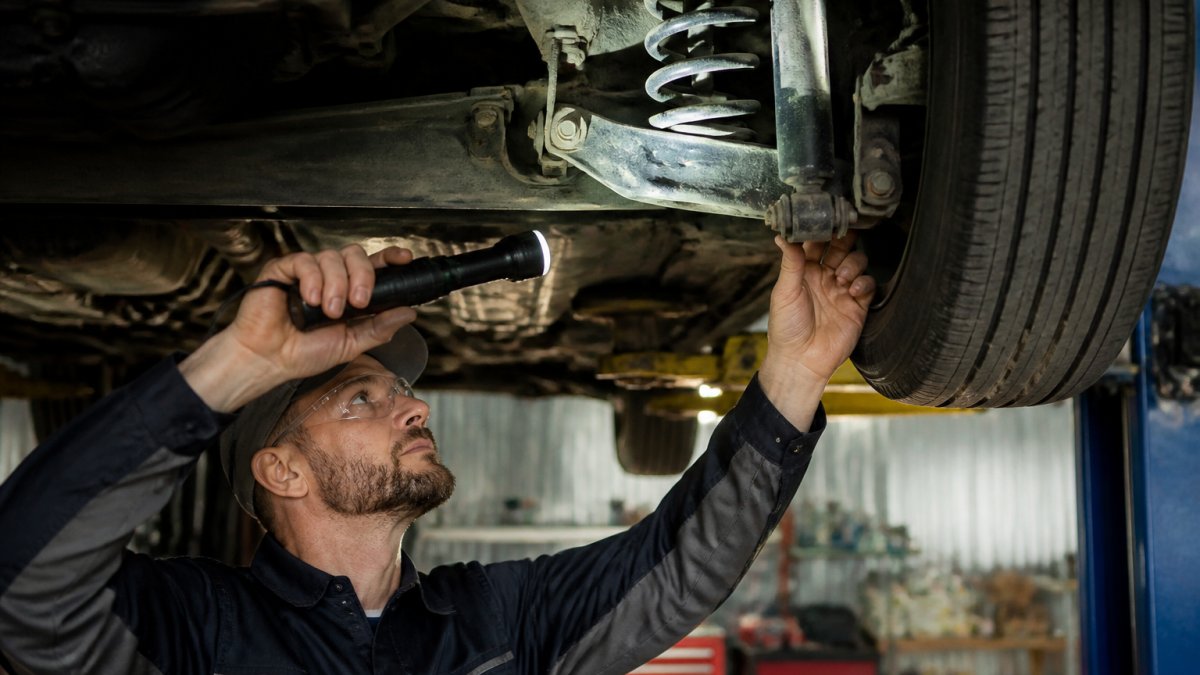
Worn shocks and struts show measurable problems before they fail completely. Spotting them early lets you plan a repair instead of facing an emergency breakdown.
Common warning signs include:
- Vehicle bounces excessively after bumps or dips
- Nose dives when braking hard
- Leans or rolls during cornering
- Uneven tyre wear, especially on outer edges
- Clunking or knocking sounds from suspension
- Steering feels loose or unpredictable
- Vehicle sits lower on one side than the other
The bounce test works for a quick check: press down hard on the bonnet or boot. If the vehicle bounces more than once or twice before settling, shocks or struts are likely worn. A professional inspection reveals actual condition and helps prioritise repairs.
Uneven tyre wear matters most. Worn suspension throws alignment out, accelerating wear on one edge. If you’re replacing tyres every 20,000 kilometres instead of 40,000, suspension damage is likely the cause. Fixing it first prevents wasting money on prematurely worn tyres.
Suspension Inspection for Older Cars: What Mechanics Check
A thorough suspension inspection for older cars covers specific components and their condition, using diagnostic tools to catch what visual checks miss.
Mechanics typically evaluate:
- Shock absorber fluid leaks or damage
- Strut wear and mounting condition
- Coil spring cracks or sagging
- Anti-roll bar links and bushings
- Ball joints and tie rod ends
- Suspension bushings for cracks or deterioration
- Wheel alignment angles
- Overall ride height and balance
For older vehicles, the inspection also weighs component age. Rubber bushings deteriorate regardless of mileage, so a 15-year-old vehicle with 150,000 kilometres may need work a 10-year-old with 200,000 doesn’t. Mildura’s temperature swings and dust also accelerate wear.
A professional inspection takes 30 to 45 minutes and identifies exactly which components need attention, so your repair-versus-replace decision is backed by condition data rather than guesswork.
Older Car Suspension Repair or Replacement: The Decision Framework
Deciding whether to repair or replace suspension components requires weighing four factors: repair cost, vehicle value, remaining service life, and follow-up costs.
Repair versus replacement: cost and longevity
Suspension repair targets the failed component. One shock costs far less than a pair, which costs less than a full overhaul. For a 12-year-old vehicle with 140,000 kilometres where one shock has failed but others are serviceable, repair makes sense.
Suspension replacement addresses multiple worn components at once. If shocks, struts, springs, and bushings all show significant wear, replacing everything might cost only 20 to 30 per cent more than repairing individual pieces. New components also carry a warranty.
Longevity matters: keep the vehicle five more years and replacement pays off; sell within two and repair is often enough.
When to replace components in pairs
Suspension components should be replaced in pairs on the same axle. If the front left shock has failed, the front right is likely close behind. Replacing only one leaves mismatched components that handle differently and wear unevenly.
Pairs ensure balanced behaviour. With one new and one worn shock, the vehicle leans during braking and cornering, the new component works harder and wears faster, and tyre wear accelerates on the older side.
For older vehicles, pairs also prevent return visits: replacing both at once costs more upfront but saves coming back in six months for the second.
Car Suspension Repair Cost Australia: What Affects Your Quote
Suspension repair costs vary widely, reflecting your vehicle, parts, and labour rate. Use indicative ranges to sanity-check quotes, then confirm with a local inspection and written quote.
What actually drives your quote
- Component type. Shock absorbers are generally the cheapest wear item to replace. Struts cost more because the spring and mount often come off with them. Coil springs, control arms, and bushings add labour.
- Vehicle make and model. Access is the biggest variable. Some vehicles allow a strut to come out in under an hour; others require removing battery trays, cowl panels, or subframe components first.
- Parts quality. Aftermarket parts are usually cheaper than OEM (original equipment manufacturer) parts. OEM and quality aftermarket brands typically carry better warranties and more consistent valving. Cheap no-name shocks can fail early and wipe out the saving.
- Labour rate. Ask for the hourly rate and the estimated hours separately.
- Additional work. Wheel alignment is almost always required after suspension work. Brake lines, ABS sensors, and tyres may also need attention once components are removed.
Mildura-specific context
Mildura drivers face sealed streets, regional highways, and unsealed roads, a mix that accelerates wear on bushings, links, and shocks. Local workshops stock or quickly source common parts, but less common models may need ordering in, adding a day or two. Always ask whether the quote assumes parts are in stock.
How to compare quotes fairly
Ask for a written quote separating parts, labour, and alignment. Confirm:
- Whether the price covers one side or both sides of the axle
- Whether wheel alignment is included
- The brand and warranty of parts fitted
- The workmanship warranty on labour
- Whether additional recommended work is safety-critical or monitorable
A quote that looks 200 AUD cheaper but excludes alignment and uses unbranded parts often isn’t cheaper once the job is done. A higher quote with quality parts, alignment, and a clear workmanship warranty may be better value over the repair’s life.
Get at least two written quotes and ask each workshop to itemise parts, labour, and alignment separately. This makes the real differences visible.
Follow-up costs to factor in
Suspension repair is rarely one-off. Budget for:
- Wheel alignment immediately after the repair
- A re-check of torque settings and ride height after a few hundred kilometres, if offered
- Tyre replacement if existing tyres have worn unevenly
- Further work if inspection found components you chose to monitor rather than replace
Factoring these in upfront prevents the common surprise of a bill that grows after the quote.
Safety, Roadworthiness, and Remaining Vehicle Life
Worn suspension isn’t just a comfort issue. It affects braking, steering, and roadholding, and in Victoria can affect whether your vehicle passes a roadworthiness inspection. For older-car owners, weigh safety and legal compliance alongside the dollars.
How suspension condition affects safety
- Braking. Worn shocks and struts reduce tyre contact with the road under braking, lengthening stopping distances, especially on wet or unsealed surfaces.
- Steering. Worn ball joints, tie rod ends, and bushings introduce play and vagueness, making the vehicle harder to place accurately in an emergency.
- Stability. Worn suspension reduces body control during cornering and sudden direction changes, increasing the risk of loss of control.
- Tyre grip. Uneven or excessive tyre wear caused by misaligned or worn suspension reduces grip and increases the risk of aquaplaning.
Victorian roadworthiness considerations
In Victoria, a vehicle must meet roadworthiness standards to be registered and driven, and suspension components are part of that assessment. Severely worn ball joints, tie rod ends, cracked springs, or leaking shocks can fail an inspection. Requirements can change, so check current VicRoads guidance or speak to a licensed tester rather than relying on general advice.
If a qualified mechanic identifies a safety-critical suspension fault, delaying repair is not a neutral choice. It can affect your insurance, your roadworthiness, and the safety of everyone in the vehicle.
Prioritising repairs: safety-critical versus monitorable
Not every worn component needs replacing immediately. Sort inspection findings into three groups:
- Safety-critical, repair now. Ball joints with excessive play, tie rod ends near failure, cracked or broken springs, severely leaking shocks, and anything a mechanic flags as unsafe.
- Wear items, plan and budget. Tired but not failed shocks and struts, worn bushings, and anti-roll bar links. These affect handling and tyre wear but aren’t immediate safety risks.
- Monitor, re-check at next service. Minor bushing cracks, slight shock seepage, or early wear. Ask the mechanic to note them and re-inspect next service.
Ask for the inspection findings in writing, including which components are safety-critical and which can be monitored. This gives you evidence to compare quotes and to decide what to approve now versus later.
The repair-versus-replace decision for older cars
A useful framework compares the repair quote against three things: market value, remaining service life, and near-term maintenance.
- Vehicle value. If the quote is a significant portion of the vehicle’s value, you’re investing a considerable amount in one system. That can still be worthwhile if the rest is sound and you plan to keep it.
- Remaining service life. Keep the vehicle three or more years and it’s otherwise reliable? A targeted repair often makes sense. Selling within 12 months makes a large bill harder to justify.
- Near-term maintenance. Consider what else is due: timing belt, clutch, brakes, tyres, major service. A repair that triggers a cascade of bills may tip the decision toward replacing the vehicle rather than the parts.
Local driving conditions and use
Mildura drivers often cover long distances, carry loads, or tow, which accelerates wear on rear suspension, springs, and shocks. If your vehicle tows or regularly carries heavy loads, repair is more likely worth it because it’s doing real work and the safety margin matters more. A lightly used second car on short trips can tolerate monitoring longer.
Getting a professional assessment
A qualified mechanic can assess overall condition, remaining useful life, and intended use, then recommend repair or replacement. Ask for:
- A written list of findings, split into safety-critical and monitorable
- An itemised quote for the recommended work
- An honest view on whether the vehicle is worth the investment
Safety, roadworthiness, and financial context together turn a vague question into a clear decision.
Frequently Asked Questions
How do I know if my car’s suspension needs repair?
Common signs include excessive bouncing after bumps, uneven tyre wear, a drifting or pulling sensation while steering, clunking noises from the undercarriage, and a noticeably rougher ride. A professional suspension inspection will confirm whether shocks, struts, springs, or other components are worn and require repair or replacement.
Is it safe to drive a car with worn suspension?
Worn suspension compromises vehicle stability, increases braking distance, and reduces tyre grip, especially on wet roads or uneven terrain. This affects both your safety and compliance with Australian roadworthiness standards. A mechanic can assess whether the condition is safe to drive or requires immediate repair before further use.
Is it worth repairing an older car if the suspension needs replacing?
The answer depends on the vehicle’s market value, remaining service life, and the total repair cost. If replacement costs exceed 50% of the car’s value and you plan to keep it only a few more years, repair may not justify the investment. However, if the rest of the vehicle is reliable and the car serves your needs, targeted repair of the most critical components can extend its usable life affordably.
Should I replace suspension components in pairs?
Yes. Replacing shocks or struts in pairs (both front or both rear) ensures balanced handling and ride quality. If only one side is replaced, the vehicle may pull to one side or handle unevenly. A mechanic will recommend paired replacement to maintain safety and performance.
