
Table of Contents
- Why Diesel 4WDs Develop These 5 Common Problems
- 1. Hard Starting or Failure to Start
- 2. Excessive Exhaust Smoke and DPF Regeneration Issues
- 3. Engine Overheating and Loss of Power
- 4. Diesel Fuel Injector Symptoms You Shouldn’t Ignore
- 5. Fuel Contamination and Turbocharger Failure
- Your 4WD Diesel Maintenance Schedule for Mildura Conditions
- DIY vs. Professional Diagnostics: When to Call a Mechanic
- Frequently Asked Questions
Last Updated: September 9, 2026
Diesel engines in 4WD vehicles face unique stresses that petrol engines don’t encounter. At Mallee Auto & Agricultural Services, our mechanics see the same handful of failures repeat across all major 4WD brands, and most are preventable with the right knowledge.
TL;DR:
- Hard starting usually points to glow plugs, fuel supply, or battery voltage
- White, blue, or black smoke each tell a different mechanical story
- Overheating and power loss often trace back to airflow or cooling restrictions
- Injector issues mimic fuel system problems, so diagnosis matters
- Contaminated fuel is the silent killer of common rail systems and turbos
Why Diesel 4WDs Develop These 5 Common Problems
Diesel engine problems in 4WD vehicles rarely appear without warning. The conditions that trigger them build slowly, and by the time a warning light appears, damage has often already started.
The five most common diesel engine problems we diagnose are hard starting, excessive exhaust smoke, overheating with power loss, injector faults, and fuel contamination leading to turbo failure. They share common triggers: neglected preventative maintenance, poor fuel quality, and the extreme operating conditions of regional driving.
According to the Australian Government’s fuel quality standards, diesel sold in Australia must meet strict specifications, yet contamination still occurs through storage, handling, and older underground tanks. This is particularly relevant for 4WD owners who refuel across remote areas where turnover is slower and water can accumulate in storage.
The common thread across all five problems is maintenance timing. Diesel components fail when service intervals slip, not because the technology is unreliable.
1. Hard Starting or Failure to Start
A diesel that cranks but won’t fire usually has one of three issues: failing glow plugs, low fuel pressure, or weak battery voltage. Glow plugs preheat the combustion chamber, and in cooler Mallee mornings, worn plugs mean the engine can’t reach ignition temperature.
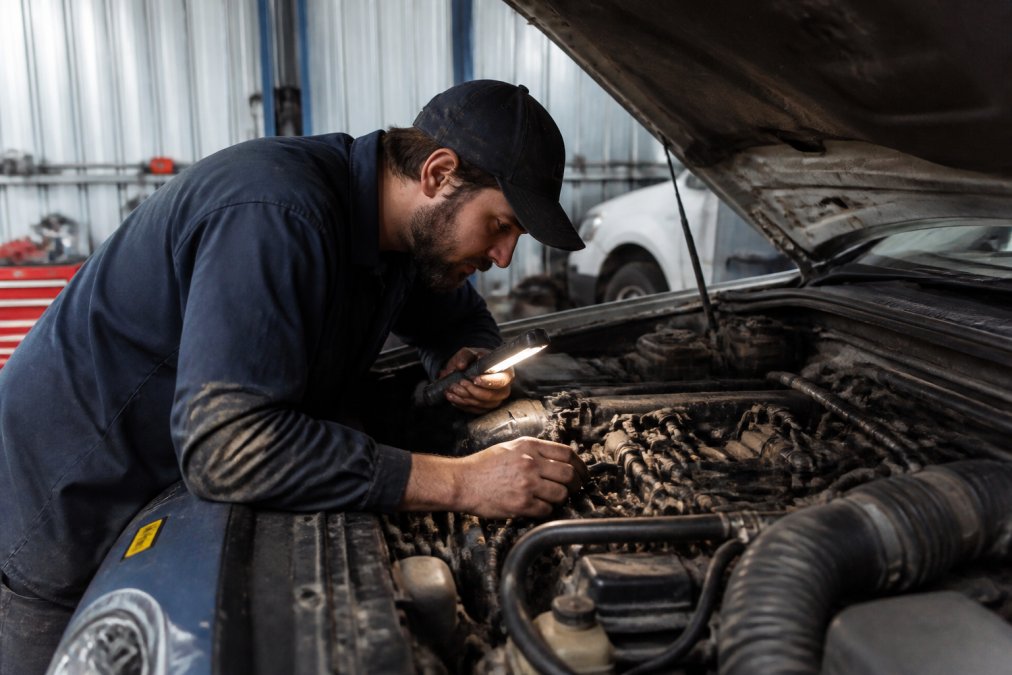
Check the simple things first. Listen for the fuel pump priming when you turn the key to the accessory position. If it’s silent, the pump or its relay may be dead. Inspect battery terminals for corrosion and confirm the battery holds charge under load.
A common mistake is replacing glow plugs without testing the relay and wiring. The relay is often the actual culprit. If the engine cranks slowly, suspect the battery or starter before blaming the fuel system.
Test glow plugs with a multimeter for resistance rather than visual inspection. A plug can look fine but draw no current, leaving one cylinder cold and the engine struggling to start.
2. Excessive Exhaust Smoke and DPF Regeneration Issues
Diesel exhaust smoke colour is a diagnostic language of its own, but reading it correctly requires understanding the specific conditions that trigger each type. In the Mildura and Mallee region, extreme heat and fine dust alter how these symptoms present.
White Smoke on Startup: This indicates unburned fuel from cold cylinders. While often attributed to failing glow plugs, a more common cause in this region is slow cranking due to battery voltage drop in the heat. A weak battery doesn’t spin the engine fast enough to build compression heat. Before replacing glow plugs, verify the battery’s cold cranking amps (CCA) rating meets the manufacturer’s specification. A multimeter test while cranking should show no less than 9.6 volts.
Blue Smoke Under Acceleration: This signals oil burning past worn piston rings, valve stem seals, or a failing turbocharger oil seal. A common oversight is the positive crankcase ventilation (PCV) system. In dusty conditions, the PCV valve can clog with oil and fine dust, creating crankcase pressure that forces oil past the seals. Inspecting and cleaning the PCV system is a cheap check many owners skip, leading to misdiagnosis of major engine wear.
Black Smoke Under Load: This points to incomplete combustion from restricted air or over-fuelling. The most frequent cause on 4WDs in the Mallee is a clogged air filter, but a less obvious one is a faulty mass airflow (MAF) sensor. Fine red dust coats the MAF sensor’s hot wire, causing it to misreport intake air volume. The ECU then over-fuels, producing black smoke and increasing DPF load. Cleaning the MAF sensor with dedicated electrical contact cleaner is a 15-minute job that can resolve what looks like a major fuel system fault.
DPF Regeneration in Extreme Heat
Modern diesels carry a diesel particulate filter, which traps soot and burns it off during regeneration. The process requires exhaust gas temperature to reach approximately 550°C to 600°C. In Mildura’s summer heat, the engine management system may delay regeneration to protect the DPF from overheating. A vehicle used for short trips in 40°C heat may never complete a passive regeneration cycle, leading to a clogged filter faster than in cooler climates.
For drivers towing heavy caravans, the situation is different. Sustained load generates high exhaust temperatures, which is good for active regeneration. However, the increased soot load from towing means the DPF fills faster. The Australian Automotive Aftermarket Association’s maintenance guidance recommends checking air filters more frequently in dusty regional conditions than the standard service schedule suggests. We advise a more frequent inspection of the DPF’s differential pressure sensor readings for vehicles that regularly tow in this region.
If your vehicle enters limp mode or shows a persistent DPF warning light, continuing to drive risks expensive secondary damage. A blocked DPF left unchecked can force a regeneration that damages the turbocharger.
A diesel particulate filter that repeatedly fails to regenerate will eventually trigger a warning light and limp mode. Catching this early with a forced regeneration at a workshop beats the cost of filter replacement. If you experience frequent DPF issues, a diagnostic check of the exhaust gas temperature sensors and the differential pressure sensor is the first step, as these are common failure points that prevent the system from initiating a burn-off cycle.
3. Engine Overheating and Loss of Power
Overheating in a diesel 4WD is rarely a single-component failure. It usually stems from restricted airflow through the cooling system, a failing thermostat, or a water pump that’s lost efficiency. Loss of power alongside rising temperatures points to the engine management system reducing fuel delivery to protect the engine. In the Mallee region, the root causes are amplified by extreme heat and the sustained load of towing.
The Towing-Specific Diesel Stress Factor
When you tow a heavy caravan or livestock trailer up the Sunraysia Highway or through the Hattah-Kulkyne National Park, your engine operates at near-maximum torque for extended periods. The cooling system must dissipate heat from continuous high fuel delivery, and the transmission and torque converter add their own heat load to the radiator. A common failure point is the fan clutch. In a viscous fan clutch, the silicone fluid degrades over time, causing the fan to slip and not spin at full speed when hot. This results in chronic overheating on long uphill tows, even though the radiator and water pump are in good condition.
Diagnostic Check: With the engine at operating temperature, the fan should produce a noticeable roar when revved. If it spins freely without resistance, the clutch is failing. Replacing a fan clutch is a DIY-friendly job on most 4WDs, far less expensive than a head gasket replacement from overheating.
The Mildura Dust and Heat Effect
In this region, a build-up of fine red dust in the radiator core is one of the most common causes of chronic overheating we see. The dust mixes with moisture and forms a mud-like paste between the radiator fins and the air conditioning condenser, effectively insulating the radiator. A visual inspection from the front often misses this, as the blockage is between the two cores. A thorough flush with a low-pressure water hose from the engine side is a critical maintenance step before summer.
Beyond the radiator, the intercooler is a frequently overlooked component. A 4WD’s intercooler sits low behind the front grille, exposed to dust, bugs, and road debris. When the intercooler fins are clogged, intake air temperatures rise dramatically. For every 10°C increase in intake air temperature, air density drops by roughly 3%, and the ECU compensates by cutting fuel to prevent detonation. This is why a 4WD towing a heavy trailer can feel sluggish even before the temperature gauge moves.
Check the intercooler for ‘fin fold’ – where the thin aluminium fins have been flattened by high-pressure water from a pressure washer. This restricts airflow just as effectively as a dust blockage. Use a soft brush and low-pressure air to clean the intercooler core.
The Thermostat and Water Pump Reality
A failing thermostat that sticks closed will cause rapid overheating, but one that sticks open will cause the engine to run cooler than normal. This is a problem in diesel engines because they rely on operating temperature for efficient combustion. A cool-running diesel will produce more soot, clogging the DPF and diluting the engine oil with unburned fuel. The water pump impeller is another weak point. On many modern 4WDs, the impeller is made of composite plastic. Over time, it can corrode or sheer off the shaft, reducing coolant flow even though the pump appears to spin fine. If replacing a water pump as preventative maintenance, always inspect the old impeller for wear.
Check the cooling system methodically: radiator fins for mud and dust blockage, coolant levels when cold, and the fan clutch operation. For vehicles over 100,000 km, replacing the thermostat and water pump as a preventative pair is a sound investment, especially before a long outback trip. The labour cost is the same whether you replace one or both, and the parts cost is low compared to the risk of a roadside failure in extreme heat.
4. Diesel Fuel Injector Symptoms You Shouldn’t Ignore
Diesel fuel injector symptoms often masquerade as other problems. A rough idle, increased fuel consumption, or a slight miss under load can all point to injectors, but they can also indicate a failing fuel pump or a clogged fuel filter. This overlap is why accurate diagnosis matters.
Common rail injectors operate at extremely high pressures and are precision components. Poor fuel lubricity, water contamination, and carbon buildup on the injector tips all shorten their service life. The exhaust gas recirculation system can also contribute by recirculating soot-laden gases that bake onto intake valves and injector tips.
A fuel system cleaner like Flashlube Diesel Conditioner can help prevent carbon buildup when used regularly, but it won’t fix a mechanically worn injector. If you suspect injector trouble, have the system tested with professional diagnostic equipment that can measure each injector’s contribution to the engine’s operation.
The cheapest injector repair is the one you avoid through regular fuel filter changes and using reputable fuel sources. A diesel fuel injector symptom ignored for too long typically leads to a full injector replacement set, which is a significant expense.
5. Fuel Contamination and Turbocharger Failure
Fuel contamination and turbocharger failure often arrive together, and the root cause is usually the same: water or particulates in the fuel system. Water in diesel promotes microbial growth, corrodes the high-pressure fuel pump, and destroys injector lubrication. The resulting metal particles then travel through the system and can seize a turbocharger’s bearings.
The turbocharger itself spins at extreme speeds and relies on a constant supply of clean, pressurised oil. Oil starvation, whether from contamination, low oil levels, or a blocked oil feed line, destroys a turbo in minutes. Black smoke and a high-pitched whine are the classic signs of a turbo in distress.
Prevention is straightforward. Change the fuel filter at the recommended interval, and consider a water separator kit like the Ryco Fuel Water Separator Kit if you frequently refuel in remote areas. This Australian-designed filtration system removes water and particulates before they reach the injection system.
A turbocharger failure is almost never the turbo’s fault. It’s the symptom of an oil supply problem or fuel contamination that went unaddressed.
Your 4WD Diesel Maintenance Schedule for Mildura Conditions
Standard service intervals assume average driving conditions, but Mildura and the broader Mallee region are far from average. Dusty unsealed roads, extreme summer heat, and sustained towing all accelerate wear on diesel components.
The table below shows a practical 4WD diesel maintenance schedule tailored to regional Victorian conditions:
| Maintenance Item | Standard Interval | Mildura Conditions | Why It Matters |
|---|---|---|---|
| Engine oil and filter | 10,000 km | 7,500 km | Protects turbo bearings and injectors |
| Fuel filter | 20,000 km | 15,000 km | Prevents contamination reaching injectors |
| Air filter | 30,000 km | 15,000 km | Dusty roads clog filters faster |
| Coolant flush | 2 years | Annually | Prevents overheating in summer heat |
| DPF inspection | 40,000 km | 30,000 km | Frequent towing increases soot load |
This schedule accounts for the higher load and dust exposure that 4WDs face in this region. Towing-specific diesel stress means the engine runs hotter and under more load for longer periods, which accelerates oil breakdown and soot production.
For farm and agricultural operators, downtime is the real cost. A tractor or truck that fails during harvest doesn’t just need a repair; it needs a repair that happens fast. the Victorian Farmers Federation’s resources on machinery maintenance highlights how planned maintenance reduces costly breakdowns during critical seasonal windows.
DIY vs. Professional Diagnostics: When to Call a Mechanic
Some diesel maintenance is safely DIY. Changing oil and filters, inspecting belts and hoses, and using a diagnostic tool like the ScanGauge II to monitor engine temperatures are all within reach of a competent home mechanic. A scan tool that reads live data helps you spot trends before they become failures.
The line between DIY and professional help is drawn by the diagnostic equipment required. Modern diesel engines have complex engine management systems, and guessing at faults leads to parts cannon repairs that waste money. When symptoms persist after basic checks, professional diagnostics near Mildura are the efficient path.
Mallee Auto & Agricultural Services uses modern diagnostic tools to identify diesel engine problems accurately, rather than replacing parts on speculation. Our mechanics work across all vehicle types, from daily driver 4WDs to heavy farm equipment, and we stand behind our work with a complete satisfaction guarantee. Pensioner discounts and transparent pricing make professional diagnosis accessible.
If your vehicle enters limp mode or shows a persistent warning light, continuing to drive risks expensive secondary damage. A blocked DPF left unchecked can force a regeneration that damages the turbocharger.
Book your diesel service with a mechanic who understands regional conditions. Contact Mallee Auto & Agricultural Services today for an accurate diagnosis and fair quote before small problems become major repairs.
Frequently Asked Questions
What are the most common signs of DPF failure in diesel 4WDs?
The most common signs include a warning light on the dashboard, reduced engine performance, increased fuel consumption, and the engine going into limp mode. You may also notice a burning smell or excessive smoke from the exhaust. If your DPF regeneration is happening too frequently, such as every 200-300 km instead of the usual 500 km or more, it’s a strong indicator of a problem.
What causes fuel injector failure in modern common-rail diesel engines?
Fuel injector failure is usually caused by contaminated fuel, water in the fuel system, or lack of regular servicing. Poor quality diesel with low lubricity can also accelerate wear on the injector internals. Symptoms include rough idling, white or black smoke, increased fuel consumption, and a noticeable loss of power. Replacing injectors is costly, so using quality fuel and changing your fuel filter regularly is essential.
How often should I service my diesel 4WD in regional Victoria?
For most modern diesel 4WDs, a full service is recommended every 10,000 km or 6 months, whichever comes first. This is especially important in dusty conditions common in the region. However, you should check your owner’s manual for the manufacturer’s specific schedule. Regular oil and filter changes are critical to prevent oil starvation and turbocharger failure.
Why is my diesel 4WD losing power under load?
Loss of power under load, such as when towing or climbing hills, often points to a blocked fuel filter, faulty turbocharger, or issues with the intake manifold and EGR system. Carbon build-up can restrict airflow, reducing combustion efficiency. A clogged DPF can also create excessive backpressure. Start by checking the simplest items like air and fuel filters before inspecting more complex components.
Are diesel 4WDs more expensive to maintain than petrol models?
Generally, yes. Diesel engines have more complex components like the DPF, EGR system, turbocharger, and high-pressure fuel injection system. These parts are more expensive to replace, and servicing intervals may require more oil. However, diesel engines often have a longer lifespan and better fuel economy, which can offset the higher maintenance costs over the vehicle’s life.
Diesel engine problems in 4WD vehicles share a common theme: they are predictable and preventable. The five issues covered here, from hard starting to turbocharger failure, all respond to timely maintenance and honest diagnosis. Whether you maintain your vehicle yourself or rely on a professional team, the key is catching problems while they are still inexpensive to fix. Get started with Mallee Auto & Agricultural Services and keep your 4WD reliable on and off the road.
