
Table of Contents
- What Guaranteed Automotive Repair Work Really Means
- How Mechanic Warranty on Parts and Labour Protects You
- Your Rights Under Australian Consumer Law Vehicle Repairs
- Red Flags: Spotting Unreliable Repair Shops
- How to Resolve a Dispute with a Mechanic
- Finding Certified Mechanics Who Stand Behind Their Work
- Why Cost Transparency and Written Estimates Matter
- Conclusion
Last Updated: August 14, 2026
What Guaranteed Automotive Repair Work Really Means
Guaranteed automotive repair work is a commitment from a mechanic or repair shop that the parts they install and labour they perform will function as specified for a defined period. If something fails within that guarantee window, the shop fixes it at no additional cost. This protection covers both components and workmanship.
The distinction matters because it separates shops willing to stand behind their decisions from those treating every job as a one-way transaction. When a mechanic guarantees their work, they’re accepting responsibility for correct diagnosis, appropriate parts sourcing, and proper execution. If they haven’t delivered, they bear the correction cost.
In Mildura and across Victoria, the standard guarantee on parts typically runs 12 months or a set kilometre limit, whichever comes first. Labour guarantees vary more widely, some shops offer 12 months, others limit it to 90 days. Premium operators guarantee longer periods on major repairs like transmission work or engine rebuilds. The guarantee length signals how confident a shop is in its diagnostic accuracy and technical capability.
What separates genuine guarantees from marketing language is specificity. A shop that says "we stand behind our work" without defining terms, duration, or coverage limits offers nothing concrete. A shop providing written warranty details, exactly what’s covered, for how long, and under what conditions, gives you actual protection.
How Mechanic Warranty on Parts and Labour Protects You
A mechanic warranty on parts and labour creates a legal obligation: the shop agrees that if the repaired component or system fails within the warranty period due to defective parts or poor workmanship, they’ll repair or replace it without charging you again.
Parts warranties typically come from the manufacturer; a replacement alternator or brake pads carries its own guarantee. Reputable shops pass that manufacturer’s warranty through to you and honour it if something fails. Labour warranties are the shop’s own commitment, they’re saying: "We stand behind the quality of our work."
The practical protection is substantial. Suppose you pay $800 for transmission service and two weeks later it starts slipping. Without a labour warranty, you’d argue whether the problem existed before or was caused by the service. With a labour warranty, the shop must diagnose and fix the issue at no cost. They absorb the cost of their own mistake.
Many regional shops like those in Mildura offer warranties to build customer trust. When choosing between an unfamiliar mechanic and one with a good reputation, the mechanic’s willingness to guarantee their work is a confidence signal. It means they’ve invested in proper training, diagnostic tools, and quality parts.
The catch: warranties only protect you if you follow maintenance recommendations and use the vehicle normally. If you ignore service intervals or modify the vehicle in ways that stress components, the warranty may not apply. Read the terms carefully.
Your Rights Under Australian Consumer Law Vehicle Repairs
Australian Consumer Law provides baseline protections for vehicle repairs that exist independently of any warranty a shop offers. Understanding these rights prevents you from being pressured into accepting poor work.
The law requires that services, including automotive repair, be provided with due care and skill. The mechanic must use the knowledge and experience a qualified technician would apply to your specific problem. If your car leaves a shop with the same problem or new problems created by the repair, the shop has breached this obligation.
You also have the right to goods of acceptable quality. If a shop installs a replacement part that fails prematurely or doesn’t fit properly, that part must meet standards of acceptable quality, fit for purpose and durable for a reasonable period.
Critically, Australian Consumer Law protects you even if the shop’s warranty doesn’t. A shop might offer only a 90-day labour warranty, but if a repair fails after six months due to poor workmanship, you can still pursue the shop under Consumer Law. The legal protection extends further than most written warranties.
If you believe a repair has been done poorly, contact the shop in writing, describing the problem and requesting remedies. Most shops will respond to a clear, factual complaint. If the shop refuses, escalate to a dispute resolution service or seek legal advice.
Red Flags: Spotting Unreliable Repair Shops
Certain behaviours from a repair shop should trigger caution before you hand over your keys.
A shop that quotes repair costs over the phone without examining your vehicle is guessing. Automotive diagnosis requires hands-on inspection, often with modern diagnostic tools. If a shop tells you "it’s probably the alternator" without plugging in a scanner, they’re not performing due diligence. Guaranteed automotive repair work requires accurate diagnosis first.
Shops that pressure you to approve repairs immediately are another warning sign. Professional mechanics understand that customers want time to consider options, especially for expensive work. A shop using artificial urgency, "we can only hold this slot until this afternoon", is bypassing your judgment.
Vague explanations are a consistent red flag. If a mechanic can’t explain what they found, why it’s a problem, and how the repair fixes it in language you understand, they may not fully understand the problem themselves.
Shops that recommend multiple expensive repairs at once, especially for routine service, warrant scepticism. A vehicle needing a new transmission, brake overhaul, and suspension rebuild simultaneously is statistically unlikely. One or two diagnoses may be correct; all three suggests aggressive upselling.
Finally, a shop with no online presence, no reviews, and no willingness to provide references is harder to hold accountable. Reputable mechanics have reputations to protect and are findable, reviewable, and willing to discuss their track record.
How to Resolve a Dispute with a Mechanic
If you’ve paid for a repair and the work is unsatisfactory, escalate the dispute methodically to increase your chances of resolution and protect your legal position.
Start with direct communication. Contact the shop in writing, email is fine, but a letter creates a better record. Describe the problem factually: "The vehicle was brought in on [date] for [service]. After pickup on [date], [specific problem] occurred." Request a specific remedy: repair at no cost, refund, or replacement of the faulty part. Give the shop five to ten business days to respond.
Many disputes resolve at this stage. If the shop refuses or doesn’t respond, contact your state’s automotive industry ombudsman or dispute resolution service. In Victoria, the Australian Competition and Consumer Commission (ACCC) provides guidance on consumer rights and dispute resolution.
Document everything: receipts, written estimates, photographs of problems, and copies of all communication with the shop. If you had the work inspected by another mechanic and they identified a problem, that inspection report is valuable evidence.
Before pursuing legal action, understand the cost-benefit. Small claims procedures exist in Victoria for disputes under a certain amount, but legal fees can exceed the repair cost quickly. Dispute resolution services are often free or low-cost and faster than court.
Finding Certified Mechanics Who Stand Behind Their Work
Identifying mechanics who genuinely guarantee their work requires looking beyond marketing claims to actual credentials, equipment, and customer feedback.
Certification matters. Mechanics certified by industry bodies like the Australian Institute of Automotive Technicians have met training standards and continuing education requirements. When evaluating a mechanic in Mildura, ask about their qualifications.
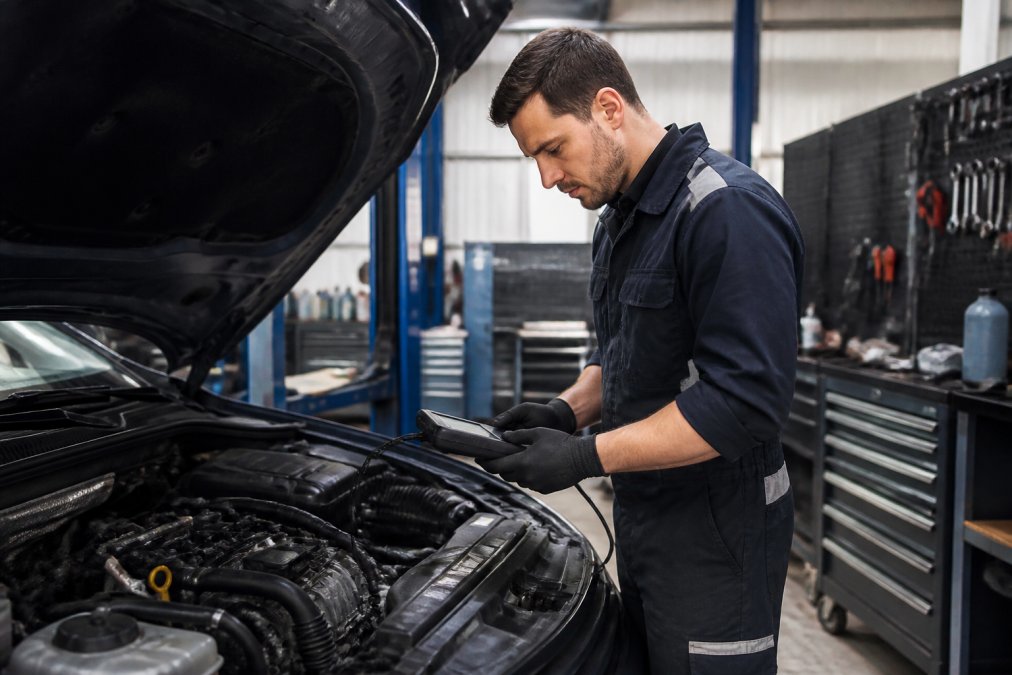
Modern diagnostic tools are non-negotiable for accurate repairs. A shop equipped with computer diagnostic scanners, multimeters, and specialist equipment can identify problems precisely. Shops relying on visual inspection are more likely to misdiagnose, leading to failed repairs and disputes. Ask what diagnostic equipment a shop uses before committing to major work.
Customer reviews provide real-world evidence of whether a shop stands behind its work. Look for patterns in reviews, not isolated comments. Consistent praise for honest diagnosis and willingness to fix problems is a strong signal. Repeated complaints about overcharging or having work redone suggests the shop cuts corners.
For agricultural equipment owners, specialist expertise is critical. Not every mechanic can diagnose tractor or heavy machinery issues accurately. Shops with experience on farm equipment, modern diagnostic tools, and a track record of quick turnarounds are worth the investment.
Ask potential mechanics how they handle disputes. A shop confident in its work will explain warranty terms clearly and describe their complaint resolution process. Shops evasive about guarantees are signalling risk.
Why Cost Transparency and Written Estimates Matter
A written estimate is your protection against surprise charges and a record of what work you’ve approved. Shops that resist providing estimates upfront are creating conditions for disputes.
A proper estimate includes itemised labour costs, parts costs, and completion timeframe. It specifies exactly what work will be done and what parts will be used, genuine OEM parts or aftermarket alternatives. It should state the total cost and any conditions under which that cost might change.
The estimate also clarifies what’s covered by any guarantee. If a shop guarantees labour for 12 months but only guarantees parts for the manufacturer’s standard warranty, that needs to be stated upfront.
Cost transparency is particularly important in regional areas like Mildura, where vehicle owners may have limited options. Shops that clearly explain their pricing, labour rates, and parts markups are easier to compare and hold accountable.
Professional mechanics expect written estimates. Asking for one is normal and reasonable. A mechanic who becomes defensive about providing one is signalling that their pricing won’t withstand scrutiny.
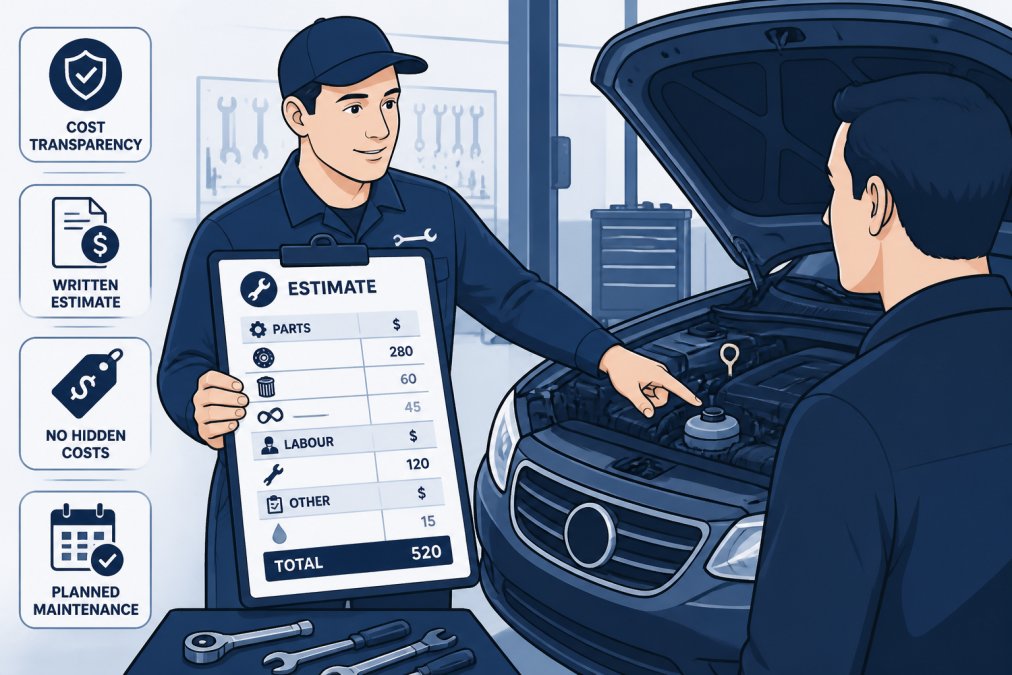
Before approving any estimate, ask whether the quoted price includes all labour and parts, or whether additional charges are likely. Ask what happens if the work takes longer than estimated. Ask whether the shop will contact you before performing any work not listed on the estimate.
Conclusion
Guaranteed automotive repair work isn’t a luxury, it’s a baseline expectation when paying for professional service. It signals that a mechanic has confidence in their diagnosis, trusts the quality of their parts, and stands behind their labour. In Mildura and across Victoria, shops offering clear, written guarantees on parts and labour are easier to trust and hold accountable.
Your rights under Australian Consumer Law provide a safety net even when a shop’s warranty doesn’t cover a problem. The best protection is choosing a mechanic upfront who invests in proper diagnosis, uses quality parts, and commits to transparent pricing and honest communication. When you need reliable automotive repair work you can trust, professional mechanics with certified qualifications and transparent practices are worth seeking out.
Book Now with Mallee Auto & Agricultural Services and experience the difference that genuine guaranteed automotive repair work makes.
Frequently Asked Questions
What does guaranteed automotive repair work actually mean?
Guaranteed automotive repair work means the mechanic stands behind their service with a formal warranty covering both labour and parts. A qualified technician uses modern diagnostic tools to identify issues accurately, and the repair is warranted to fix the problem for a specified period. If the repair fails within that timeframe, the shop corrects it at no extra cost. This guarantee protects you from paying for work that doesn't solve the underlying problem.
What should I look for in a mechanic warranty on parts and labour?
A solid mechanic warranty on parts and labour should cover at least 12 months or the distance travelled, whichever comes first. Check whether it applies to both genuine and aftermarket parts, and confirm the warranty is transferable if you sell the vehicle. Reputable shops provide written warranty documentation that clearly states what's covered, the duration, and any conditions. Always ask whether labour on future repairs related to the original work is included, and get the warranty terms in writing before authorising work.
What are my consumer rights for car repairs under Australian Consumer Law?
Under Australian Consumer Law, you have the right to services that are rendered with due care and skill, and goods that are of acceptable quality. If a repair fails to fix the fault or creates new problems, you can request a refund, repair, or replacement without charge within a reasonable timeframe. Mechanics must provide a written quote before starting work, and they cannot charge you for diagnostic work without your consent. If a dispute arises, you can lodge a complaint with your state's consumer affairs body or seek resolution through the Australian Competition and Consumer Commission (ACCC).
How do I know if a repair hasn't held up and what should I do?
If the same fault reappears or a new problem develops shortly after repair, return to the mechanic immediately with your service records. Document the fault with photos or video if possible, and describe the symptoms clearly. Under your warranty, the shop should re-examine and correct the issue free of charge. If they refuse or claim it's unrelated, request a written explanation and keep all documentation. If you cannot resolve it directly, contact your state's consumer affairs office or lodge a dispute resolution claim through the ACCC.
This article was written using GrandRanker
