
Last Updated: October 22, 2026
Quick Summary
Shock absorbers last between 40,000 and 80,000 kilometres in normal driving conditions, though some vehicles may reach 100,000 kilometres before replacement becomes necessary. The actual lifespan depends on driving conditions, road quality, vehicle load and usage patterns rather than kilometres alone.
- Manufacturers recommend checking shock absorber condition every 20,000 kilometres
- Rough roads and heavy loads can reduce shock lifespan by 20,000 kilometres or more
- Always replace shocks in pairs to ensure balanced damping and safe handling
- Signs of worn shocks include excessive bouncing, uneven tyre wear, oil leaks and poor steering response
- Professional inspection is more reliable than at-home bounce tests for determining shock condition
Table of Contents
- Typical Lifespan of Shock Absorbers
- Factors That Affect How Long Shock Absorbers Last
- Signs of Worn Shock Absorbers
- How Often to Replace Shock Absorbers
- Shock Absorber Inspection: What to Check
- Why Shock Absorbers Should Be Replaced in Pairs
- Frequently Asked Questions
Typical Lifespan of Shock Absorbers
Shock absorbers last between 40,000 and 80,000 kilometres in normal driving conditions. Some vehicles may reach 100,000 kilometres before replacement becomes necessary, whilst others need new shocks sooner depending on how they’re used and the roads they travel.
The lifespan varies significantly. A shock absorber’s ability to dampen vehicle movement gradually deteriorates over time. This degradation happens whether you’re driving or parked. Regular use accelerates wear because the internal components compress and extend thousands of times.
Think of shock absorbers like brake pads. They wear down through use. Once they’re worn, they lose their ability to do their job effectively. Your vehicle’s ride quality suffers, and handling becomes unpredictable.
Many vehicle owners don’t realise how critical shock absorber condition is until problems become obvious. By that point, other suspension components may already be damaged.
Mileage as a Guide, and Its Limits
Most manufacturers recommend checking shock absorber condition every 20,000 kilometres. This inspection schedule helps catch wear early. In practice, many drivers wait until symptoms appear before getting them checked.
The 40,000 to 80,000 kilometre range is a helpful benchmark. It’s not a hard deadline. Some shocks fail sooner. Others last longer. Your actual lifespan depends on factors beyond just kilometres travelled.
A common pattern in Australian workshops is that vehicles used mainly for short town trips and highway commuting reach the upper end of that range, whilst vehicles that regularly tow, carry loads or travel unsealed roads in the Mallee tend to need attention earlier. The kilometre figure is a prompt to inspect, not a diagnosis.
What a Professional Assessment Actually Involves
A mileage estimate cannot confirm whether a particular shock is still doing its job. A mechanic will typically:
- Road-test the vehicle and note bounce, float, lean and steering feel
- Inspect each shock body for fluid seepage, corrosion and damaged mounts
- Check springs, bushes, ball joints and tie-rod ends for related wear
- Examine tyre wear patterns for signs of uneven damping
- Compare left and right sides for balanced behaviour
Bring your service history, a note of any recent towing or heavy loads, and a description of when symptoms appear (for example, over speed humps or at highway speed). That information helps a workshop distinguish worn shocks from other suspension faults and avoid unnecessary replacement.
Use the 40,000-80,000 kilometre range as a reminder to book an inspection, not as a replacement deadline. A mechanic’s assessment of condition, not the odometer alone, should drive the decision.
Factors That Affect How Long Shock Absorbers Last
Several conditions determine whether your shocks reach 100,000 kilometres or fail at 50,000. Understanding these factors helps you predict when replacement might be needed, and, just as importantly, helps you tell shock wear apart from other suspension problems.
Driving Conditions and Road Quality in the Mallee
Rough roads wear shocks faster than smooth highways. Potholes, gravel, and uneven surfaces force shock absorbers to work harder. Each impact compresses the internal damping fluid and stresses the components.
Regional roads around Mildura and the wider Mallee vary significantly. Some areas have well-maintained bitumen. Others have gravel or unsealed routes that demand more from your suspension. If you regularly drive on rough surfaces, expect shorter shock lifespan.
Continuous bumpy driving can reduce lifespan by 20,000 kilometres or more. Conversely, mostly highway driving extends it. The difference is real and measurable.
Temperature extremes also matter. Hot, dry conditions can affect the damping fluid inside shocks. Cold weather stresses seals and metal components. In the Mallee, summer heat and dust add to the load on seals and exposed components, so regular cleaning and inspection are worthwhile.
Vehicle Load and Usage Patterns
Heavy loads compress shocks more forcefully. A fully loaded utility vehicle or tractor works its shocks harder than an empty sedan. Frequent towing or carrying heavy cargo accelerates wear.
Agricultural use in the Mallee region often involves loaded vehicles on rough terrain. Tractors and farm trucks experience extreme suspension demands. These vehicles typically need shock replacement more frequently than regular passenger cars.
Towing trailers also increases shock wear. Each tow puts additional stress on rear shocks. If you regularly tow, budget for earlier replacement.
Stop-and-start driving in towns is gentler on shocks than constant highway use. However, frequent sharp turns and hard braking still create suspension stress.
Shocks, Springs and Other Suspension Faults
Not every bounce, clunk or lean is a worn shock absorber. Springs support the vehicle’s weight; shock absorbers control how that weight moves. A broken or sagging spring can cause a vehicle to sit low or lean, and worn bushes or ball joints can produce clunks and vague steering. Tyre pressure and wheel balance can also mimic suspension symptoms.
This matters because replacing shocks will not fix a spring, bush or tyre problem. A professional inspection should check the whole suspension system so the correct component is replaced. If you notice a change in ride height, a persistent lean when parked, or a clunk that occurs over every bump, mention it when you book, it helps the mechanic look beyond the shocks.
A bounce test alone cannot confirm shock condition. It is a prompt to seek a proper inspection, not a diagnosis.
Signs of Worn Shock Absorbers
Recognising worn shocks early prevents other damage. Several clear warning signs indicate replacement is needed soon.
Excessive bouncing after bumps is the most obvious sign. Drive over a bump and count how many times your vehicle bounces.
Uneven tyre wear often signals shock problems. Worn shocks allow excessive movement. This causes tyres to wear unevenly across the tread.
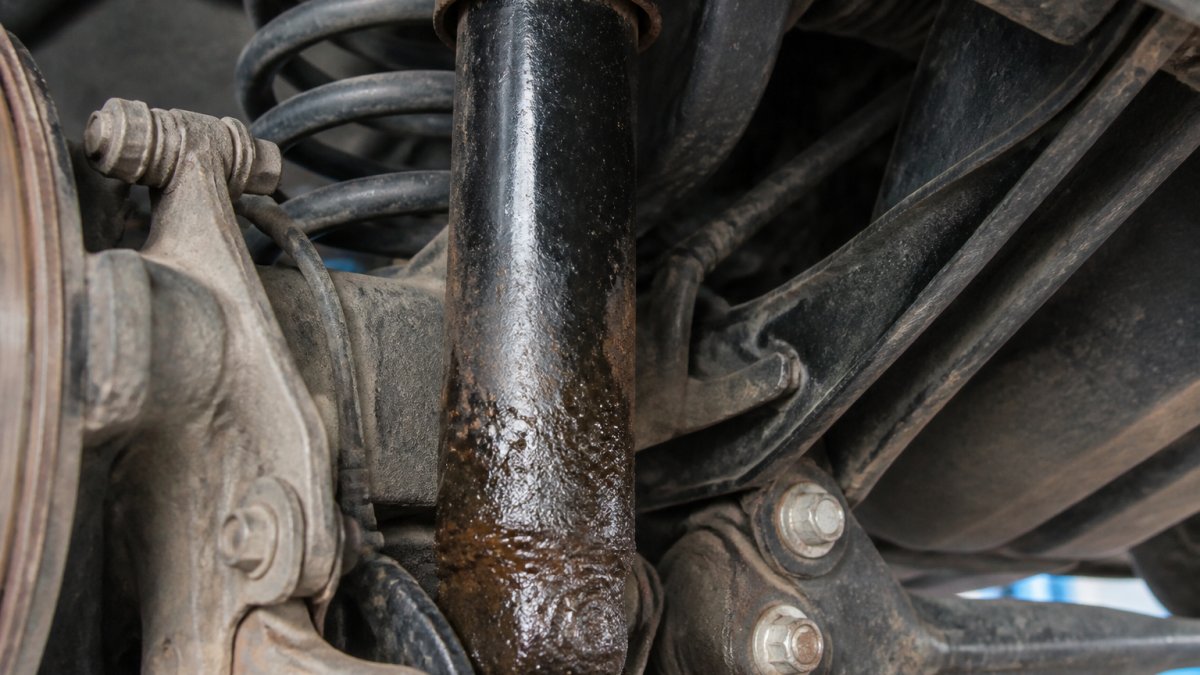
Oil leaks on the shock body show the internal seal has failed. Damping fluid leaking out means the shock cannot function properly.
Nose diving during hard braking happens when front shocks fail. The vehicle dips forward excessively. This reduces braking effectiveness and feels unsafe.
Leaning or tilting when turning corners indicates rear shock failure. The vehicle should stay level through turns. Excessive lean means suspension components are worn.
Clunking or knocking noises from the suspension suggest loose or damaged shocks. These sounds indicate internal components are failing or mounts are loose.
Poor steering response and a vague, wandering feel at the wheel often mean shocks are worn. The vehicle doesn’t respond sharply to steering inputs. This creates a safety risk.
How Often to Replace Shock Absorbers
The simple answer: replace them when signs of wear appear or every 40,000 to 80,000 kilometres, whichever comes first. Don’t wait for multiple warning signs.
Most vehicle manufacturers recommend inspection every 20,000 kilometres. This is sensible. Early inspection catches problems before they damage other components.
In practice, many people replace shocks every 60,000 kilometres as preventive maintenance. This avoids the risk of failure at an inconvenient time. It’s cheaper than waiting for shocks to fail and damage tyres, springs, or steering components.
Agricultural vehicles and those used on rough roads should be inspected more frequently. Every 15,000 kilometres is reasonable for heavy-use vehicles in the Mallee.
Shock Absorber Inspection: What to Check
You can perform basic checks yourself. However, professional assessment is more reliable. Here’s what to look for.
At-Home Checks You Can Perform
The bounce test is simple. Push down hard on each corner of your vehicle. Release and count bounces. The vehicle should settle in one or two bounces. More than two or three means shocks may be worn.
Visual inspection for oil leaks takes seconds. Look at the shock body. If you see wet, oily residue, the seal is failing. This is a clear sign of replacement needed soon.
Check for corrosion on shock bodies. Rust or severe corrosion indicates age and potential failure. Heavy corrosion often means internal components are also degraded.
Listen for noises when driving over bumps. Clunking, squeaking, or rattling from the suspension suggests worn shocks or loose mounts.
Feel the steering on a quiet road. Turn the wheel smoothly. Sharp response is normal. A vague, numb feeling suggests worn shocks affecting steering control.
These checks give you useful information. However, they’re not definitive. A shock can look fine and still be failing internally.
When Professional Assessment Is Needed
Professional mechanics have tools you don’t. They can measure damping force precisely. They can identify internal wear invisible to the naked eye.
We use modern diagnostic tools to assess shock condition accurately. This prevents unnecessary replacements and catches real problems early.
A professional inspection typically includes:
- Measuring suspension movement with specialised equipment
- Testing damping force on each shock
- Checking shock mounts and related components
- Inspecting springs, bushes, and other suspension parts
- Reviewing tyre wear patterns for clues about suspension health
This comprehensive approach catches problems before they become expensive. It’s worth the cost of a professional inspection every 20,000 kilometres or when you notice symptoms.
Many mechanics in the Mallee offer suspension checks as part of routine servicing. Ask about this during your next visit. Early detection saves money long-term.
Why Shock Absorbers Should Be Replaced in Pairs
Always replace shocks in pairs. Replace front shocks together. Replace rear shocks together. Never replace just one shock.
Here’s why: a new shock and a worn shock have different damping characteristics. This creates uneven suspension behaviour. The vehicle leans toward the worn side. Handling becomes unpredictable and unsafe.
Replacing in pairs ensures balanced damping. Both sides respond identically to bumps and turns. Steering feels consistent. The ride is smooth and predictable.
This principle applies whether you’re replacing front shocks, rear shocks, or both. Mixing old and new creates safety and handling problems.
Some people try to save money by replacing only the worst shock. This false economy costs more later. Uneven suspension accelerates tyre wear and stresses other components.
Professional mechanics always recommend pair replacement. It’s the safe, correct approach. Your safety depends on balanced suspension.
Worn shock absorbers create real safety risks. They affect braking, steering, and stability. They accelerate tyre wear and damage other suspension components.
If your vehicle is bouncing excessively, pulling to one side, or showing uneven tyre wear, have the suspension inspected. Don’t delay.
We recommend professional inspection every 20,000 kilometres or whenever you notice symptoms. At Mallee Auto & Agricultural Services, our skilled mechanics use modern diagnostic tools to assess your suspension accurately.
Frequently Asked Questions
How long do shock absorbers typically last in Australia?
Shock absorbers generally last between 80,000 and 120,000 kilometres in Australia, though this varies based on driving conditions and vehicle usage. Rough roads, heavy loads, and frequent off-road driving can reduce this lifespan significantly. Regular inspection helps identify wear early and ensures your vehicle maintains safe handling and ride comfort. If you’re unsure about your shocks’ condition, a professional assessment is the most reliable way to determine replacement timing.
What are the main signs of worn shock absorbers?
Common signs include excessive bouncing after bumps, uneven tyre wear, a harsh or uncomfortable ride, reduced steering control, and visible oil leaks on the shock body. You may also notice the vehicle dips or sways excessively when cornering or braking. If you observe any of these signs of worn shock absorbers, have them inspected promptly to prevent further suspension damage and maintain safe braking performance.
Should shock absorbers be replaced in pairs?
Yes, shock absorbers should be replaced in pairs, either both front or both rear at the same time. Replacing only one allows uneven damping, which causes poor handling, uneven tyre wear, and reduced braking stability. Paired replacement ensures balanced suspension performance and extends the life of your tyres. This is especially important for vehicles carrying loads or used in demanding driving conditions.
Can rough roads or heavy loads damage shock absorbers faster?
Absolutely. Rough roads, corrugated surfaces, and heavy vehicle loads significantly accelerate shock absorber wear. Agricultural operations, towing, and frequent travel on unsealed roads reduce the lifespan considerably. 4WD vehicles and farm equipment in regional areas often experience faster degradation due to challenging terrain. Monitoring your shocks more frequently and planning for earlier replacement helps avoid unexpected failures that could compromise safety or cause expensive secondary suspension damage.
