
Table of Contents
- Why Electrical Faults Matter: Safety and Reliability
- Sign 1: Engine Starting Problems and Slow Cranking
- Sign 2: Dim or Flickering Headlights and Dashboard Lights
- Sign 3: Battery Drains Repeatedly or Won’t Hold Charge
- Sign 4: Electrical Accessories Behaving Erratically
- Sign 5: Dashboard Warning Lights and Unusual Clicking Sounds
- Car Electrical Problems and Symptoms: When to Act
- What Does a Car Diagnostic Check Include
- Frequently Asked Questions
Last Updated: October 10, 2026
Why Electrical Faults Matter: Safety and Reliability
Electrical problems in your car are more serious than they might seem. A failing electrical fault check can catch issues before they leave you stranded or create a safety hazard on the road. Your vehicle’s electrical system powers everything from the engine’s ignition to your brakes and lights. When it fails, you’re not just inconvenienced, you’re at risk.
Small electrical issues can quickly become expensive repairs. A battery that won’t hold charge today becomes a dead engine tomorrow. Dim headlights that seem minor can reduce your visibility and put you and other drivers in danger. The good news is that most electrical problems show clear warning signs before they become critical.
Understanding these signs helps you know when to book a professional diagnostic. Early detection saves money and keeps your vehicle safe on the road.
Sign 1: Engine Starting Problems and Slow Cranking
One of the first signs of an electrical fault is trouble getting your engine to start. However, slow cranking or a struggling engine can have electrical, mechanical, or fuel-related causes. Understanding which is likely helps you know whether to expect an electrical fault check or a broader diagnostic.
Electrical causes of slow or failed starting:
- A weak or flat battery that cannot deliver enough current to the starter motor
- A failing alternator that has not recharged the battery during driving
- A faulty starter motor that draws power but cannot turn the engine over
- Corroded or loose battery terminals that block electrical flow
- A defective solenoid or relay that prevents the starter from engaging
Non-electrical causes that mimic electrical starting problems:
- Low fuel pressure or a failing fuel pump (engine cranks but won’t fire)
- Poor engine compression from worn piston rings or valve problems (engine cranks weakly)
- Faulty engine sensors (crankshaft position sensor, mass airflow sensor) that prevent fuel injection
- Spark plug or ignition coil failure (engine cranks but does not ignite)
The key difference: if your starter motor turns the engine over but it won’t fire, the fault is likely fuel or ignition, not electrical. If the engine barely cranks or does not crank at all, the fault is usually electrical.
Intermittent starting problems are particularly diagnostic. If your car starts fine on some days and struggles on others, you likely have an intermittent electrical fault rather than a dead battery or fuel problem. Intermittent faults are harder to diagnose because they do not always show up during testing. Keep a detailed record of when starting problems occur: the time of day, the outside temperature, how long the car sat unused, and whether you had recently driven it hard or left accessories on. Note whether the engine cranks slowly, does not crank at all, or cranks normally but will not fire. Share this record with your mechanic during a professional electrical fault check, it helps them narrow down which part of the electrical system is failing.
In Mildura’s hot climate, battery performance drops significantly in summer and can mask intermittent alternator problems. A battery that holds charge in mild weather may fail when temperatures exceed 35°C, making seasonal patterns worth recording.
If your car won’t start at all and you cannot jump-start it after two attempts, do not keep trying. Repeated starter engagement drains the battery further and can damage the starter motor solenoid. Call for roadside assistance or professional help instead.
Sign 2: Dim or Flickering Headlights and Dashboard Lights
Watch your headlights carefully. Headlights that dim when you’re idling but brighten when you accelerate suggest your alternator isn’t charging properly. The alternator’s job is to keep the battery charged while the engine runs. If it fails, the battery powers everything until it’s depleted.
Flickering lights are another warning sign. Your dashboard lights, interior cabin lights, or headlights might flicker when you brake, turn, or use the air conditioning. This happens when the electrical system can’t deliver steady power to all components at once. It’s a sign that something in your charging system is struggling.
The severity matters. Occasional dimming is less urgent than lights that flicker constantly. But both warrant a professional electrical fault check because they indicate your vehicle can’t maintain stable electrical power. Dim headlights also reduce your visibility at night, creating a safety risk for you and other road users.
Test your lights in a safe, dark location. Turn on headlights, then turn the steering wheel fully left and right while accelerating gently. If lights dim significantly during these actions, your alternator or battery is likely failing.
Sign 3: Battery Drains Repeatedly or Won’t Hold Charge
A battery that needs jumping every few days, or won’t hold a charge overnight, signals an electrical fault. A healthy battery should start your car reliably for years. If you’re jump-starting your vehicle regularly, something is draining it or preventing it from charging.
Two things cause this: either the alternator isn’t charging the battery while you drive, or something in the vehicle is drawing power when the engine is off. A parasitic drain can come from a faulty component, a stuck relay, or even an aftermarket accessory that wasn’t installed correctly.
Repeated flat batteries are frustrating and expensive. Each time you jump-start, you stress the battery further. Eventually, it fails completely. Getting a professional electrical fault check identifies whether your alternator is working and whether any component is draining power when it shouldn’t.
Record how often the battery goes flat and what you were doing before it happened. Were you parked for days? Did you leave accessories on? This context helps your mechanic diagnose the fault faster.
Sign 4: Electrical Accessories Behaving Erratically
Your car’s electrical accessories, power windows, windscreen wipers, radio, interior lights, all depend on stable electrical power. When they behave strangely, your electrical system is struggling.
Erratic behaviour includes:
- Power windows that move slowly or stop mid-way
- Radio that cuts out or loses signal
- Windscreen wipers that work intermittently
- Interior lights that flicker or won’t turn on
- Seat heaters or air conditioning that lose power
These problems often point to loose electrical connections, corroded battery terminals, or a failing alternator. Corrosion on battery terminals looks like white, blue, or green crusty buildup. It blocks the flow of electricity and causes many accessories to malfunction.
If multiple accessories fail at the same time, the problem is likely in the main electrical system, not the accessories themselves. This is exactly what a professional electrical fault check can identify and fix.
Corroded battery terminals are a fire hazard if left unchecked. If you see heavy corrosion, do not attempt to clean it yourself without proper safety equipment. Have a professional handle it.
Sign 5: Dashboard Warning Lights and Unusual Clicking Sounds
Your dashboard warning lights exist for a reason. A battery warning light or check-engine light often signals an electrical fault. The battery light looks like a battery symbol and means your alternator isn’t charging properly. The check-engine light can indicate many problems, including electrical sensor faults.
Don’t ignore these lights. Even if your car seems to run fine, the light means your vehicle’s computer has detected a fault. Some faults are minor, but others can worsen quickly.
Unusual clicking sounds during ignition are another red flag. A rapid clicking sound when you turn the key suggests the battery is too weak to power the starter motor. A single loud click might mean a stuck relay or a faulty solenoid. Both require a professional electrical fault check to diagnose.
Clicking sounds are distinctive and worth noting. Describe the sound to your mechanic, rapid clicking, single clicks, or clicking that happens once or repeatedly. This helps narrow down the fault.
Car Electrical Problems and Symptoms: When to Act
Not every electrical symptom needs immediate attention, but some do. Understanding urgency helps you decide whether to drive to a mechanic or call for assistance.
Act immediately if:
- Your car won’t start at all
- Headlights are very dim or won’t turn on
- You smell burning or see smoke near the engine
- Dashboard warning lights appear alongside starting problems
Book within a few days if:
- Headlights dim noticeably but still work
- Battery drains faster than normal
- One or two accessories behave erratically
- You hear occasional clicking during startup
Monitor and track if:
- Lights flicker rarely
- Starting is slow but reliable
- A single accessory works inconsistently
Keep a simple log of when problems occur. Note the weather, how long the car sat unused, and what you were doing. This record helps your mechanic understand whether the fault is consistent or intermittent. Intermittent electrical faults are harder to diagnose because they don’t always show up during testing.
What Does a Car Diagnostic Check Include
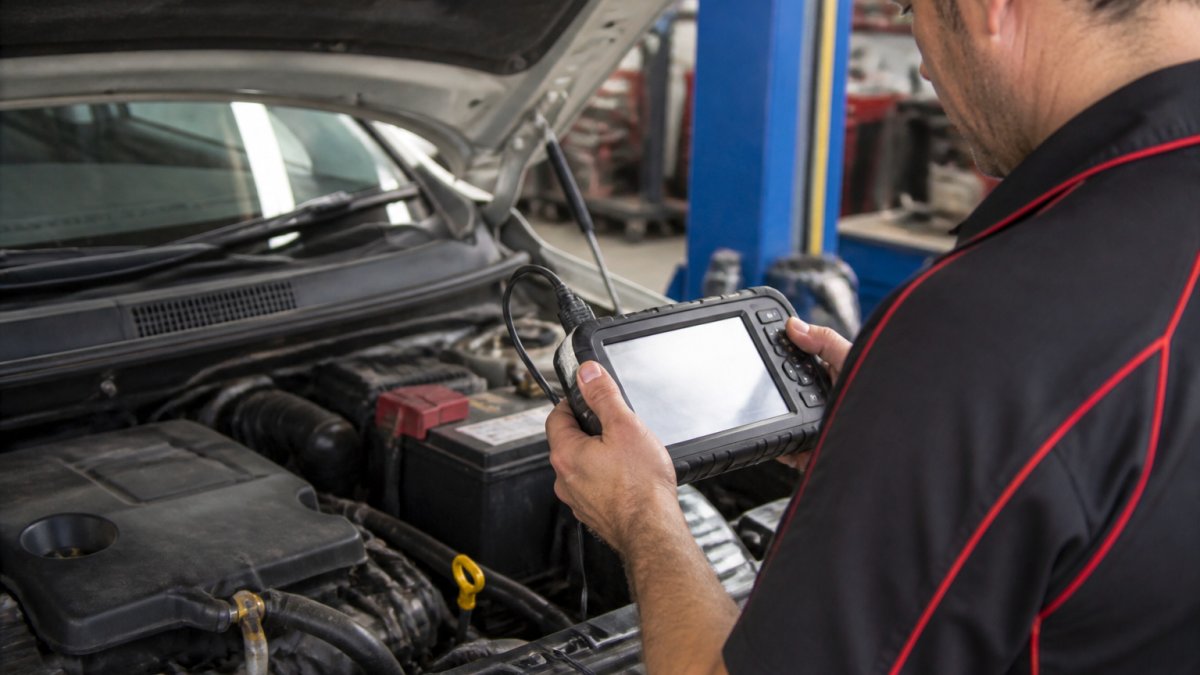
A professional electrical fault check is more thorough than a visual inspection. Modern diagnostic tools connect to your vehicle’s engine control unit and read fault codes. These codes tell your mechanic exactly which sensors or systems have failed.
Here’s what happens during a diagnostic:
Step 1: Visual Inspection
Your mechanic checks battery terminals for corrosion, looks for loose wires, and inspects connections. They test your battery voltage with a multimeter to see if it’s holding charge. They also look for signs of heat damage, burnt wiring, or fluid leaks near electrical components. This step often reveals obvious problems like a corroded battery terminal or a loose alternator belt.
Step 2: Diagnostic Scan
A scan tool plugs into your vehicle’s diagnostic port (usually under the steering wheel). It reads all stored and pending fault codes. Stored codes mean the fault has happened before; pending codes mean the fault is happening now or has happened recently but not consistently.
Step 3: Load Testing
The mechanic tests your battery and alternator under load. A load tester simulates the demand your car places on the electrical system during normal driving, headlights on, air conditioning running, engine at idle. This reveals whether components can handle real-world conditions.
Step 4: Circuit Testing
For intermittent faults, your mechanic may test individual circuits. They use a multimeter to check voltage and current flow through different parts of the electrical system. They may also perform a parasitic drain test, which measures how much power the vehicle draws when the engine is off.
Step 5: Recommendations
Based on findings, your mechanic explains what’s wrong, what needs repair, and how urgent it is. They discuss options and provide a quote before doing any work. If the fault is intermittent, they will explain whether the stored or pending codes are reliable indicators or whether the component needs replacement as a precaution.
A proper diagnostic takes 30 minutes to an hour, depending on how complex the fault is. It costs less than guessing and replacing parts that might not be broken. At Mallee Auto & Agricultural Services, we use modern diagnostic tools to get accurate results quickly.
The best time to get an electrical fault check is when you first notice a problem, not after your car fails completely. Early diagnosis saves money and keeps you safe on the road. If a fault is intermittent, a diagnostic scan can often find stored codes even if the problem is not happening at that moment.
Frequently Asked Questions
What are the common signs of an electrical problem in a car?
Common signs include slow or difficult engine cranking, dim or flickering headlights, repeated battery drain, erratic behaviour in power windows or radio, dashboard warning lights (especially battery or check-engine indicators), and unusual clicking sounds during ignition. If you notice any combination of these, a professional electrical fault check can identify the root cause, whether it’s the battery, alternator, starter motor, wiring, or sensors.
How long does a car diagnostic take?
A standard electrical diagnostic typically takes time depending on the complexity of the fault and the vehicle’s electrical system. Intermittent faults may require extended testing. Your mechanic will give you an estimate before starting. Modern diagnostic tools can pinpoint issues faster than older manual methods, reducing both time and guesswork.
Can a car electrical fault drain the battery?
Yes. A faulty alternator may fail to recharge the battery while driving, causing repeated flat batteries. Corroded electrical connections, malfunctioning sensors, or parasitic drains (components drawing power when the engine is off) can also deplete the battery. A professional fault check will identify which component is responsible and prevent costly repeat failures.
Can I drive my car if it has an electrical fault?
It depends on the fault’s severity. Dim headlights or minor accessory issues may be safe for short trips, but slow cranking, warning lights, or erratic behaviour suggest underlying problems that could leave you stranded. Do not ignore dashboard warning lights. Book a diagnostic check promptly to avoid safety risks and further damage to the engine control unit or other systems.
