
Table of Contents
- What Causes Car Air Conditioning to Stop Working
- Low Refrigerant in Car Air Conditioning
- Why Your Car Air Conditioning Is Not Blowing Cold Air
- Car Air Conditioning Works Intermittently: Diagnosis and Solutions
- Car Air Conditioning Electrical Fault: Wiring, Fuses, and Sensors
- Safe Checks You Can Do Before Booking a Repair
- When to Seek Professional Diagnosis
- Conclusion
- Frequently Asked Questions
Last Updated: October 12, 2026
What Causes Car Air Conditioning to Stop Working
Car air conditioning stopped working is one of the most frustrating issues drivers face, especially during hot weather. When your AC suddenly fails to blow cold air, the problem could stem from several different sources. At Mallee Auto & Agricultural Services, we diagnose AC failures, and the causes are more varied than many drivers expect.
The most common culprits include low refrigerant levels, compressor failure, blocked condensers, dirty cabin air filters, and electrical faults. Some issues develop gradually over months. Others appear overnight. Understanding what’s happening under your bonnet helps you decide whether a quick fix will solve it or whether professional diagnosis is necessary.
The good news: most AC problems are fixable. The challenge: identifying which component has failed requires systematic troubleshooting. Below, we’ll walk you through the main causes, how to spot them, and what you can safely check yourself before booking a repair.
Low Refrigerant in Car Air Conditioning
Low refrigerant is the leading reason car air conditioning stopped working in vehicles we service. Your AC system relies on refrigerant to absorb heat from inside your car and release it outside. When refrigerant levels drop, the system can’t function properly.
Refrigerant doesn’t get “used up” like petrol. A properly sealed system maintains the same refrigerant charge for years. If levels are low, you have a leak somewhere in the system. Leaks typically occur at connection points, seals, or the compressor itself.
Signs of low refrigerant include:
- AC blows warm air instead of cold
- Weak airflow from vents
- System cycles on and off frequently
- Hissing or bubbling sounds from the AC unit
- Frost or oily residue around AC components
Finding a refrigerant leak requires specialist equipment. The leak might be visible (oily stains on the compressor or hoses) or hidden inside the system where you can’t see it. Once the leak is found and repaired, the system must be recharged with the correct refrigerant type.
In Australia, refrigerant handling is regulated. Only licensed technicians can legally handle certain refrigerants under the Ozone Protection and Synthetic Greenhouse Gas Management Regulations. This is why DIY refrigerant top-ups aren’t a practical solution for most drivers.
Why Your Car Air Conditioning Is Not Blowing Cold Air
When your car air conditioning is not blowing cold air, the problem might not be refrigerant at all. Several other components can prevent cold air from reaching your cabin, even if the system itself is working.
A blocked or dirty condenser is a common culprit. The condenser sits in front of your radiator and releases heat from the refrigerant. If it’s clogged with dirt, leaves, or bugs, airflow is restricted and cooling performance drops. This happens frequently in rural areas where dust and agricultural debris accumulate.
The evaporator, located inside your dash, can also fail. This component cools the air before it enters the cabin. If the evaporator freezes up (usually from a blockage in the expansion valve), ice forms and blocks airflow. The system might run, but no cold air reaches you.
A faulty pressure switch or control module can also cause this problem. These electrical components regulate when the compressor engages. If they malfunction, the compressor won’t activate even though refrigerant is present.
Quick checks you can perform:
- Listen for the compressor clutch engaging when you turn on AC (a clicking sound)
- Feel the large hose on the compressor, it should be cold when AC is running
- Check the condenser fins for visible blockages
- Inspect the cabin air filter for dirt accumulation
If the compressor isn’t engaging at all, the problem is electrical. If it engages but air stays warm, the issue is likely refrigerant or a blocked condenser.
Car Air Conditioning Works Intermittently: Diagnosis and Solutions
Car air conditioning works intermittently when it blows cold for a while, then warm air returns. This pattern often points to a specific set of problems. Intermittent operation is frustrating because the system sometimes works, making you think it might fix itself. It won’t.
A failing compressor clutch is a common cause. The clutch engages and disengages the compressor as needed. When it’s worn, it slips in and out of engagement unpredictably. You’ll notice the AC works for five minutes, then stops, then works again.
Low refrigerant can also cause intermittent operation. As refrigerant levels drop, the system struggles to maintain pressure. On cooler days or at higher speeds, it might work briefly. In traffic or on hot days, it fails.
Electrical connections that are loose or corroded create intermittent faults. A poor connection might allow current to flow sometimes but not others. This is especially common in older vehicles where corrosion builds up around connectors.
A faulty pressure switch can cause the compressor to cycle erratically. If the switch doesn’t read pressure correctly, it signals the compressor to turn on and off at the wrong times.
Intermittent AC troubleshooting steps:
- Note when it fails (hot weather, long drives, sitting in traffic)
- Check if it works better on cooler days
- Listen for the compressor engaging and disengaging
- Have a mechanic inspect electrical connectors for corrosion
- Request a refrigerant pressure test
Intermittent problems are harder to diagnose because the fault might not be present when the mechanic tests it. Keep a log of when it fails to help your technician identify the pattern.
Car Air Conditioning Electrical Fault: Wiring, Fuses, and Sensors
Car air conditioning electrical fault can disable the entire system even if the mechanical components are fine. Your AC system depends on several electrical components working together.
The AC compressor is driven by an electric clutch. When you turn on AC, electrical current flows to the clutch, engaging the compressor. If wiring is damaged, the clutch won’t engage and the compressor won’t run.
Fuses protect the AC circuit. A blown fuse cuts power to the system immediately. If the AC worked fine yesterday and stopped today with no warning, a blown fuse is likely.
The AC control module, located in your dash, sends signals to activate the compressor. If this module fails, the system won’t respond to your commands. You’ll turn on the AC and nothing happens.
Sensors monitor refrigerant pressure, temperature, and airflow. If a sensor fails, the control module receives incorrect information and may shut the system down as a safety measure.
Wiring damage is often caused by age, vibration, or corrosion. Corroded connectors create high resistance, reducing current flow. Damaged insulation exposes wires to moisture and can cause shorts.
Electrical checks you can safely do:
- Look for visible wiring damage or corrosion around the compressor
- Check fuses in the fuse box (replace a blown fuse with the same amperage)
- Ensure AC controls respond when you adjust temperature and fan settings
- Listen for clicking sounds when you engage AC (indicates the clutch is trying to engage)
If the fuse blows again after replacement, there’s a short circuit in the system. Professional diagnosis is necessary to locate it.
Safe Checks You Can Do Before Booking a Repair
Before you ring a mechanic, several checks can help identify the problem and potentially save you money.
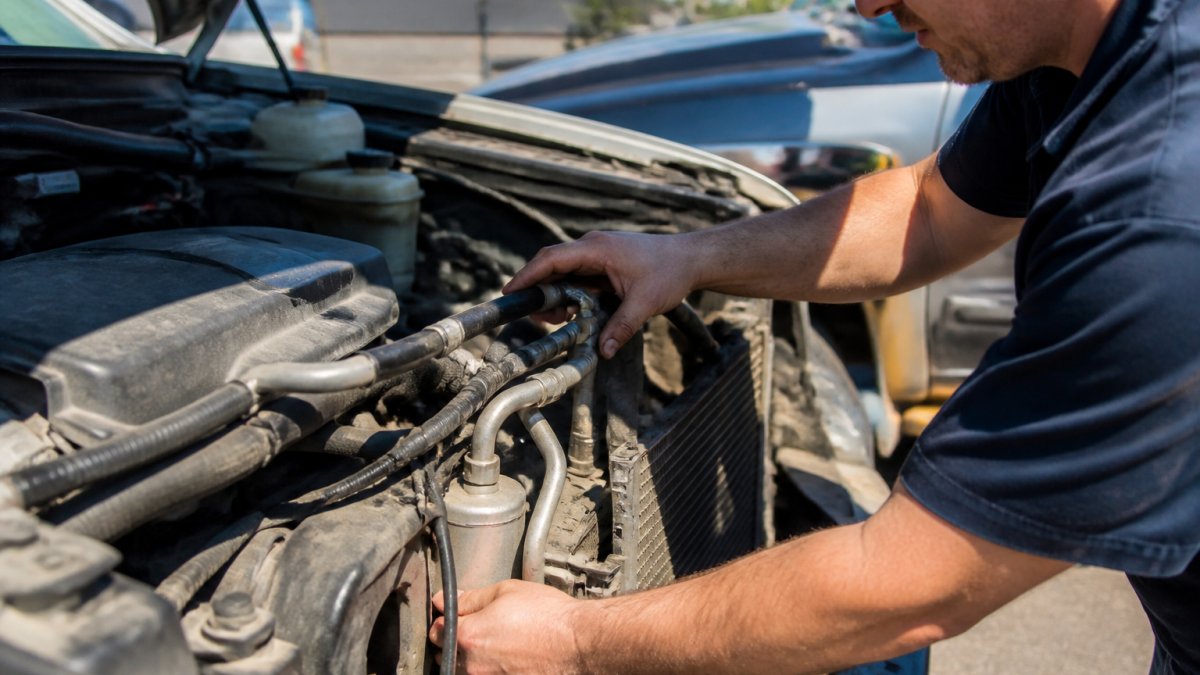
Visual inspection of AC components:
Start with the engine off and cool. Open your bonnet and locate the compressor (it’s a cylindrical component driven by a belt).
Check the condenser, which looks like a radiator in front of your main radiator. If it’s clogged with dirt, leaves, or dead insects, airflow is blocked.
Inspect hoses connected to the compressor. They should be intact with no cracks or splits. If a hose is damaged, refrigerant will leak out.
Electrical checks:
Turn on the engine and engage the AC. Listen closely to the compressor. You should hear a clicking sound as the clutch engages.
Feel the hose connected to the compressor outlet (the smaller hose). When the AC is running, it should be noticeably cold.
Check your cabin air filter. It’s usually located behind your glove box. A clogged filter restricts airflow and makes the AC seem weaker than it is.
Refrigerant pressure check:
You cannot safely check refrigerant pressure yourself, the system is sealed and requires specialised gauges.
When to stop and book a professional:
If you find visible damage, oily residue, or electrical faults, stop investigating and book a repair.
These checks help you provide your mechanic with useful information.
When to Seek Professional Diagnosis
Some AC problems are beyond safe DIY inspection. Knowing when to call a professional saves time and prevents damage.
Book a repair immediately if:
- The compressor isn’t engaging (no clicking sound when AC is turned on)
- You see visible damage to hoses or connections
- Refrigerant is leaking (oily residue on components)
- The AC fuse blows repeatedly after replacement
- Electrical connectors are corroded or burned
Professional mechanics have diagnostic equipment that reads system pressure, checks electrical circuits, and identifies faults you can’t see. Modern diagnostic tools connect to your vehicle’s computer and reveal sensor faults that would otherwise go undetected.
At Mallee Auto & Agricultural Services, we use modern diagnostic equipment to pinpoint AC faults accurately. Rather than guessing which component has failed, we test each part systematically. This approach saves you money by identifying the actual problem instead of replacing parts that aren’t faulty.
The technician will:
- Test refrigerant pressure and check for leaks
- Inspect electrical connections and test the compressor clutch
- Check the control module for fault codes
- Examine the condenser and evaporator for blockages
- Review your vehicle’s service history for related issues
Once the diagnosis is complete, your mechanic explains what’s failed and what repair options exist. Some problems have one solution. Others offer choices, for example, a failing compressor can be repaired or replaced, and each option has different costs and longevity.
Conclusion
Car air conditioning stopped working is frustrating, but the problem is usually fixable once you identify the cause. Low refrigerant, compressor failure, blocked condensers, dirty filters, and electrical faults account for the vast majority of AC failures. Safe preliminary checks, visual inspection, listening for the clutch, feeling hose temperatures, help narrow down the problem before you book a repair.
When your AC fails, bring your vehicle to Mallee Auto & Agricultural Services in Mildura. Our skilled mechanics use modern diagnostic tools to identify exactly what’s wrong, so you’re not paying for guesswork. We offer fair, transparent pricing with no hidden charges, and pensioner discounts are available. Whether it’s a simple refrigerant top-up, a condenser cleaning, or a compressor replacement, we’ll get your air conditioning working again and your vehicle running smoothly. Book now and experience the difference professional diagnosis makes.
Frequently Asked Questions
Why is my car air conditioning not blowing cold air?
Car air conditioning stops blowing cold air most commonly due to low refrigerant from a leak, a faulty compressor that cannot circulate refrigerant, or a blocked condenser that prevents heat dissipation. A clogged cabin air filter or dirty evaporator can also reduce airflow and cooling performance. Electrical faults affecting the compressor clutch, pressure switch, or control module may prevent the system from activating. A professional diagnostic check identifies which component has failed and whether repair or replacement is needed.
Can low refrigerant in car air conditioning cause complete failure?
Yes. Low refrigerant levels prevent the compressor from building sufficient pressure to cool air effectively. If refrigerant drops below the minimum threshold, the pressure switch cuts power to the compressor as a safety measure, stopping the system entirely. A slow refrigerant leak means cooling gradually weakens over weeks or months until the system fails. Finding and sealing the leak, then recharging with refrigerant to the correct level, restores function. Topping up refrigerant without fixing the leak is temporary, the system will fail again.
Is it safe to drive when car air conditioning stops working?
Driving without air conditioning is generally safe, though uncomfortable in warm conditions. However, if the AC failure is due to a compressor clutch failure or electrical fault, continued operation may damage other engine components or create a safety hazard. If you notice unusual noise, burning smells, or the AC system cycling on and off erratically, stop driving and have the vehicle inspected. In hot weather, loss of AC can affect driver comfort and concentration, increasing fatigue on long journeys.
What should I check before calling a mechanic about my car AC?
First, confirm the AC compressor clutch engages when you turn on the system, you should hear or feel a slight click near the compressor. Check that the cabin air filter is not visibly clogged with dirt. Inspect the condenser fins (front of the radiator) for debris or damage blocking airflow. Look for oil stains or wet spots around hose connections indicating a refrigerant leak. Listen for unusual grinding, squealing, or rattling sounds. Check that all AC controls respond when adjusted. Document what you observe, this helps a mechanic diagnose the fault faster and more accurately.
