
Last Updated: October 26, 2026
Quick Summary
To check car fluid levels correctly at home, park your vehicle on level ground, let the engine cool for at least five minutes, then locate each fluid reservoir in your engine bay using your owner’s manual. Check the level against the minimum and maximum markings on each dipstick or reservoir, and top up with the correct fluid specification if needed.
- Check your main fluids every month or before a long trip, following intervals in your owner’s manual.
- Gather a clean cloth, funnel, correct replacement fluids, gloves and your owner’s manual before starting.
- Engine oil should be golden or amber when fresh; dark brown or black means it needs changing.
- Never open the coolant system when hot; wait at least 30 minutes after driving to avoid burns.
- Stop and see a mechanic if fluid levels drop rapidly, look dark or burnt, or if you notice leaks under your car.
Table of Contents
- Why checking car fluid levels matters for vehicle reliability
- How often to check car fluids and what you’ll need
- Preparing your vehicle and choosing a safe inspection spot
- How to check engine oil level with the dipstick
- How to check coolant level safely without burns
- Checking brake fluid, transmission fluid and power steering levels
- Reading fluid colour and condition to spot problems early
- When to top up fluids yourself and when to see a mechanic
- Frequently Asked Questions
Why checking car fluid levels matters for vehicle reliability
Learning to check car fluid levels is one of the simplest ways to keep your vehicle running smoothly and safely. Many vehicle owners skip this basic maintenance task, then wonder why their engine overheats, their brakes feel spongy, or their transmission starts slipping. Regular fluid checks catch problems early, before they become expensive repairs.
Transmission fluid that’s low or contaminated can damage your gearbox. Brake fluid that’s aged loses its ability to stop your car effectively. Engine oil that’s too thin won’t protect your engine from wear.
The good news is that you don’t need special skills to check car fluid levels correctly at home. This guide walks you through each major fluid, shows you where to find it, and explains what you’re looking for.
How often to check car fluids and what you’ll need
Most vehicle owners should check their main fluids every month or before a long trip. Some fluids need more frequent attention than others. Your owner’s manual specifies the exact intervals for your vehicle, so check that first.
Before you start, gather these simple tools:
- Clean cloth or paper towels
- Funnel (for topping up)
- Correct replacement fluids for your vehicle
- Protective gloves (optional but recommended)
- Your vehicle’s owner’s manual
You don’t need expensive equipment. Most of these items are already in your garage or cost just a few dollars at any auto parts store. The key is using the right fluid for your specific vehicle. Using the wrong type can damage your engine, transmission, or braking system.
Gather these essential items before checking your car’s fluid levels at home.
| Item | Purpose | Note |
|---|---|---|
| Clean cloth or paper towels | Wipe dipsticks and reservoirs | Removes old fluid for accurate readings |
| Funnel | Top up fluids safely | Prevents spills in engine bay |
| Correct replacement fluids | Match your vehicle’s specification | Wrong type damages engine or transmission |
| Protective gloves | Optional protection | Recommended for safety |
| Owner’s manual | Reference guide | Shows exact fluid locations and intervals |
Preparing your vehicle and choosing a safe inspection spot
Your car must be parked on a level, flat surface before you check any fluid levels. Parked on a slope, the readings will be inaccurate. Find a flat driveway, level garage floor, or straight section of level ground.
Let your engine cool for at least five minutes after driving. Hot engine oil and coolant can burn your skin. Most fluid checks require a cool engine anyway, so patience here prevents injury.
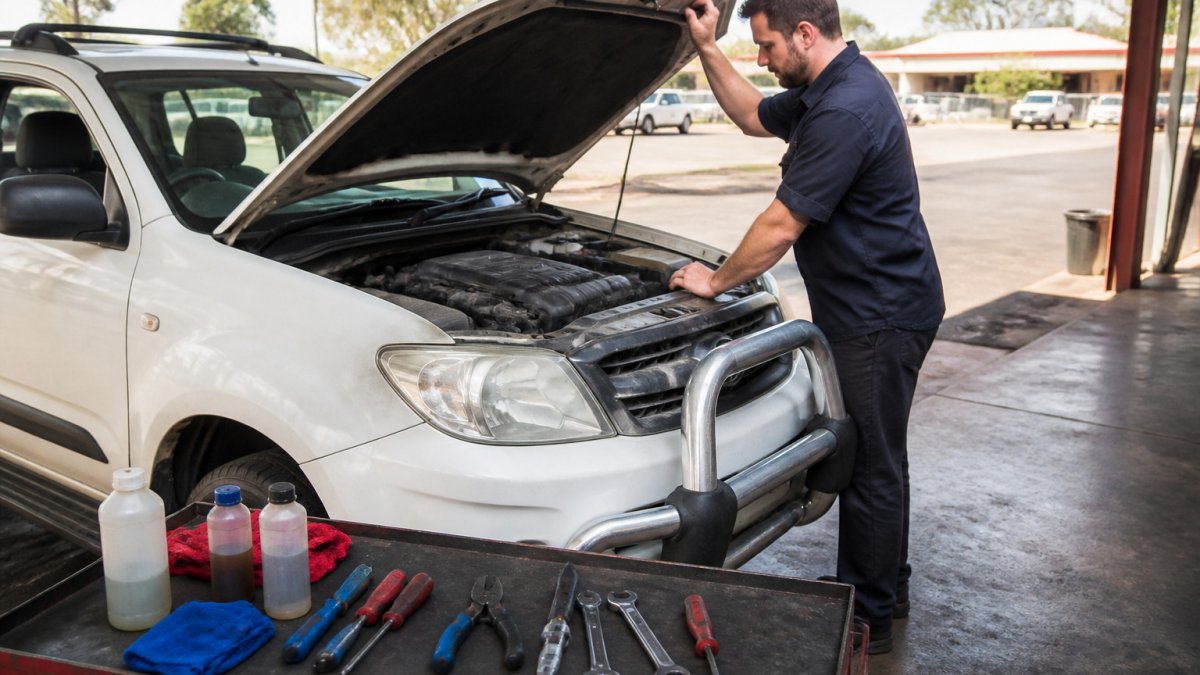
Open your bonnet and locate your engine bay. Take a moment to identify the main components: the engine block, the radiator, and the various reservoir caps.
How to check engine oil level with the dipstick
Engine oil is the lifeblood of your engine. It lubricates moving parts, reduces friction, and carries away heat and dirt.
Locate the dipstick. It’s usually a yellow or orange handle sticking out of the engine block. Pull it straight out. The dipstick will have oil on it from the previous check.
Wipe the dipstick clean with a cloth or paper towel. This removes old oil so you can read the current level accurately.
Pull it out again and look at the markings. Most dipsticks have a minimum marking and a maximum marking. Your oil level should sit between these two lines.
Look at the oil colour while you’re checking the level. Fresh oil is golden or amber. If your oil looks dark brown or black, it’s time for an oil change.
How to check coolant level safely without burns
Coolant keeps your engine from overheating. It circulates through your engine and radiator, absorbing heat and releasing it through the radiator fins. Never open the coolant system when the engine is hot.
Wait at least 30 minutes after driving before checking coolant. The system needs time to depressurise and cool down.
Locate your coolant reservoir. It’s usually a translucent plastic tank near the radiator or engine bay edge. You can see the fluid level through the plastic without opening it.
If your coolant level is low, top it up with the correct coolant type for your vehicle. Never mix coolant types. Check your owner’s manual or the cap label for the correct specification.
Watch your coolant colour. Fresh coolant is bright green, orange, pink, or blue, depending on the type. If your coolant looks rusty, brown, or cloudy, it’s contaminated and needs flushing.
Checking brake fluid, transmission fluid and power steering levels
Brake fluid, transmission fluid and power steering fluid are critical to your safety and vehicle control. Each has its own check procedure, level markings and warning signs. Rushing these checks, or using the wrong specification, can cause expensive damage. The following guidance applies to most vehicles sold in Australia, but always confirm the exact procedure in your owner’s manual first.
How to check brake fluid level and condition
Brake fluid is hygroscopic, meaning it absorbs moisture from the air over time. That moisture lowers its boiling point and can cause a spongy pedal or, in extreme cases, brake fade under heavy load.
Park on level ground and let the engine cool. Locate the brake fluid reservoir at the back of the engine bay, usually on the driver’s side near the firewall. It is a white or translucent plastic container with a brake symbol on the cap.
Brake fluid should be clear to light amber. Dark, murky or black fluid indicates water contamination or age. If the fluid looks dark or the pedal feels spongy, have the system flushed and inspected by a qualified mechanic. Do not top up brake fluid as a substitute for a flush.
Brake fluid damages paintwork. If you spill any on the body or engine bay, rinse it off immediately with plenty of water.
How to check transmission fluid level and condition
Transmission fluid lubricates and cools the gearbox. Low or degraded fluid causes rough gear changes, slipping or complete transmission failure. The check procedure depends on whether your vehicle has a dipstick.
Most modern automatic transmissions sold in Australia, including many sealed units, have no dipstick. Check your owner’s manual to confirm. If your vehicle has a transmission dipstick, the process mirrors checking engine oil: pull it out, wipe it clean, reinsert it fully, then pull it out and read the level against the hot or cold markings. Many dipsticks have separate hot and cold ranges.
Transmission fluid should be bright red or pink. Dark red, brown or black fluid means the transmission is overheating or breaking down internally. Burnt-smelling fluid is a serious warning sign. If your vehicle has no dipstick, or the fluid looks or smells wrong, have a mechanic check it.
How to check power steering fluid level
Power steering fluid sits in a reservoir near the power steering pump, usually on the passenger side of the engine bay. Many modern vehicles use electric power steering and have no fluid reservoir at all, so check your owner’s manual first.
If your vehicle has a reservoir, you can often see the level through the translucent plastic. Most have minimum and maximum markings. Check the level with the engine off and cool. Top up with the correct power steering fluid for your vehicle. Do not substitute automatic transmission fluid unless your manual explicitly permits it.
Power steering fluid should be clear to light red. If it is dark, foamy or smells burnt, the system has a problem. Foamy fluid often indicates air in the system or a failing pump. Have it inspected by a professional.
Take a photo of each reservoir cap and its label before you top up. That way you can match the exact specification at the parts store without guessing.
Reading fluid colour and condition to spot problems early
Fluid colour tells you a lot about what’s happening inside your engine and systems. Learning to read these signs helps you catch problems before they become serious and expensive.
Engine oil should be golden or amber when fresh. As it ages, it darkens.
Milky or frothy oil indicates water in your engine. This happens when coolant leaks into the oil system, usually from a failed head gasket.
Coolant colour depends on the type, but it should always be bright and clear. Rust-coloured or cloudy coolant means contamination.
Brake and power steering fluid should stay clear to light amber. Any darkening, cloudiness, or burnt smell means these fluids need professional flushing and replacement.
Check your windscreen washer fluid level too. Unlike other fluids, washer fluid colour varies by product, but the level should be visible in the translucent reservoir.
When to top up fluids yourself and when to see a mechanic
Topping up engine oil, coolant, brake fluid and power steering fluid is straightforward when levels are only slightly low. Use the correct fluid specification for your vehicle, add small amounts, and recheck the level after each addition.
Matching Australian fluid specifications
Do not choose fluids by colour or generic advice. Australian vehicles require specific oil viscosities, coolant types and brake fluid standards. Your owner’s manual lists the exact specification, such as 5W-30 engine oil or a particular coolant standard. Using the wrong specification can void your warranty and damage your engine, transmission or braking system. When buying fluid, check the label for the specification your manual requires, not just the brand or colour.
Disposal and environmental handling
Used automotive fluids are hazardous waste. Do not pour them down drains, onto the ground or into household rubbish. In Australia, most local councils run household hazardous waste collection days or have permanent drop-off facilities. Store used fluids in sealed containers and take them to an appropriate collection point. Clean up spills with absorbent material and dispose of it responsibly.
When to stop and see a mechanic
Stop and see a mechanic if:
- Your fluid level drops rapidly between checks
- Fluid colour is dark, cloudy or burnt-smelling
- You see fluid leaks under your car
- Your brake pedal feels spongy or soft
- Your power steering feels heavy or makes noise
- Your engine overheats despite adequate coolant
- Your transmission slips or changes gear roughly
Rapid fluid loss usually means a leak. Leaks can range from minor to serious, and only a professional can diagnose the source and fix it properly. Continuing to drive with a significant leak can damage your engine or leave you stranded.
If you are unsure about any fluid check, or if you find something that concerns you, book a fluid service check with a local mechanic. Mallee Auto & Agricultural Services provides automotive repair and maintenance, with modern diagnostic tools for issue detection and fair, transparent pricing.
For detailed guidance on when your brake system actually needs service, see our guide on when to replace brake rotors to understand the bigger picture of brake maintenance beyond just fluid checks.
Frequently Asked Questions
How often should I check my car’s fluid levels?
Check your owner’s manual for the recommended fluid-check intervals for your vehicle.
Should the engine be hot or cold when checking car fluids?
Check your owner’s manual for the correct procedure for your vehicle. Never open the radiator cap on a hot engine.
What does it mean if my transmission fluid is dark or smells burnt?
If your transmission fluid looks or smells wrong, check your owner’s manual and consider having a mechanic inspect it.
Which car fluids can I safely top up at home?
Check your owner’s manual for the correct fluid specifications and procedures for your vehicle.

