
Last Updated: October 28, 2026
Quick Summary
The signs of faulty car suspension include uneven tyre wear, a bouncy ride or nose dive under braking, and clunking, squeaking or vibration. You may also notice body roll, pulling to one side, uneven ride height, or vague steering from worn ball joints. Fix the cause early, because worn suspension wears tyres faster and can add to your braking distance.
- Push down on each corner and release; more than two rocks means a weak shock.
- A wet, oily shock body behind a wheel is a leaking one.
- A clunk over speed humps often means worn sway bar links or bushings.
- A broken coil spring is a safety issue, not a comfort one.
- Ask for a written quote before any suspension work starts.
Table of Contents
- 1. Uneven Tyre Wear That Points to Suspension Trouble
- 2. A Bouncy Ride or Nose Dive That Signals Worn Shock Absorbers
- 3. Clunking, Squeaking and Vibration: Noises That Reveal the Culprit
- 4. Body Roll, Pulling to One Side and Uneven Ride Height
- 5. Symptoms of Worn Ball Joints and Other Steering Faults
- 6. How to Check Shock Absorbers at Home Before You Book a Mechanic
- 7. The Cost of Suspension Repair in Australia and When to See a Professional
- Book a Suspension Inspection in Mildura Before the Damage Spreads
- Frequently Asked Questions
1. Uneven Tyre Wear That Points to Suspension Trouble
Uneven tyre wear is often the first visible clue of faulty car suspension that has moved out of spec. A worn shock absorber, a sagging spring or a bent control arm changes how the tyre meets the road, and the tread tells the story.
Run your hand across the tread. If one edge is smooth and the other is sharp, or you feel dips and high spots, that is cupping. Cupping usually points to worn shocks or a wheel alignment that has drifted. A single bald strip down the middle can mean over-inflation, but a bald patch on one side often means camber is out.
Check tread depth across the full width of each tyre. Most Australian tyres have tread wear indicators built into the grooves, and the national tyre safety guidance from the Department of Infrastructure explains why tread depth matters for grip in the wet.
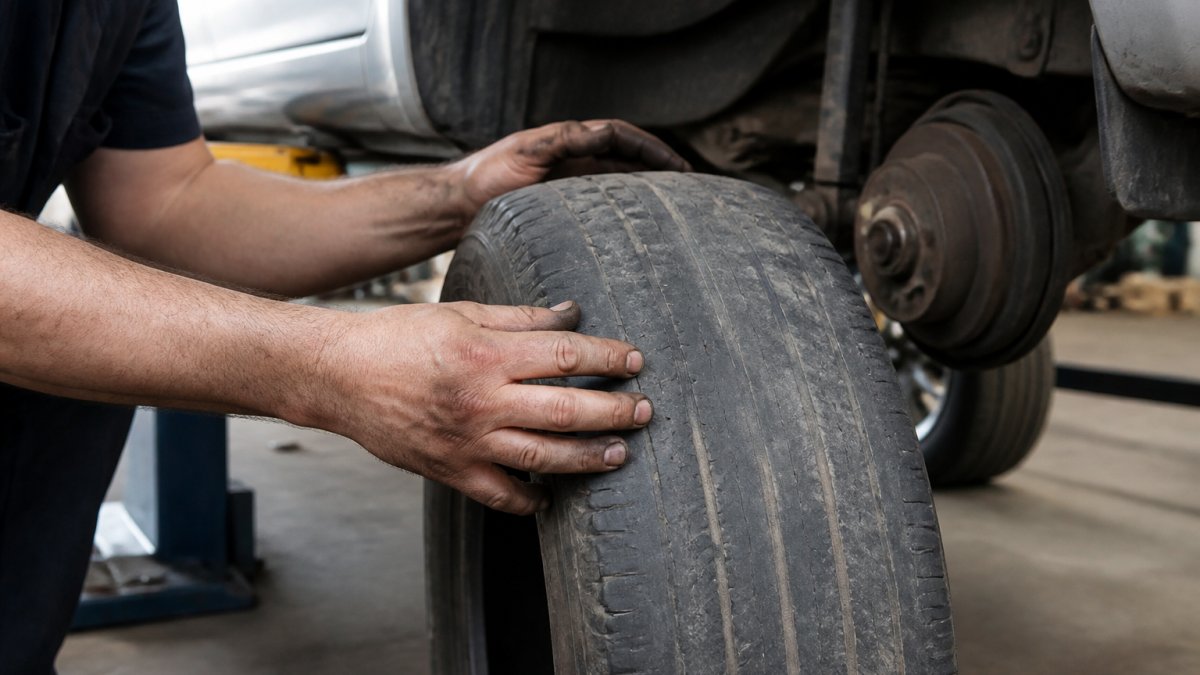
A common mistake is replacing the tyre and ignoring the cause. New rubber on a bent suspension will wear the same way within a few thousand kilometres. If you spot uneven wear, get the suspension and alignment checked before you spend money on tyres.
2. A Bouncy Ride or Nose Dive That Signals Worn Shock Absorbers
A bouncy ride or a nose dive under braking usually means the shock absorbers are past their best. Shock absorbers control the spring, and when they weaken, the body keeps moving after the bump has passed.
Here is a simple test. Push down hard on one corner of the car and let go. A healthy car settles in one or two movements. If it keeps rocking, the shock on that corner is tired. Do the same on each corner.
Nose dive is the same problem under load. When you brake and the front drops sharply, the front shocks are not controlling the weight transfer. That adds braking distance and makes the car harder to steer in an emergency.
Watch out: a bouncy ride also affects rear squat under acceleration, which can unsettle a ute or 4WD with a load on board. If you tow or carry tools, worn shocks show up faster.
3. Clunking, Squeaking and Vibration: Noises That Reveal the Culprit
Clunking, squeaking and vibration are the noises most drivers notice first, and each one points to a different part. A clunk over speed humps often means worn sway bar links or bushings. A squeak on turns can come from dry or worn bushings. A vibration through the steering wheel at speed usually points to a wheel balance issue or a worn component.
Listen for where the noise comes from:
- Front end clunk: sway bar links, control arm bushings or ball joints
- Rear clunk: worn rear bushings or shock mounts
- Squeak on bumps: dry bushings or worn strut mounts
- Vibration at speed: wheel balance, worn bearings or a bent component
Vibration is the one to take seriously. A shaking steering wheel reduces steering responsiveness and makes the car feel unstable. Get it checked before it gets worse.
4. Body Roll, Pulling to One Side and Uneven Ride Height
Body roll, pulling to one side and uneven ride height are three signs that often appear together. Excessive body roll in corners means the sway bar or its links are worn, or the springs have softened. Pulling to one side can come from a seized brake caliper, but it also points to a bent suspension part or a misaligned wheel.
Uneven ride height is the easiest to spot. Park on level ground and look at the gap between each tyre and the guard. If one corner sits lower, a coil spring may be sagging or broken. A broken spring is a safety issue, not a comfort one.
These three signs share a cause: faulty car suspension is no longer holding the chassis level and stable. Vehicle stability depends on all four corners working together. When one is out, the others carry more load and wear faster.
5. Symptoms of Worn Ball Joints and Other Steering Faults
Symptoms of worn ball joints include vague steering, a knock over bumps and uneven tyre wear on the front. Ball joints connect the control arms to the steering knuckle, and when they wear, the wheel can move where it should not.
Other steering faults to watch for:
- Loose or wandering steering: worn tie rod ends or a worn steering rack
- A knock when turning: worn ball joints or control arm bushings
- A shimmy at low speed: worn ball joints or wheel bearings
- Uneven front tyre wear: worn ball joints or a misaligned wheel
A worn ball joint can fail completely. When that happens, the wheel can collapse, and you lose steering control. If you hear a knock from the front and the steering feels loose, do not put it off.
6. How to Check Shock Absorbers at Home Before You Book a Mechanic
How to check shock absorbers at home comes down to three quick tests you can do in your driveway. None of them replace a proper undercarriage inspection, but they tell you whether to book one.
- The bounce test. Push down on each corner and release. More than two rocks means a weak shock.
- The visual check. Look behind each wheel for oil leaks on the shock body. A wet, oily shock is a leaking one.
- The drive test. Find a quiet road and note how the car handles bumps and braking. Nose dive, rear squat or a floaty feel all point to worn shocks.
Also check tyre pressures and look for cupping on the tread. If two or more tests fail, book a suspension repair inspection. A mechanic with automotive diagnostics can confirm which parts are worn before you spend money.
Victoria’s road safety guidance on vehicle maintenance is a useful starting point for what to check between services.
Three quick driveway tests can tell you whether worn shocks are behind the symptoms.
| Test | What to do | What it tells you |
|---|---|---|
| Bounce test | Push down on each corner and release | More than two rocks means a weak shock |
| Visual check | Look behind each wheel for oil leaks | A wet, oily shock is a leaking one |
| Drive test | Note handling over bumps and under braking | Nose dive, rear squat or floaty feel point to worn shocks |
7. The Cost of Suspension Repair in Australia and When to See a Professional
The cost of suspension repair in Australia depends on the vehicle, the parts and how much wear has built up. A single worn sway bar link is a small job. A full set of shocks and struts on a 4WD is a much bigger one.
What we can tell you is how to keep the bill down:
- Fix the cause early, before worn parts damage tyres and other components
- Ask for a written quote before any work starts
- Choose OEM or quality aftermarket parts based on how you use the vehicle
DIY vs professional is the real decision. Replacing a sway bar link is within reach for a handy owner. Replacing struts or ball joints needs the right tools and a torque wrench, and a mistake there is a safety risk. If you are unsure, hand it over.
Watch out: driving on worn suspension wears tyres faster and can add to your braking distance. The longer you leave it, the more the repair tends to cost.
Book a Suspension Inspection in Mildura Before the Damage Spreads
If any of these signs feel familiar, the smart move is a proper inspection, not another guess. Mildura’s mix of highway runs, farm tracks and rough back roads puts real load through your suspension, and small faults grow faster than most drivers expect.
At Mallee Auto & Agricultural Services, our skilled mechanics use modern diagnostic tools for accurate issue detection. We offer fair, transparent pricing and pensioner discounts. You can book a car service in Mildura.
Want to understand why repair bills keep climbing? Read our breakdown of why vehicle repair costs are rising. Not sure whether your car needs a logbook service or a standard one? Compare logbook vs standard service options before you book.
Get started with Mallee Auto & Agricultural Services.
Frequently Asked Questions
How do I know if there’s something wrong with my suspension?
Watch for a cluster of signs rather than a single one. Uneven tyre wear, a bouncy ride over speed humps, nose dive when braking, clunking over bumps and the steering pulling to one side all point to faulty car suspension. A simple bounce test on each corner of the vehicle can be one observation to note. If two or more signs appear together, consider seeking professional advice.
How much does it cost to fix car suspension in Australia?
The cost of suspension repair depends on the vehicle and the work required. For current business pricing, refer to Mallee Auto & Agricultural Services’ website. Ask for a quote before deciding whether to proceed.
Can car suspension be repaired, or does it need replacing?
Whether a suspension fault can be repaired or requires replacement depends on the vehicle and the issue. A qualified mechanic can advise on the options after assessing the vehicle.
Is it safe to drive with faulty car suspension?
If you notice clunking, severe vibration or the vehicle pulling hard to one side, consider seeking professional advice about whether it is safe to continue driving.
A bouncy ride, a clunk over speed humps or a bald patch on one tyre is your car asking for help. The sooner you act, the less it costs. Get started with Mallee Auto & Agricultural Services and book a suspension inspection with mechanics who explain what they find, quote before they start, and stand behind the work.

