
Last Updated: October 24, 2026
Quick Summary
Car maintenance tips for beginners include checking engine oil monthly, monitoring tyre pressure and tread depth, inspecting brakes and fluid levels, and cleaning battery terminals. Most checks take just minutes and require no special skills, helping you avoid costly repairs and keep your vehicle running safely.
- Check engine oil monthly on level ground when the engine is cold, keeping it between minimum and maximum marks.
- Change oil and filter every 10,000 to 15,000 kilometres or every 12 months, whichever comes first.
- Check tyre pressure monthly when tyres are cold and inspect tread depth regularly using the coin test.
- Have a qualified mechanic inspect brakes annually and immediately if you notice squealing, grinding, or a soft pedal.
- Set phone reminders for the first of each month to batch maintenance checks and avoid skipping them.
Table of Contents
- Why Car Maintenance Matters for New Owners
- How to Check Engine Oil and Plan Oil Changes
- Monitoring Tyre Pressure and Tread Condition
- Inspecting Brakes, Fluids, and Other Critical Systems
- Creating Your Car Maintenance Checklist
- Understanding Your Car Service Schedule
- What DIY Maintenance Is Safe, and What Requires a Mechanic
- Book Your First Service Inspection
- Frequently Asked Questions
Why Car Maintenance Matters for New Owners
New car owners often overlook basic maintenance until something breaks. That’s when costs spike.
Think of maintenance like brushing your teeth: small, regular actions prevent big problems later.
Following a few essential habits can help owners in the region avoid costly breakdowns, most take minutes and require no special skills.
Here’s what matters most: knowing which checks you can do yourself and which require a qualified mechanic. This guide covers both.
How to Check Engine Oil and Plan Oil Changes
Engine oil keeps your engine running smoothly; low or dirty oil can cause serious damage.
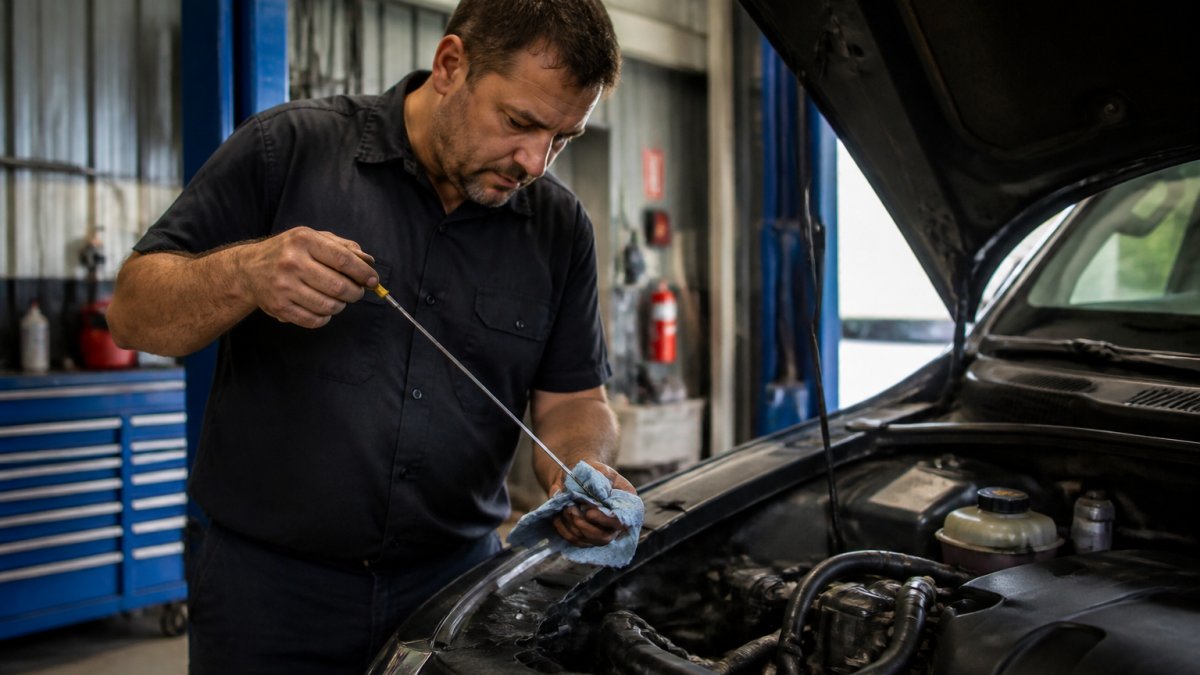
Checking your oil takes two minutes:
- Park on level ground and wait five minutes after the engine cools
- Pull out the dipstick (usually has a yellow or orange handle)
- Wipe it clean with a cloth
- Reinsert it fully, then pull it out again to check the level
- The oil should sit between the minimum and maximum marks
If the level is low, top it up with the oil type specified in your owner’s manual.
Don’t skip this step. Fresh oil protects your engine and improves fuel efficiency.
Many owners schedule oil changes at the same time each year to remember them, set a phone reminder when you’re due.
Monitoring Tyre Pressure and Tread Condition
Your tyres are the only part of your car touching the road, so proper tyre maintenance affects safety, fuel efficiency and tyre life.
Check tyre pressure monthly:
- Find the correct pressure in your owner’s manual or on a sticker inside the driver’s door
- Use a tyre pressure gauge (available at any service station or auto shop)
- Check pressure when tyres are cold (before driving or at least three hours after driving)
- Adjust pressure by adding or releasing air as needed
Underinflated tyres wear faster and waste fuel. Overinflated tyres feel harsh and wear unevenly. Both reduce tyre longevity.
Inspect tyre tread depth regularly:
Worn tread loses grip, especially in the wet. Australia’s legal minimum is 1.6 millimetres, but safety experts recommend replacing tyres at 3 millimetres.
Use the coin test: push a 20-cent coin into the tread.
Inspecting Brakes, Fluids, and Other Critical Systems
These systems keep your car running safely and efficiently. Most checks take just a few minutes.
Brake inspection and maintenance
Your brakes are critical for safety. Listen for warning signs: squealing, grinding, or a soft brake pedal.
Brake pads wear gradually; when thin, they trigger a warning light or squeal. Understand when to replace brake rotors to avoid further damage.
Australian vehicle safety standards require brakes to be in good working order.
When to seek professional help: if your brake pedal feels spongy, goes to the floor, or you hear grinding sounds, stop driving and get the vehicle checked immediately.
Checking fluid levels
Your car relies on several fluids. Check these monthly:
- Coolant: Keeps your engine at the right temperature. Low coolant can cause overheating.
- Brake fluid: Makes your brakes work. Low levels mean air in the system, which reduces braking power.
- Transmission fluid: Lubricates transmission parts. Check only if your manual says it’s safe to do so.
- Washer fluid: Keeps your windscreen clean. This is the easiest to top up yourself.
Most fluid checks are straightforward: open the bonnet, find the translucent reservoirs with minimum and maximum marks, and top up if needed.
If you lose fluid quickly, you have a leak. A mechanic should inspect it.
Battery condition and care
A dead battery leaves you stranded. Regular checks prevent this.
Inspect battery terminals:
- Look for white, blue, or green corrosion on the metal posts
- Clean corrosion with a damp cloth or a battery terminal cleaner
- Ensure cable connections are tight
Test battery age: Most car batteries last 3 to 5 years (Car battery guide: how they work, when to replace them, and how to jump-start). If yours is older and cranks slowly or runs dim lights, have it tested before it fails.
Watch for difficulty starting, dim headlights or a clicking sound when you turn the key.
Creating Your Car Maintenance Checklist
A simple checklist keeps you organised and ensures nothing is missed. The schedule below suits beginners and Mildura’s hot, dry summers, dusty roads and long regional drives. Always cross-check your owner’s manual for model-specific intervals, it overrides any generic guide.
Weekly checks (5 minutes, before you drive)
- Walk around the car and look for new damage, leaks or under-inflation
- Confirm all lights work: headlights, tail lights, brake lights, indicators and reversing lights
- Check windscreen washer fluid and top up if low
- Glance at tyre sidewalls for bulges, cuts or embedded objects
Monthly checks (15-20 minutes)
- Engine oil level (cold engine, level ground)
- Tyre pressure on all four tyres and the spare, using the placard in the driver’s door jamb or fuel filler flap
- Tyre tread depth and uneven wear patterns
- Coolant level (only when the engine is cold)
Pre-trip checks (before any drive of 100 km or more)
Mildura owners regularly drive long stretches to Wentworth, Robinvale, Ouyen or beyond. Before those trips:
- Re-check tyre pressures cold and inspect the spare
- Top up coolant, oil and washer fluid
- Test the battery, hot weather shortens battery life, and a weak battery can fail at a remote roadhouse
- Confirm your breakdown kit is stocked (see the emergency preparation guidance below)
Every 6 months
- Brake inspection by a qualified mechanic
- Hoses and belts for cracks, softness or leaks
- Battery load test if the battery is more than 3 years old
- Air filter inspection, dusty Mildura conditions can clog filters faster than the manual predicts
Annually
- Professional brake inspection and fluid check
- Wheel alignment check, especially if you notice uneven tyre wear
- Air filter replacement if inspection shows it is dirty
- Full service per the owner’s manual schedule
Keep records
Keep a logbook of every check, service and repair. It proves you’ve cared for the vehicle, helps spot recurring issues and supports resale value, a glovebox notebook or phone note works fine.
| Maintenance Task | Frequency | DIY or Professional | Notes |
|---|---|---|---|
| Walk-around and lights | Weekly | DIY | 5 minutes |
| Oil level check | Monthly | DIY | Cold engine, level ground |
| Tyre pressure | Monthly and pre-trip | DIY | Use cold pressure reading |
| Fluid levels | Monthly | DIY | Coolant, brake, washer |
| Brake inspection | Every 6 months | Professional | Safety-critical |
| Oil and filter change | Per manual (often 10,000-15,000 km or 12 months) | Either | Follow the manual |
| Battery test | Annually if 3+ years old | Professional | Hot climate shortens life |
| Wheel alignment | As needed | Professional | If uneven tyre wear |
Set phone reminders for the first of each month and one week before any long regional trip. Beginners who batch checks into a single monthly session are far less likely to skip them.
Understanding Your Car Service Schedule
Your owner’s manual outlines a service schedule specific to your vehicle. Follow it closely.
Services fall into two categories: minor and major.
Minor services typically include an oil and filter change, fluid top-ups, and filter inspections.
Major services are more thorough. Learn what a major service includes.
Skipping services saves money short-term but costs far more later.
Many owners in the region find that booking services in advance prevents delays.
What DIY Maintenance Is Safe, and What Requires a Mechanic
Knowing your limits prevents costly mistakes and keeps you safe. In Mildura’s climate, some checks matter more than the generic advice suggests, heat, dust and long distances all stress different systems.
Safe DIY checks for beginners
These tasks need no special tools and carry low risk when done on level ground with the engine off and cool:
- Checking and topping up engine oil, coolant (cold only), brake fluid and washer fluid
- Checking tyre pressure and tread depth
- Replacing windscreen wipers
- Cleaning battery terminals (wear gloves and eye protection)
Tasks that need a qualified mechanic
- Oil and filter changes if you are not confident with ramps, jack stands and waste oil disposal
- Any brake work, pads, rotors, fluid bleeding or ABS faults
- Suspension, steering and wheel alignment
- Engine diagnostics and warning-light investigation
Mildura-specific safety precautions
- Heat: Never open a radiator cap on a hot engine. Coolant can be well above 100°C and will scald. Wait until the engine is cold.
- Dust: After driving on unsealed roads around the region, check the air filter and radiator fins. A clogged radiator reduces cooling exactly when you need it most.
- Long drives: Before heading to remote routes, tell someone your route and expected arrival time. Mobile coverage is patchy between towns.
- Under the car: Never crawl under a vehicle supported only by a jack. Use rated jack stands on firm, level ground. Hot metal and sharp edges are common hazards.
Warning signs that mean stop driving
Pull over safely and call a mechanic or roadside assistance if you notice:
- A red oil-pressure or temperature warning light
- Grinding or metal-on-metal braking noises
- A spongy or sinking brake pedal
- Steam or coolant smell from the bonnet
If a red warning light appears, do not “drive it home to check later”. Stopping early is almost always cheaper than the damage caused by continuing.
Modern cars are complex, and a mistake can be expensive or unsafe. If unsure, ask a qualified mechanic, a short inspection is far cheaper than a failed repair.
Book Your First Service Inspection
Regular maintenance is the best investment you can make in your vehicle.
If you’re in Mildura and ready to start a proper maintenance routine, we’re here to help.
Vehicle maintenance best practices recommend regular servicing as the cornerstone of vehicle safety.
Start with a professional inspection.
Owners in Mildura experiencing engine or suspension issues can benefit from our modern diagnostic tools. We identify problems accurately, saving you time and money on guesswork repairs. Save Money Car Maintenance Mildura for local resources and strategies to reduce maintenance costs in your area.
Ready to take control of your vehicle’s health? Book your first service inspection with Mallee Auto & Agricultural Services today.
Frequently Asked Questions
How often should I check my car’s oil and other fluids?
Check engine oil every two weeks or before long trips, and monitor other fluid levels (coolant, brake fluid, transmission fluid) monthly. Many beginners find it easiest to check fluids when refuelling. Your owner’s manual specifies exact intervals and fluid types for your vehicle. If you notice fluid levels dropping between checks, have a mechanic inspect for leaks.
What should be on my car maintenance checklist?
Your car maintenance checklist should include monthly checks for engine oil, coolant, brake fluid, and tyre pressure; quarterly inspections of lights, wipers, and battery terminals; and twice-yearly reviews of tyre tread and brake condition. Refer to your owner’s manual for your specific car service schedule, which outlines manufacturer-recommended intervals for oil changes, filter replacements, and major servicing.
Can I check tyre pressure myself, or do I need special tools?
Checking tyre pressure is straightforward and requires only an inexpensive tyre pressure gauge (available at most petrol stations and auto shops). Remove the valve cap, press the gauge onto the valve stem, and read the pressure. Compare it to the recommended pressure on your driver’s door jamb or owner’s manual, not the maximum on the tyre itself. Check pressure when tyres are cold for accuracy.
Which car maintenance jobs are safe for beginners to do themselves?
Safe DIY tasks include checking oil, topping up washer fluid, replacing air filters, and inspecting tyre tread and pressure. Avoid working on brakes, suspension, transmission fluid, or electrical systems unless you have specific training. If you’re unsure whether a task is safe, consult your owner’s manual or ask a qualified mechanic. Professional diagnostics and major repairs protect both your safety and your warranty.
Your car’s reliability depends on consistent, simple actions. Most maintenance tasks take minutes and cost little. The alternative, ignoring your vehicle until something breaks, costs far more. Start with the basics outlined here, follow your owner’s manual, and don’t hesitate to call a professional when you need one. Your vehicle will thank you with years of dependable service.

