
Last Updated: October 25, 2026
Quick Summary
To improve car handling suspension, start by diagnosing the actual problem through a five-step sequence: check tyre pressures and wear, test steering response, listen for suspension noise, assess body roll and bounce, then decide whether you need alignment, parts replacement, or an upgrade. Many handling issues stem from worn tyres, misalignment, or loose components rather than suspension defects.
- Under-inflation of 30 kPa reduces steering responsiveness and increases body roll; tyres over five years old harden and lose grip regardless of tread depth.
- Excessive body roll or bounce indicates worn shock absorbers or weak springs and is a safety issue that can cause loss of traction in emergency manoeuvres.
- Professional wheel alignment measures three angles, camber, toe, and caster, and should be checked annually or after hitting a pothole hard.
- Stiffer springs and dampers improve cornering precision but reduce ride comfort and are less forgiving on poor surfaces.
- Suspension modifications in Australia require compliance with Australian Design Rules and may need an engineering certificate; undisclosed modifications can void insurance claims.
Table of Contents
- Diagnose Handling Problems Before You Upgrade
- Recognise Signs of Worn Suspension
- Check Wheel Alignment and Handling
- Select Tyres for Improved Handling
- Plan a Suspension Upgrade for Better Handling
- Get a Professional Suspension and Steering Inspection
- Book Your Suspension Diagnostic Today
- Frequently Asked Questions
Diagnose Handling Problems Before You Upgrade
The first step to improve car handling suspension is understanding what’s actually wrong. Many drivers assume they need expensive suspension upgrades when the real issue is simpler: worn tyres, misaligned wheels, or loose steering components. Proper diagnosis saves money and prevents unnecessary repairs.
Work through this five-step sequence in order, because each step rules out a cheaper cause before the next.
Step 1: Rule out tyres and pressures first
Check cold tyre pressures against the door-jamb placard and set them to the manufacturer’s recommendation for your normal load, not the sidewall maximum.
Inspect tread depth at the inner edge, centre, and outer edge. A difference of more than about 1.5 mm between inner and outer edges points to an alignment or camber problem, not a tyre problem.
Step 2: Run a steering response and tracking test
In a quiet, flat car park, turn the wheel gently from lock to lock at walking pace.
On a straight, flat road at steady speed, briefly release the wheel only when safe. A consistent pull suggests misalignment, a dragging brake caliper, or a damaged suspension component on one side.
Vibration through the wheel at 60-80 km/h that appears at a specific speed and fades above it usually points to wheel balance or a bent rim; vibration that worsens with speed can indicate worn bushes or a failing CV joint.
Step 3: Listen and feel for suspension noise
Drive slowly over a bumpy road and listen for clunks, squeaks, or rattles from under the car:
- Clunking over bumps suggests worn sway bar links, worn control arm bushes, or loose suspension mounts.
- Squeaking often means worn rubber bushes or dry suspension joints.
- Rattling from underneath can indicate loose anti-roll bar components or a loose exhaust shield.
Try the bounce test: push down hard on each corner and release. The car should rebound once and settle. More than one or two cycles means the shock absorbers on that corner are worn; a corner much stiffer than the others may have a binding or damaged strut or spring.
Step 4: Check for body roll and bounce under load
Body roll is the side-to-side tilt when you turn; some is normal, but excessive roll reduces grip and makes cornering feel unstable. Bounce is the up-and-down movement after a bump; more than one or two cycles indicates worn shock absorbers or weak springs. Both reduce control, and in an emergency manoeuvre can cause loss of traction or a skid, a safety issue, not just a comfort one.
Step 5: Decide whether you need alignment, parts, or an upgrade
Choose the cheapest fix that addresses the cause:
- Tyres or pressures only, correct pressures, replace aged or unevenly worn tyres, then recheck.
- Tracking or off-centre wheel, book a professional wheel alignment before replacing any suspension part.
- Noise or excessive bounce on one corner, inspect that corner’s shock absorber, strut top mount, and bushes.
Write down what you feel at each step, including the speed and road condition where it happens. A short written log helps a technician reproduce the problem and avoids paying for unnecessary parts.
If you spot uneven tyre wear, pulling, or noise, do not delay. Link to “How Long Do Shock Absorbers Last in Australia” explains when replacement becomes necessary, and Link to “10 Essential Car Maintenance Tips for Beginners” covers alignment as routine maintenance.
Recognise Signs of Worn Suspension
Worn suspension components affect comfort and safety. If you spot these signs, your car needs attention soon.
Uneven tyre wear and tracking issues
Uneven tyre wear patterns reveal suspension and alignment problems:
- Wear on the inside edge suggests the wheels are angled inward (negative camber is excessive)
- Wear on the outside edge indicates wheels angled outward (positive camber is excessive)
- Wear in the centre of the tyre usually means over-inflation, but can also signal suspension stiffness issues
Uneven tyre wear costs money, those tyres need replacing sooner, and reduces grip and handling precision, especially in wet conditions.
If your car pulls to one side despite straight steering, the wheels aren’t aligned properly, which creates drag, reduces fuel efficiency, and makes the car harder to control.
You can check tracking yourself on a quiet, straight road, but precise measurement needs professional alignment equipment.
Excessive body roll and bounce
Body roll is the side-to-side tilt of the car’s body when you turn. Some roll is normal.
Bounce is the up-and-down movement after hitting a bump. A little bounce is fine. Too much bounce (more than one or two cycles) indicates worn shock absorbers or weak springs.
Both problems reduce your control of the vehicle. In an emergency manoeuvre, excessive roll or bounce can cause loss of traction or even a skid.
Check Wheel Alignment and Handling
Wheel alignment is critical for handling. Misaligned wheels fight each other, creating drag and unpredictable steering. Alignment also protects your tyres and suspension components.
Professional alignment measures three angles: camber (wheel angle from vertical), toe (wheel angle relative to the car’s centreline), and caster (steering pivot angle). Small changes significantly affect how the car handles.
You can’t adjust alignment without specialist equipment, but you can spot the signs:
- The steering wheel is off-centre when driving straight
- The car pulls consistently to one side
- Tyres wear unevenly or very quickly
Check alignment annually, especially if you drive rough roads or hit a pothole hard, in Mildura and the surrounding region, road conditions can shift it quickly.
Select Tyres for Improved Handling
Tyres have an enormous impact on handling: the right set transforms how your car feels, while the wrong set makes even a well-maintained suspension feel sluggish or unstable.
Tyre choice depends on your driving style and conditions. Summer tyres offer better grip in dry conditions. Winter or all-season tyres perform better in wet weather.
Check tyre pressure weekly: under-inflation reduces responsiveness and increases rolling resistance, while over-inflation makes the ride harsher and reduces grip. The correct pressure is on the door-jamb sticker.
Plan a Suspension Upgrade for Better Handling
If your suspension is in good condition but you want to improve car handling suspension, common upgrades include stiffer springs, performance shock absorbers, upgraded anti-roll bars, and lowered ride height. Each has trade-offs, plus Australian compliance and insurance implications to understand before booking the work.
Match the upgrade to how you actually drive
Treat upgrades as a set of trade-offs rather than a single “better handling” package. The table below summarises the common options and what they change.
| Upgrade | Handling effect | Comfort effect | Other considerations |
|---|---|---|---|
| Stiffer springs | Less body roll, sharper turn-in | Harsher over sharp bumps | Can reduce droop travel; check bump stops |
| Performance dampers | Better body control, less float | Firmer, especially at low speed | Pair with matching springs; mixing brands can upset balance |
| Uprated anti-roll bars | Flatter cornering, quicker direction change | Slightly firmer single-wheel bumps | Too stiff a rear bar can increase oversteer in the wet |
| Lowered ride height | Lower centre of gravity, less dive and squat | Less suspension travel | Ground clearance, speed humps, driveways, and compliance |
| Uprated springs for load | Less sag when loaded, steadier towing | Firmer unladen ride | Confirm rated load and tow ball limits |
For Mildura commuting and regional highways, most drivers get the best result from fresh standard or sport dampers, sound bushes, and a proper alignment rather than a stiffer spring package. For vehicles that regularly tow or carry tools, uprated rear springs and load-rated dampers address sag and instability without ruining unladen comfort.
Understand the trade-offs between comfort, handling, lift, and load
Stiffer springs and dampers improve cornering precision but reduce ride comfort, you’ll feel every bump, which is fatiguing on long rough-road drives.
Lowering ride height improves handling by lowering the centre of gravity, so the car corners flatter and feels more planted.
Lifting increases clearance for unsealed roads but raises the centre of gravity, increasing body roll and changing steering geometry; lift kits above a modest height often require engineering approval and can affect insurance.
Check Australian compliance and insurance before you modify
Suspension modifications in Australia are governed by the Australian Design Rules (ADRs) and state and territory vehicle standards; in Victoria, guidance is published by VicRoads and, for heavy vehicles, the National Heavy Vehicle Regulator.
Lowering or lifting beyond modest limits, significantly changing spring rates, or fitting non-standard components can require an engineering certificate and modification permit before registration.
Most Australian insurers require you to disclose suspension modifications, including lift and lowering kits, because they change the vehicle’s risk profile; undisclosed modifications can lead to a claim being reduced or denied.
Do not assume a kit sold online is legal for road use in Victoria. Check that the supplier provides ADR compliance evidence and, where required, an engineering certificate. Keep receipts and documentation with the vehicle.
Measure the result, not just the feel
Before and after any upgrade, record simple checks to judge whether it actually improved handling:
- Note the steering wheel angle when driving straight on the same road.
- Note how many bounce cycles the car makes after a bump at a set speed.
- Check tyre pressures and tread depth at the same intervals.
Look for reduced body roll in a steady corner, steadier tracking on a straight road, more even tyre wear over several thousand kilometres, and fewer bounce cycles after a bump. Avoid relying on seat-of-the-pants impressions alone, because firmer suspension often feels faster without improving grip.
Budget and timing
Plan suspension work as a sequence: diagnose first, replace worn standard components second, and upgrade only if the standard setup still falls short. A professional inspection takes 45 minutes to an hour.
Agricultural and trade vehicles in the Mildura region often carry heavy loads. Uprated suspension is an investment in longevity and safety, but confirm rated load and tow ball limits before fitting, and check whether the change affects registration or insurance.
Get a Professional Suspension and Steering Inspection
A professional inspection reveals problems you can’t spot yourself. Modern diagnostic tools detect worn components, misalignment, and structural damage that visual inspection misses.
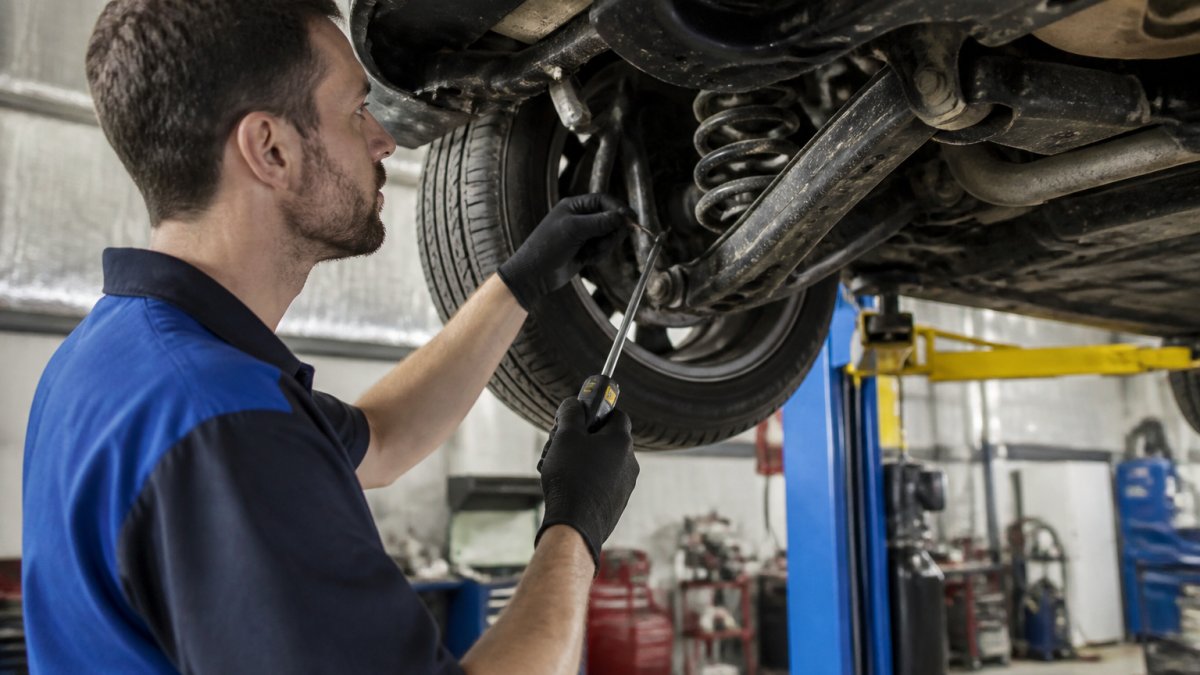
During an inspection, a qualified technician will:
- Check all suspension bushes and joints for wear
- Test shock absorber function with diagnostic equipment
- Measure wheel alignment to precise tolerances
An inspection typically takes 45 minutes to an hour and costs far less than replacing worn components later.
Book Your Suspension Diagnostic Today
Poor handling affects safety, fuel efficiency, and tyre life, and many issues are simple and inexpensive to fix once you know what’s wrong.
Mallee Auto & Agricultural Services provides expert suspension diagnostics in Mildura using modern tools and skilled technicians, working with all vehicle types from family cars to agricultural equipment. Our mechanics explain findings clearly and recommend practical solutions that fit your budget and driving needs.
Frequently Asked Questions
Can worn suspension affect car handling?
Yes. Worn suspension components reduce your vehicle’s ability to keep tyres in contact with the road, causing poor steering response, excessive body roll, and uneven tyre wear. Damaged shocks, springs, or bushings make cornering less precise and bump absorption less effective. A professional inspection can identify wear before it becomes unsafe.
Will a wheel alignment improve handling?
Absolutely. Misaligned wheels pull to one side, cause uneven tyre wear, and make steering feel heavy or vague. A proper wheel alignment check restores steering precision and distributes braking force evenly. Combined with suspension repairs, alignment is one of the quickest ways to notice improved handling.
What suspension parts improve handling the most?
Upgrading shocks, springs, and anti-roll bars directly improves cornering stability and bump absorption. Stiffer springs and dampers reduce body roll; thicker anti-roll bars improve road stability. The best choice depends on your driving conditions, daily commuting, off-road use, or towing all require different setups. A mechanic can recommend components matched to your needs.
Do better tyres improve a car’s handling?
Yes. High-quality tyres with better grip and responsive sidewalls improve cornering precision and steering feedback. Tyre pressure also matters; underinflated tyres reduce handling feel and increase wear. Choosing tyres suited to your vehicle weight and driving style, then maintaining correct pressure, noticeably sharpens handling without suspension work.
Don’t let poor handling compromise your safety or drain your wallet on unnecessary repairs. Book a suspension diagnostic with Mallee Auto & Agricultural Services and get clarity on what your car actually needs. Our fair pricing and transparent approach mean no surprises, and our pensioner discounts help keep costs manageable for the community we serve.

