
Table of Contents
- Why Regular Servicing Matters: The Real Consequences of Skipping Car Service
- Engine Oil Degradation and Sludge Buildup
- How Long Can You Delay a Car Service Before Damage Occurs
- Increased Wear, Engine Damage, and Reduced Vehicle Lifespan
- Breakdown Risk, Fuel Economy, and Safety Issues
- Missed Car Service and Warranty: What You Need to Know
- Car Service Warning Signs and What to Do If Your Service Is Overdue
- Frequently Asked Questions
Last Updated: October 20, 2026
Why Regular Servicing Matters: The Real Consequences of Skipping Car Service
Skipping your car service might seem like a quick way to save money, but the cost of that shortcut often comes much later, when something breaks down and leaves you stranded.
Regular servicing keeps your engine running smoothly. It catches small problems before they become big ones. When you skip car service, you’re gambling with your vehicle’s reliability.
Here’s what actually happens when maintenance gets pushed aside:
- Engine oil breaks down faster without regular changes
- Metal parts wear against each other without proper lubrication
- Filters clog and restrict fluid flow
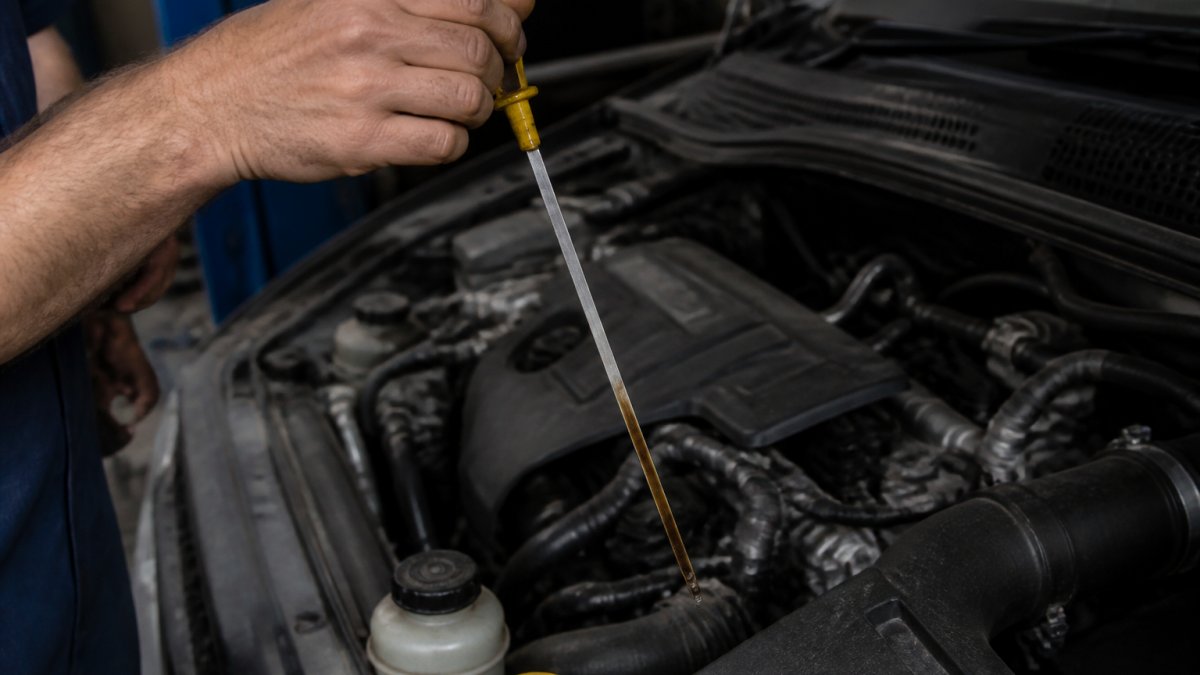
Engine Oil Degradation and Sludge Buildup
Engine oil lubricates moving parts, removes heat, and carries away contaminants, but it degrades over time and distance.
Degraded oil thickens, loses its protective properties, and accumulates sludge, a sticky buildup of oxidised oil and dirt that clogs passages and restricts flow to critical engine components.
Here’s what degraded oil actually does:
- Reduces lubrication between moving parts
- Traps contaminants instead of suspending them
- Thickens and flows more slowly through narrow passages
When you delay a car service, engine temperature rises, friction increases, and metal-to-metal contact accelerates wear.
In Mildura’s hot climate, higher temperatures cause oil to degrade faster, so vehicles that run in extreme heat need more frequent servicing, not less.
How Long Can You Delay a Car Service Before Damage Occurs
There is no single safe number of weeks or kilometres for every vehicle. Damage risk starts as soon as you pass the manufacturer’s interval, and how fast it builds depends on your vehicle, driving, and Mildura conditions.
Time-based versus kilometre-based intervals
Most modern service schedules use two limits and require whichever comes first:
- Kilometre-based: commonly every 10,000 km or 15,000 km for many passenger vehicles, though some schedules are shorter or longer.
- Time-based: commonly every 6 or 12 months, even if you have driven very few kilometres.
Time matters because oil oxidises, brake fluid absorbs moisture, and seals and belts age even when the car sits idle. A low-kilometre vehicle doing mostly short trips around Mildura can be harder on oil than a highway-driven one, because the engine never gets hot enough to burn off condensation.
Severe-use schedules
Many owner’s manuals include a separate severe-use or severe-service schedule. It typically shortens intervals for vehicles that regularly experience:
- Frequent short trips under about 10 km
- Stop-start traffic
- Dusty or unsealed roads
- Heavy loads or towing
In the Mallee and Sunraysia regions, dust, summer heat, and long rural drives can push a vehicle into severe-use territory. If your manual lists a severe-use schedule, follow it rather than the standard interval.
What overdue actually looks like in practice
Workshops report that the first consequences of a missed service are subtle, then compound:
- Slightly overdue (weeks or a few thousand kilometres): oil is past its best, but serious damage is unlikely if the vehicle is otherwise healthy. Book a service promptly.
- Moderately overdue (a few months or several thousand kilometres beyond the interval): sludge and varnish can begin to form, fuel economy may drop, and minor faults may be missed because the safety checks did not happen.
- Significantly overdue (six months or more, or well beyond the kilometre limit): the risk of sludge-blocked oil passages, accelerated bearing and camshaft wear, and missed brake or tyre problems rises sharply. This is the zone where a routine service can turn into a repair bill.
Mildura and regional conditions
Mildura’s summer heat and dry rural dust accelerate oil degradation and clog air filters faster than city driving, and long distances between towns make a breakdown more serious. For farm or unsealed-road vehicles around the Mallee, follow the severe-use schedule and service at the shorter end of the range.
The practical rule
Use the interval in your owner’s manual, apply the severe-use schedule if your driving matches it, and treat the time limit as seriously as the kilometre limit. If you are past either limit, book a service and ask the mechanic to check for sludge, fluid condition, and brake and tyre wear.
If your service is significantly overdue and you notice knocking, overheating, a brake warning light, or fluid leaks, stop driving and arrange an inspection. Continuing to drive can turn a service into a major repair.
If you have lost track of your interval, check the owner’s manual or contact a dealer with your vehicle identification number (VIN). Do not rely on a generic kilometre figure from a forum or a friend’s car.
Increased Wear, Engine Damage, and Reduced Vehicle Lifespan
Skipping car service accelerates wear on every moving part inside your engine.
Without proper lubrication, these components grind against each other, metal shavings enter the oil, and wear accelerates.
An engine that receives regular servicing can last longer; one that skips services might have a reduced lifespan and lost value at resale.
The consequences extend beyond the engine:
- Transmission fluid degrades without servicing, causing shifting problems
- Coolant loses its ability to protect against corrosion and overheating
- Brake fluid absorbs moisture and loses stopping power
- Battery life shortens without system checks
Each system depends on maintenance, so skipping servicing risks failure across multiple systems at once.
Breakdown Risk, Fuel Economy, and Safety Issues
A vehicle that hasn’t been serviced is a breakdown waiting to happen. The risk increases every week you delay.
But the real danger is safety.
Brake pads wear down and brake fluid degrades.
Tyres, suspension, steering, lights and batteries all need regular checks that a full service covers.
Skip the service and you’re skipping those safety checks, so you might be driving an unsafe vehicle without knowing it.
Skipping car service increases your risk of breakdown on the road. A mechanical failure in a remote area can leave you stranded for hours. In extreme weather, this becomes a genuine safety emergency.
Missed Car Service and Warranty: What You Need to Know
Warranty confusion stops many Mildura drivers from asking the right questions after a missed service. Australian Consumer Law gives you stronger protections than many realise, and servicing outside a dealership does not automatically void your warranty.
What Australian Consumer Law actually says
The Australian Competition and Consumer Commission (ACCC) enforces the consumer guarantees in the Australian Consumer Law. These guarantees sit alongside any manufacturer’s warranty and cannot be excluded by fine print. In simple terms:
- Goods must be of acceptable quality, fit for purpose, and match their description.
- A manufacturer cannot tell you that you must use their dealership for servicing to keep your warranty intact.
- A manufacturer can, however, ask you to show that the vehicle has been maintained in line with the schedule and that any fault is not caused by neglect or poor-quality work.
So if you skip a service and later make a warranty claim, the manufacturer may argue that the missed maintenance contributed to the fault. That does not automatically cancel your consumer guarantees, but it can complicate a claim. The practical defence is a clear service history.
Logbook servicing versus dealership servicing
A logbook service is performed to the manufacturer’s specified schedule and recorded in the vehicle’s logbook. Any qualified mechanic can do it, not only a dealership, as long as the correct parts, fluids and procedures are used. Many independent Mildura workshops offer logbook servicing and stamp the book the same way a dealer does.
What matters is evidence:
- The service was done at or near the specified interval.
- The correct grade of oil and the specified filters were used.
- The work is recorded with date, odometer reading, and workshop details.
If a workshop cannot provide that record, the manufacturer has more room to question whether maintenance was adequate.
How a missed service can affect a claim
A missed service does not give a manufacturer a free pass to refuse every claim. But it can affect how a claim is assessed. Common patterns include:
- Fault clearly unrelated to servicing (for example, a failed infotainment unit or a manufacturing defect in a door latch): the missed service is unlikely to be relevant.
- Fault possibly linked to maintenance (for example, engine sludge, overheating, or premature brake wear): the manufacturer may ask for service records and may argue that neglect contributed.
- Fault caused by poor-quality work (for example, an incorrectly fitted filter or wrong oil grade): responsibility may sit with the workshop that did the work, not the manufacturer.
If you are in this situation, gather your records, describe the fault clearly, and ask the manufacturer or dealer to put their position in writing. If you cannot resolve it, the ACCC and your state consumer affairs body publish guidance on escalating a consumer guarantee dispute.
Protecting yourself after a missed service
You cannot undo a missed service, but you can rebuild a defensible record:
- Book a logbook service with a qualified mechanic as soon as practical.
- Ask for the service to be recorded in the logbook and keep the invoice.
- Keep any diagnostic reports or photos of the vehicle’s condition.
- If a fault appears, report it promptly rather than continuing to drive.
Servicing outside a dealership does not automatically void your warranty, and Australian Consumer Law gives you rights that sit alongside the manufacturer’s warranty. But a missed service can weaken your position if a fault is linked to maintenance. Keep a clear logbook and service records, and ask for any refusal in writing.
ACCC guidance on consumer guarantees
Car Service Warning Signs and What to Do If Your Service Is Overdue
Your vehicle sends signals when it needs servicing. Recognising them helps you catch problems early.
Common warning signs include:
- Service light on dashboard, the most obvious signal; don’t ignore it
- Dark, dirty engine oil, check your dipstick; oil should be amber, not black
- Engine noise, knocking or ticking sounds indicate wear
- Reduced fuel economy, your car suddenly drinks more petrol
If you see any of these signs, don’t wait for your next scheduled service, get it checked immediately.
Overdue Car Service: What to Do Right Now
If your service is already overdue, here’s what to do:
Step 1: Check your logbook. Find out exactly when your last service was performed and what interval your vehicle requires. If you’ve lost your logbook, check your vehicle’s manual or contact your car manufacturer with your registration number.
Step 2: Book a service immediately. Don’t drive the vehicle any longer than necessary.
Step 3: Be honest with your mechanic. Tell them how long it’s been since your last service.
At Mallee Auto & Agricultural Services, we understand that life gets busy and servicing sometimes gets delayed.
If your service is overdue and you’re worried about what damage might have occurred, get a diagnostic check done first. It tells you exactly what you’re dealing with. Many mechanics, including ours, offer this as a separate service.
Protecting your vehicle’s reliability starts with one simple commitment: keeping up with scheduled servicing.
Frequently Asked Questions
What happens if you don’t get your car serviced on time?
Skipping car service allows engine oil to break down, creating sludge that restricts oil flow and accelerates wear on engine components. You risk increased fuel consumption, reduced performance, unexpected breakdowns, and potential engine damage. Your warranty may also be affected if you cannot prove regular servicing through your logbook.
How long can you delay a car service before damage occurs?
Most vehicles should be serviced every 6 to 12 months or according to your owner’s manual service interval. Delaying beyond this window allows contaminants to accumulate in the oil. While you might not notice immediate damage, mechanical failure risk increases significantly. The longer you delay, the greater the risk of costly repairs and safety issues.
Does missing a car service affect your car warranty?
Yes. Most manufacturers require proof of regular servicing through your logbook to honour warranty claims. If you skip services and later experience engine or mechanical failure, the manufacturer may argue that the missed maintenance contributed to the fault. A missed service can complicate a claim for repairs that warranty might otherwise cover. Always maintain your service history.
What should you do if your car service is overdue?
Book a service appointment immediately. Bring your vehicle’s logbook and owner’s manual so the mechanic can assess any damage from the delay. Be honest about how long the service has been overdue, this helps the technician prioritise safety checks on brakes, tyres, and fluid levels. Have the mechanic inspect for sludge buildup and check warning lights. Once serviced, stick to your scheduled maintenance interval to prevent future issues.
