
Last Updated: November 5, 2026
Quick Summary
A VicRoads inspection is the check the department requires before a vehicle can be registered in Victoria, and it may include identity validation, a check against the register, and a roadworthy check. Before booking, confirm whether you need a registration inspection, a roadworthy certificate, or both, since the two are not the same.
- A roadworthy certificate is a safety inspection by a licensed tester, and differs from a registration inspection.
- Bringing the wrong inspection type can mean a second visit and a second fee.
- Put ownership papers, photo ID, VIN or chassis number and any approvals in one folder the night before.
- Check tyre tread: the legal minimum is 1.5mm across the central three-quarters of the tread.
- Test every light, check the windscreen in the driver’s view, and fix faults before the inspection.
Table of Contents
- Understanding Which VicRoads Inspection You Need
- Gathering Paperwork, Vehicle Details and Identification
- Checking Tyres, Brakes and Steering Before Your Inspection
- Lights, Electrical Items, Windscreen and Visibility Checks
- Common Reasons for Roadworthy Failure and How to Avoid Them
- Booking Your Inspection and Finding a Licensed Vehicle Tester in Mildura
- What Happens After a Failed Inspection and What the Inspection Costs in Victoria
- Frequently Asked Questions
Understanding Which VicRoads Inspection You Need
Before you book anything, work out which vehicle inspection applies to your vehicle and whether you need a VicRoads inspection. You can see the full process in detail on our page on preparing your vehicle for a roadworthy inspection. A roadworthy certificate and a VicRoads registration inspection are not the same thing, and bringing the wrong paperwork wastes a trip and a fee.
The short answer: a roadworthy certificate is a safety inspection carried out by a licensed vehicle tester, and it confirms the vehicle meets the standards to be driven on Victorian roads.
Common scenarios and which inspection they usually trigger:
- First registration in Victoria: a registration inspection, plus a roadworthy certificate if the vehicle has not previously been registered in Victoria or has come from interstate.
- Registration lapsed and the vehicle has been off the road: a registration inspection, and a roadworthy certificate if the lapse exceeds the period VicRoads allows before a new certificate is required.
- Modified vehicle (engine swap, LPG conversion, suspension change): a roadworthy certificate that accounts for the modifications, and in some cases a VicRoads engineering approval or a modified vehicle inspection before registration can continue.
- Imported vehicle: a registration inspection that includes compliance checks against the relevant import approval, plus a roadworthy certificate.
- Previously written-off vehicle: a registration inspection that includes identity and repair validation, plus a roadworthy certificate.
- Ownership changing (private sale): a roadworthy certificate is generally required to transfer registration, but a full registration inspection is not usually needed unless the registration has lapsed or the vehicle’s details have changed.
Watch out: booking a roadworthy certificate when VicRoads requires a registration inspection (or the reverse) can mean a second visit and a second fee, and in some cases the first inspection result will not be accepted for the purpose you intended.
You can read the official requirements on the VicRoads vehicle inspection requirements page before you commit to a booking. Confirm the requirement for your specific vehicle and situation, because the rules differ for cars, motorcycles, trailers, modified vehicles and imports.
If you are unsure, call the inspection provider and describe your situation in plain terms: the vehicle’s registration status, whether it has been modified or imported, and what you are trying to achieve (register it, transfer it, or clear a defect).
Gathering Paperwork, Vehicle Details and Identification
Paperwork causes more delays than mechanical faults. Put everything in one folder the night before your appointment, so nothing is missing at the counter.
A typical document checklist includes:
- Proof of ownership or the current registration papers
- A valid driver’s licence or other photo identification
- The vehicle identification number (VIN) or chassis number
- Engine number, where it is requested for your vehicle type
- Any modification approvals or certificates for changed parts
- A receipt or record for any recent repairs
Check the exact list on the official booking page before your appointment, because requirements change. Also confirm the vehicle’s details match the paperwork exactly. A mismatched number or an outdated address can stop the inspection before it starts.
Checking Tyres, Brakes and Steering Before Your Inspection
Tyres, brakes and steering are the parts most likely to fail a roadworthy check. You can spot many problems yourself in twenty minutes at home.
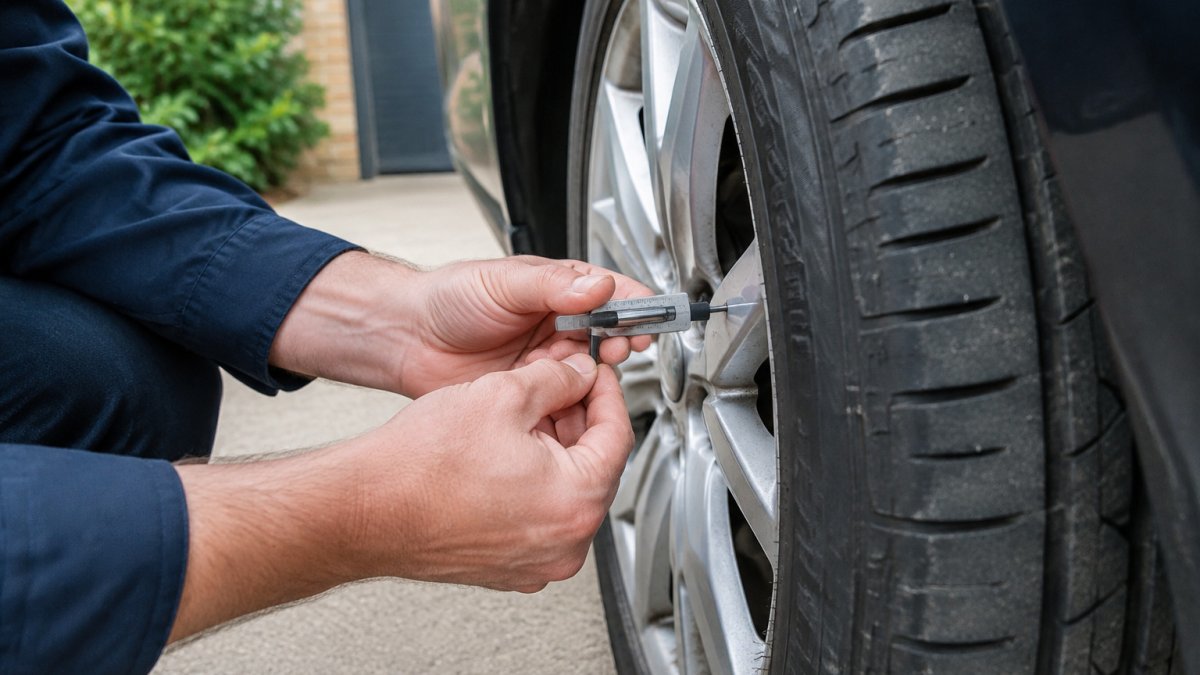
!A driver’s hands checking tyre tread depth with a tread gauge beside a car wheel in a driveway
Tyres:
- Check tread depth with a gauge. The legal minimum is 1.5mm across the central three-quarters of the tread
- Look for cuts, bulges, cracks in the sidewall and uneven wear
- Check pressures against the sticker inside the driver’s door, and include the spare if it is a full-size tyre
Brakes:
- Listen for grinding or squealing when you brake gently
- Note any pull to one side or a soft, spongy pedal
- Look for fluid leaks around the wheels and under the car
Steering and suspension:
- Turn the steering wheel from lock to lock and listen for clunks or knocks
- Bounce each corner of the car and watch how many times it rebounds
- Look for leaking shock absorbers and worn ball joints
A common mistake is ignoring a small clunk or pull because the car still drives fine. If you hear a knock when turning or going over bumps, our guide on how to diagnose car suspension clunking noises walks through the likely causes. Inspectors look for exactly these faults, and a small problem found early costs far less to fix.
Lights, Electrical Items, Windscreen and Visibility Checks
Lights and visibility faults are the cheapest to fix and the easiest to miss. Do this check with a helper, or park facing a wall or garage door so you can see the reflections.
- Headlights: Check both low and high beam work, and that they are aimed correctly
- Indicators and hazard lights: Confirm every indicator flashes at a steady rate
- Brake lights: Press the pedal and check all three lights, including the centre one
- Reverse lights, number plate light and fog lights: Test each one
- Windscreen: Look for chips or cracks in the driver’s line of sight
- Wipers and washers: Check the blades are not perished and the washer jets spray
- Mirrors: Make sure all mirrors are secure and not cracked
- Horn and seat belts: Test the horn and check every seat belt latches and retracts
If you find lighting or electrical faults, a local auto electrician can usually fix them quickly. Our Mildura auto electrician guide explains what to look for when choosing one. Get them repaired before the inspection to avoid a failed result.
Common Reasons for Roadworthy Failure and How to Avoid Them
Most failures come from a short list of problems. Knowing them lets you fix the obvious ones first.
- Worn or illegal tyres: Check tread depth and sidewalls before every inspection
- Non-working lights: Replace blown bulbs, which are often cheap and quick to change
- Brake wear or leaks: Listen for noise and check fluid levels regularly
- Cracked windscreen in the driver’s view: Repair or replace before the inspection
- Leaking fluids: Find and fix the source, not just the drip
- Undisclosed modifications: Declare every change and bring the paperwork
For many drivers, the best way to avoid failure is a pre-inspection check a few days ahead. That leaves time to book repairs without rushing.
Booking Your Inspection and Finding a Licensed Vehicle Tester in Mildura
Booking is simple once you know which inspection you need, but the logistics matter more in a regional centre like Mildura than they do in Melbourne.
Finding a licensed tester in Mildura
Before you book, confirm three things:
- The tester is licensed to carry out the specific inspection you need (roadworthy certificate, registration inspection, or both).
- The tester can inspect your vehicle type (car, motorcycle, trailer, modified vehicle, imported vehicle).
- The tester can issue the certificate or report that VicRoads will accept for your purpose.
For a local option, you can book a mobile roadworthy certificate in Mildura and arrange the inspection around your schedule.
Documents and vehicle details to bring
The exact list depends on the inspection type, but a scenario-based checklist covers most cases:
- All inspections: photo identification (driver’s licence or passport), the vehicle’s VIN or chassis number, and the engine number where it is recorded on the paperwork.
- Registration inspection: proof of ownership or the current registration papers, any import approval or compliance documentation, and evidence of any VicRoads engineering approvals for modifications.
- Roadworthy certificate: the current registration papers if available, and receipts or records for recent repairs if you want the tester to see the work done.
- Previously written-off vehicle: the repair documentation and any VicRoads correspondence about the vehicle’s status.
Check the vehicle’s details match the paperwork exactly. A mismatched VIN, engine number, or an outdated address can stop the inspection before it starts, and correcting it may require a separate VicRoads visit.
What to expect on the day
Arrive with the vehicle clean enough for the tester to see components clearly, and with access to the boot, bonnet and underbody. The inspection typically covers identity checks, tyres, brakes, steering and suspension, lights and electrical items, windscreen and visibility, seat belts, and general vehicle condition.
After a failed inspection
A failed inspection is not the end of the process. You receive a written list of defects, and you can repair them and return for a reinspection.
Fees and timing
The cost of a roadworthy certificate or registration inspection in Victoria varies by provider and vehicle type. Check current fees with the inspection provider and the official VicRoads fees and charges page before you book, since amounts can change.
Watch out: booking an inspection without confirming the tester is licensed for your vehicle type and inspection purpose can result in a report that VicRoads will not accept, leaving you to book and pay again.
The article sets out which documents to bring for each inspection type:
| Inspection type | Documents to bring | Key check |
|---|---|---|
| All inspections | Photo ID, VIN or chassis number | Engine number if recorded |
| Registration inspection | Ownership or registration papers, import or modification approvals | Vehicle details match paperwork exactly |
| Roadworthy certificate | Current registration papers, repair receipts | Repairs visible to tester |
| Previously written-off vehicle | Repair documentation, VicRoads correspondence | Vehicle status confirmed |
What Happens After a Failed Inspection and What the Inspection Costs in Victoria
A failed inspection is not the end of the process. You receive a written list of defects, and you can repair them and return for a reinspection. Read the list carefully so you know exactly what needs fixing. Ask the tester to explain anything unclear.
The cost of a roadworthy certificate in Victoria varies by provider and vehicle type. Check current fees with the inspection provider and the official VicRoads fees and charges page before you book, since amounts can change. If a mechanic quotes significant work, ask for an itemised explanation and compare it with a second quote.
Watch out for mechanics who recommend unnecessary repairs. Signs your mechanic is overcharging you include vague quotes and pressure to act immediately. You can read our guide on signs your mechanic is overcharging you before agreeing to any work.
Reputable mechanics will explain each fault, show you the worn part where possible, and give you a clear quote. Take your time, ask questions, and approve only the work you understand.
Frequently Asked Questions
What is checked during a VicRoads roadworthy inspection?
A roadworthy inspection checks the vehicle’s core safety systems, including tyres and tread depth, brakes, steering and suspension, lights and indicators, windscreen and visibility, seat belts, and any visible oil or fluid leaks. The tester also confirms the vehicle identity, such as the VIN or chassis number, matches the paperwork. Checking these items yourself before you book helps you avoid a repeat visit and the cost of a reinspection.
How much does a roadworthy certificate cost in Victoria?
The cost of a roadworthy certificate in Victoria varies depending on the tester and the type of inspection, so check current fees with your chosen licensed vehicle tester before you book. Fees can also change over time, so confirm the price when you make your appointment. If a repair is needed before the vehicle passes, that cost is separate from the inspection fee.
What happens if my car fails a VicRoads inspection?
If your vehicle fails, the tester will give you a written list of the defects that must be repaired. You then arrange the repairs with a repairer and return the vehicle for a reinspection. Fix the listed items promptly, keep your repair receipts, and bring them to the reinspection so the tester can check the defects were addressed.
Can I get a roadworthy inspection done in Mildura?
Before you book a roadworthy inspection in Mildura, confirm the tester holds the correct licence for the inspection you need, and ask about availability and how long the inspection takes. Booking ahead helps you avoid delays, particularly during busy periods.

